US Navy Poised for High-Stakes Tanker Escort Mission as Tensions Mount in the Strait of Hormuz
If you've been keeping an eye on the news feeds or scrolling through alerts on your phone this week, you'll know the situation in the Persian Gulf has gone from tense to critical. We're looking at a potential re-run of the 'Tanker War'—but this time with more firepower and far higher stakes. With the White House making it crystal clear that keeping global oil moving is priority number one, the Pentagon is now moving its pieces into place for what insiders are calling a high-risk escort mission through the Strait of Hormuz.
The Calm Before the Storm in the Arabian Sea
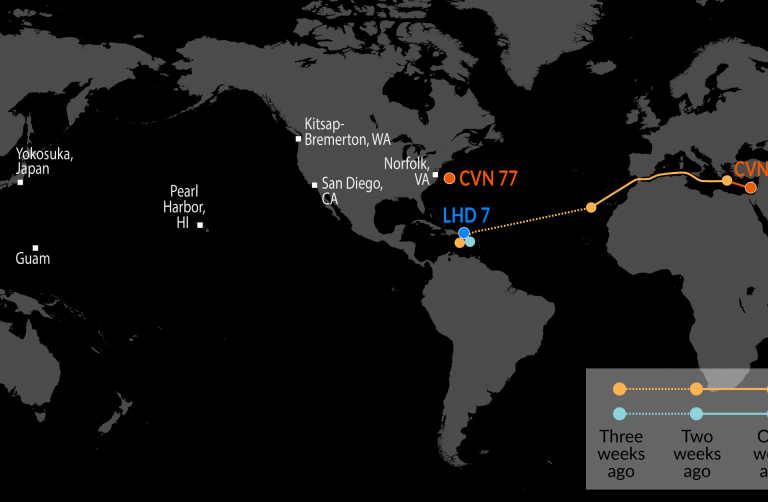
Right now, if you're checking the fleet trackers—the same ones maritime analysts here in Ireland and the UK have been debating on their podcasts and segments—you'll see a massive concentration of naval power in the region. The USS Abraham Lincoln (CVN-72) and its Carrier Strike Group 3 are holding position in the Arabian Sea. Don't be fooled by the 'holding'—that's a coiled spring ready to snap. They're flanked by a screen of destroyers, including the USS McFaul (DDG-74) and the USS Frank E. Petersen Jr. (DDG-121). Meanwhile, over in the Eastern Med, the USS Gerald R. Ford (CVN-78) is keeping a watchful eye on the northern flank.
But the real action isn't with the carriers. It's with the tiny, fast-moving attack craft and the threats beneath the waves. The Islamic Revolutionary Guard Corps Navy (IRGCN) has a nasty track record of swarming larger vessels with speedboats, and let's not forget the mines. We're talking about the most dangerous chokepoint in the world for energy transit, and right now, it's a shipping lane at a standstill.
Why Oil Prices Are Spiking
You don't need to be a trader on Wall Street to feel this one. It's already hitting home—with petrol and diesel prices set to rise at the pumps here in Ireland and across Europe. Brent crude is flirting with $95 a barrel. Why? Because since the first strikes kicked off on February 28, traffic through the Strait has dried up to almost nothing.
Here’s the breakdown of what’s stuck or stopped:
- Tankers: From around 50 transits on February 28, we dropped to just 10 in the first nine days of March.
- Cargo Vessels: Daily transits are in the single digits, compared to the usual flow of over 130 ships a day.
- The 'Shadow Fleet': Even the sanctioned ships running dark are playing a dangerous game of brinkmanship.
About 20% of the world's oil moves through that narrow stretch of water. When that pipeline gets kinked, the whole world pays—and we're already feeling it here.
The Escort Plan: 'Operation Epic Escort'
Over the weekend, Chairman of the Joint Chiefs General Dan Caine laid it out in plain terms from the Pentagon: the military is weighing up options to reopen the flow. This isn't just about showing the flag; it's about physically putting US hulls between Iranian fire and commercial tankers. The president himself said in a Florida press conference that when the time comes—and he stressed it might not be necessary—the Navy will escort them right through.
This is where it gets complicated. As a few sharp maritime analysts I've been in touch with have pointed out, taking a US warship as an escort might actually paint a target on a tanker rather than protecting it. It's a psychological game. The Iranians have threatened anyone moving through the strait, but they can't hit everyone. The question is: who wants to take that gamble?
The Ghost of the Tanker War
For those of us who remember the 1980s, this echoes the original Tanker War when the US reflagged Kuwaiti tankers. Back then, it was about protecting assets during the Iran-Iraq War. Today, the tactics are different, but the principle is the same. We've already seen 13 commercial vessels hit by projectiles since this started, scattered off the coasts of Oman and the UAE. The Iranians are playing a deep game here. They've claimed via state media to have struck the USS Abraham Lincoln with drones—a claim the Pentagon has laughed off, and the fleet tracker data flat-out contradicts. But the fact they're putting that out there shows they want to project strength, even if their fast-attack craft are staying hidden—likely because they know they'd be obliterated the moment they sortied.
What Happens to the Stuck Ships?
Imagine being a captain on one of the 150 or so vessels currently anchored in the Gulf, waiting to see if you're going to be a naval chess piece. Insurance has gone haywire. The US is backstopping up to $20 billion in claims through the DFC, but that doesn't calm the nerves of a crew hearing active sonar pings at night. The Joint Maritime Information Center has slapped a 'critical' risk level on the entire region. That's the highest warning they can give. It means they think attacks are almost certain.
For now, the world waits. This isn't just a plot from a thriller anymore; it's the reality for seafarers trapped between superpowers. The Navy is poised, the diplomats are scrambling, and the only thing moving fast through the Strait right now is the news cycle.