Line 9, the 'hell train' on the way to work, is now a little less hectic.
Any office worker who has lived in Seoul for more than 10 years will know the horror of Line 9 on the way to work. There are few routes where the word ‘hell season’ fits so well. In particular, it is appropriate to say that the express train from Gimpo Airport to Gangnam is a battlefield. In fact, there has been a joke going around for a long time that if you open a newspaper on Line 9, you won't be able to tell if you are reading it or if the person next to you is reading it.
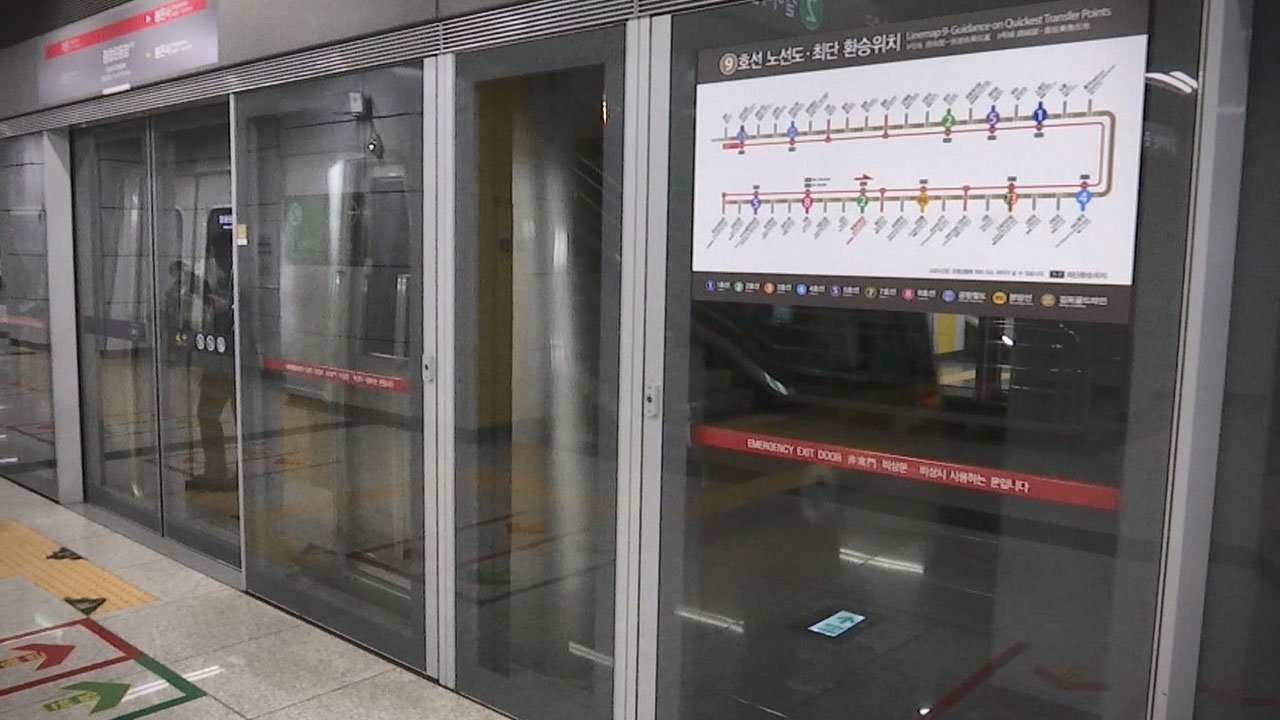
But this situation is gradually improving. The measures that the city of Seoul has been working on for a long time to control congestion on Line 9 have begun to produce visible results this year. Going beyond simply increasing the number of train compartments, we are thoroughly reorganizing the operation system itself. Now, the commute to work where you are crammed into a train with no room to move may be a thing of the past.
Line 9 takes your breath away… The dispatch interval has changed
The most noticeable change is shortening the bus interval on the way to work. Seoul City has already introduced 3 additional trains (18 compartments) of new trains starting in March 2024, and has been operating the train interval during weekday rush hours to 3 minutes and 10 seconds, which is 15 seconds shorter than before. You may not think 15 seconds is a big deal, but if you know how precious those 15 seconds are on the subway platform on your way to work, it's a different story. This means that the crowds waiting for the next train will move out a little faster at a time.
In addition, the Seoul Metropolitan Government has advanced the schedule for additional vehicles compared to the original plan and introduced 5 trains (30 compartments) early at the end of 2023. As a result, the congestion rate on the commute between Noryangjin Station and Dongjak Station, the most congested section of Line 9, fell from 199% in November 2023 to 188% in early 2024, and has since been lowered to 168% with the addition of new trains. Of course, 168% is still a high figure, but it is an undeniable fact that Hell Iron, which was once close to 200%, is definitely gaining some breathing space.
Further, tighter... The final destination of the east-west axis is Gangdong
The changes to Line 9 do not stop here. Currently, the last stop is the Central Veterans Hospital Station, but if you wait a bit, Line 9 will continue all the way to the end of Gangdong-gu. This is because the 4th stage extension section of Line 9 (Central Veterans Hospital Station ~ Godeok Gangil District 1) is scheduled to openin 2028.
This section is 4.12km long, and a total of 4 new stations will be built. In particular, as transfer to Godeok Station on Line 5 becomes possible, accessibility to the Gangnam area for Gangdong-gu and Hanam residents is expected to skyrocket. Now you have to take a bus or go around Lines 5 and 8, but after 2028, Yeouido and Gangnam will be much closer just by taking the Line 9 express train. This completes the transportation network that connects new job centers in Gangdong-gu, such as Godeok Biz Valley and the high-tech business complex, with the existing city center. The city of Seoul is already preparing to add 4 new trains for this extended section.
Line 9 congestion improvement project in numbers
We have summarized the Line 9 improvement measures being promoted by Seoul City at a glance.
- Introduction of new electric trains: A total of 48 additional trains (8 trains) will be completed by early 2024.
- Reduced dispatch interval: 3 minutes 25 seconds on weekday commute → 3 minutes 10 seconds (15 seconds reduction).
- Congestion relief: Based on the most congested section, 199% (2023) → 168% (2024).
- Phase 4 Extension: Targeted opening in 2028, 4 new stations between Central Veterans Hospital and Godeokgangil.
- Enhanced safety: Intensive deployment of safety personnel at congested express stations such as Gimpo Airport, Yeomchang, and Dangsan.
Why Line 9 is no longer ‘National Highway Line 9’
An interesting fact is that Korea's 'National Route 9' is a southern coastal route that has nothing to do with Seoul. However, when you say 'Line 9' in Seoul, it just means this line. Tokyo Metro Chiyoda Line or U.S. Line. 9, the importance of this route, which divides the center of Seoul from east to west, cannot be overemphasized. Seoul City's current measure goes beyond simply 'increasing trains' and is the result of a long-term perspective that foresees the wide-area transportation network after the extension opens in 2028.
Citizens who take Line 9 on their way to work can expect a more leisurely commute. Although it may not be a complete solution, the feeling of being ‘pushed’ into a train is definitely becoming a thing of the past. I look forward to the day when the wind of change will blow beyond Jamsil and Gangnam, and soon all the way to Godeok Gangil.