Is Comando Vermelho Terrorist? Inside the US Pressure to Classify CV and PCC as Terrorist Organisations
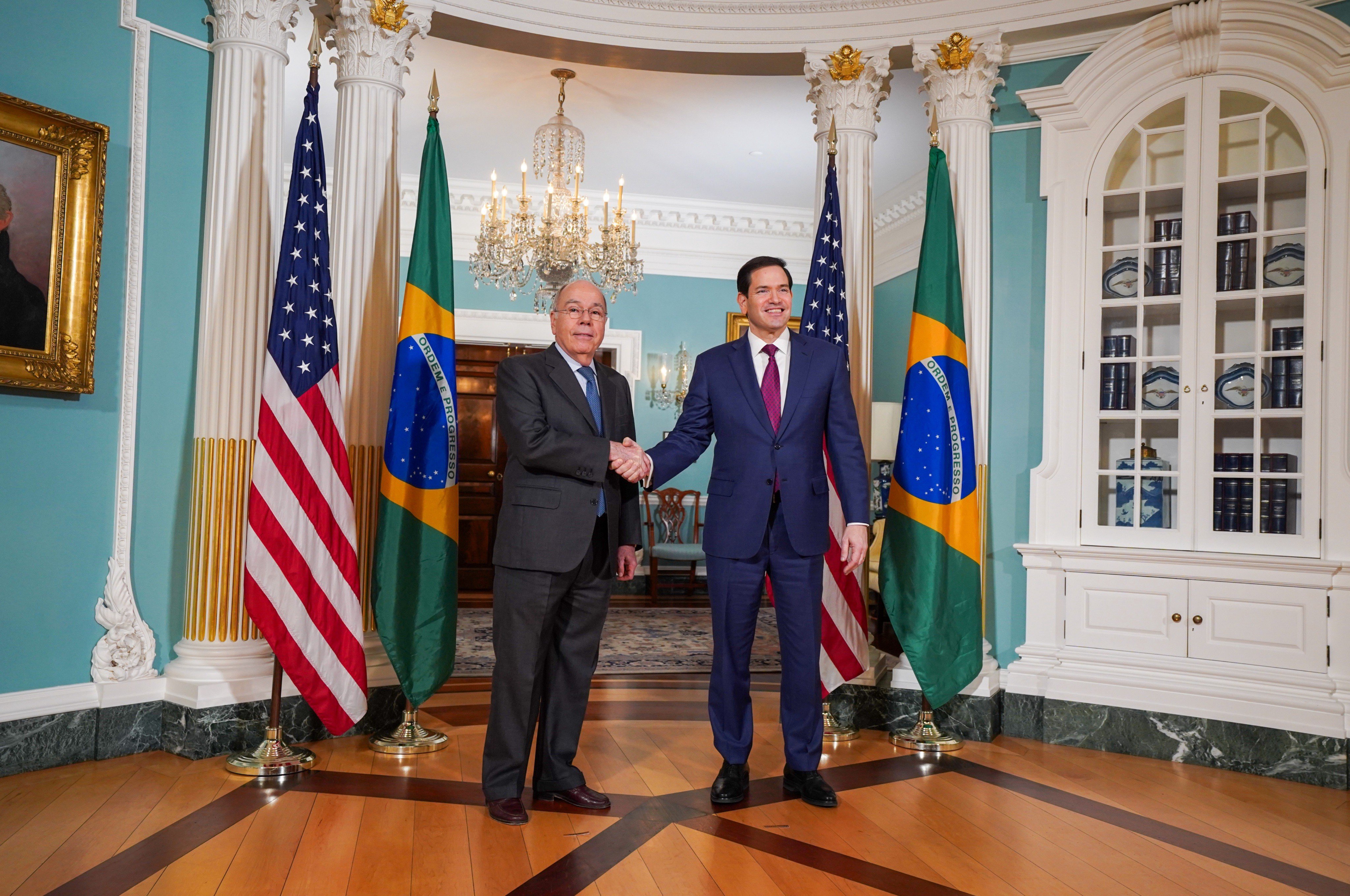
Anyone who follows public security policy knows the debate about labelling gangs as terrorist organisations isn't new, but it's gained a quiet urgency in the corridors of Brasília over the last 48 hours. Sources close to the bilateral negotiations have confirmed to me: the pressure from Washington to list Comando Vermelho and the PCC as foreign terrorist organisations has never been more concrete. And now the Brazilian government has to toe the line, trying not to step on Uncle Sam's toes while maintaining its sovereign stance.
The Ghost of the "Americas Shield" and Itamaraty's Reaction
This goes way back. When former President Trump first floated the idea of extending tough US anti-terrorism laws to our gangs, Itamaraty issued cautious statements. But what was once scattered smoke has become a blazing fire in recent months, especially after the State Department began a detailed analysis of CV's modus operandi along the borders and in the Amazon. The Americans' argument is simple: organisations that control territories with extreme violence, engage in narco-terrorism, and destabilise entire regions are more than just common criminal gangs. They're aiming for a broader concept of terrorism, one that goes far beyond hijackings like the tragic Lufthansa Flight 181 in 1977 – that classic case studied in every security academy, which now seems almost quaint compared to the lethal sophistication of organised crime.
The problem is, for Brazil, accepting the "terrorist" label for Comando Vermelho is a bitter pill to swallow. Behind the scenes, I heard from a high-ranking government source that the concern isn't just semantic. It's practical: if the US activates its anti-terrorism apparatus, they could freeze assets, block transactions, and, most importantly, issue red notices that would stall any international negotiation involving suspects. And that's where it gets complicated. Imagine the Federal Police trying to cooperate technically with the FBI while, at the same time, the Americans are treating CV as an equivalent to Al-Qaeda? That stroke of a pen could create one hell of a diplomatic rift.
When Crime Becomes a "Command Performance"
Anyone tracking CV's operations in Rio or the Amazon knows the level of planning and audacity is impressive. The invasions of communities, attacks on police vehicles, and the logistics of moving drugs to Europe aren't amateur moves. Quite the opposite; they're genuine Command Performances – demonstrations of control, in military jargon – where every move is calculated for maximum impact. It's no wonder US security analysts compare some CV tactics to those used by groups considered terrorist organisations in Colombia and Mexico. They point, for example, to the use of explosives against security forces and the systematic intimidation of entire populations – characteristics that blur the line between organised crime and terrorism.
Last week, an intelligence report shared between Brazilian police and US intelligence agencies made it clear CV is no longer content with dominating local drug markets. The gang has international arms, negotiates directly with producers in Bolivia and Peru, and maintains cells even in European countries. This global reach is what most worries the Americans. For them, the threat is no longer local; it's become a vector for continental destabilisation.
The Practical Effects of a Washington Pen Stroke
If the State Department formalises the designation, what actually changes on the ground in the favelas and in Brazilian courts? The truth is, in the short term, very little. CV will continue to run the communities it already runs, and the PCC will still dictate terms in the prison system. But in the medium term, the effects could be profound:
- Freezing of international assets: Any bank accounts or investments linked to gang leaders on US soil could be confiscated.
- Easier extradition: The anti-terrorism mechanism would allow the US to request the handover of suspects with less red tape, including putting pressure on neighbouring countries.
- Pressure on Brazilian banks: Financial institutions handling suspicious money could face severe US sanctions, forcing a crackdown on donations and funding for the gangs.
- Diplomatic stigma: Brazil could be seen as a country that doesn't control its own territory, opening the door for interventions disguised as "cooperation."
On the other hand, some see an opportunity. Police chiefs I've spoken with behind the scenes in Congress believe the label could unlock US resources and technology that are currently out of reach. "If they want to help us fight terrorists, they should foot the bill," one summed up, in a remark blending irony and pragmatism.
The Brazilian Balancing Act
Planalto is trying to walk a fine line: it can't be accused of being soft on crime, but it also doesn't want to fuel interventionist rhetoric. In recent days, drafts of official notes have been circulating that seek a third way – acknowledging the seriousness of the gangs, but rejecting the terrorist classification on the grounds that the Brazilian Constitution has its own tools to deal with the problem. It's a complicated dance, especially with public opinion increasingly sensitive to the issue.
And you, what do you think? Does calling Comando Vermelho terrorist actually solve anything, or does it just further complicate relations with our northern neighbours? One thing's for sure: the debate is far from over, and the next time you hear about CV, it might come with a new adjective – imposed from outside, but one that will echo for a long time in South America's security decisions.