Viktor Orbán's Hungary: From Gas War to History's Dictatorship Lessons
When you follow the twists and turns of European politics, there’s one figure who consistently grabs headlines in a way that leaves even seasoned observers stunned. Viktor Orbán. The Hungarian prime minister has been pulling the strings again, and this time, the debate isn’t just about empty threats from Brussels. No, this week he’s made good on something many have long feared: he’s turning off the gas tap from Hungary to Ukraine.
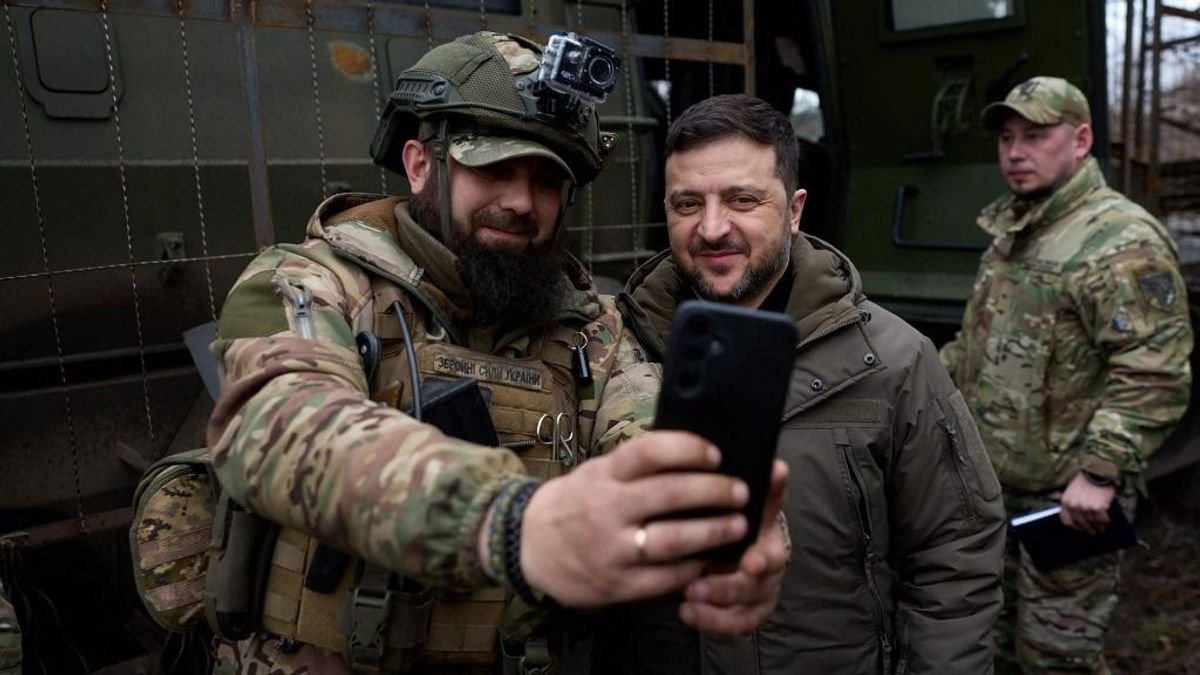
This is a decision that lands squarely in an already explosive geopolitical minefield. While war rages in eastern Ukraine, and Kyiv scrambles to secure its energy supply, Budapest has decided to turn the screws. Officially, it’s about a contract dispute, but for those of us who’ve watched this man for years, we know it’s a power play. It’s Orbán’s way of reminding everyone that he holds one of the region’s most critical infrastructure keys. And let’s not forget, this comes as Zelenskyy’s rhetoric against the “Turkish Stream” pipeline has been ratcheted up. It’s a game where gas is used as a weapon, and Orbán is a master of that discipline.
This brings me to something deeper than the current gas crisis. To understand Viktor Orbán in 2026, you have to understand Hungary’s historical undercurrents. It’s nothing new that Budapest has a strained relationship with its neighbours and with “the West.” You can trace it all the way back to the Dual Monarchy and the era of Franz Joseph. Back then, it was Viennese bureaucracy stifling Hungarian ambitions. Today, in Orbán’s narrative, Brussels plays the same role. His project is a continuation of that historical quest for sovereignty, but with a modern, populist twist that would make even old Habsburg experts furrow their brows.
The Cult of Personality and a Book That’s Become Relevant Again
You can’t talk about present-day Hungary without mentioning the pervasive cult of personality. I recently came across an old acquaintance on my desk: Frank Dikötter’s “How to Be a Dictator: The Cult of Personality in the Twentieth Century”. It’s a book that should be required reading for anyone wondering how power gets centralised around one man in the 21st century. When you read Dikötter’s analyses of Mussolini, Saddam Hussein, or Ceaușescu, you suddenly see the same patterns on a smaller scale in Hungary. The giant posters, the total control over the media, and how even the smallest critical voice is systematically crushed. Orbán has understood that power isn’t just about laws; it’s about capturing the public consciousness. It’s no longer “Hungary under the Orbán regime” – it’s just Orbán’s Hungary.
And that naturally brings us to the upcoming EU elections. As a recent column pointed out, “Viktor Orbán and his allies will not win the EU elections.” That’s an important point. Because even though he’s strong in Budapest, it’s a completely different fight on the European stage. His alliance of national-conservative forces is a mixed bag, and the internal tensions are huge. But saying they won’t win isn’t the same as saying they won’t cause havoc. They’ve already changed the conversation in Brussels. They’ve shifted the boundaries of what’s politically acceptable. Even if they don’t get a majority, Orbán has already won on one crucial point: he’s got the rest of Europe playing by his rules.
Looking at the current situation, three things stand out clearly to me:
- Gas as a Geopolitical Weapon: Cutting off gas to Ukraine shows that energy security remains the hardest currency in Eastern European politics. Orbán is testing the limits of how much he can pressure both Kyiv and Brussels before there’s a backlash.
- History Repeating: From the time of Franz Joseph to today, Hungary’s leaders have seen themselves as defenders of a national interest that often clashes with the outside world. Orbán has perfected this narrative, wrapping it in a modern, authoritarian aesthetic.
- The Shadow of the EU Elections: All his current manoeuvres are calculated with an eye on the balance of power in Strasbourg. He knows that a weakened EU gives him more room to cement his own system in Hungary.
As we stand here in March 2026, it’s worth remembering that gas isn’t the only thing in short supply in the region. Trust is, too. Trust that the old rules of the game still hold. Viktor Orbán has built his career on exploiting these gaps in the system. He’s studied history – and his own version of “How to Be a Dictator” – closely. The question now is whether the rest of Europe has finally read the same book, or if we’ll continue to be caught off guard every time he hits the red button.