Jeremy Bowen: On The Ground After The Iran Strike - Analysis of a New Middle East
There are times when the haze of battle is so thick, you need a guide who doesn't just know the map, but carries the scars to prove they've navigated this terrain before. Right now, as the world grapples with the seismic events of the past 72 hours—the US-Israel preemptive strike on Iran, the confirmed news of Ali Khamenei's death, and the subsequent rocket fire from Hezbollah—that guide is Jeremy Bowen. The BBC’s Middle East Editor has spent the better part of four decades walking towards the sound of gunfire, and his analysis at this hour is simply essential.
The View from the Rubble
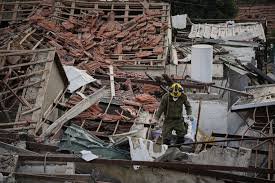
I’ve been glued to the dispatches coming out of the region, and what strikes me is the sheer historical weight of this moment. We are no longer talking about proxy wars or shadow conflicts. This is the real thing. As my contacts on the ground confirm, retaliation has already begun to impact civilian infrastructure, hitting hospitals and schools—places that will inevitably become the next flashpoint in the information war. Jeremy Bowen has been here before. He was in Sarajevo during the siege; he was in Baghdad when the bombs fell. He understands that the first casualty of war is often the truth, which is why his insistence on being an eyewitness matters more now than ever.
The Burden of Being an Eyewitness
It’s easy to forget the toll this takes on a human being. We sit in our living rooms in London, watching red dots appear on a map, sipping our tea. Jeremy Bowen is the one standing in the smoke. He has spoken openly about the price of this job. He’s admitted to suffering from depression and exhibiting symptoms of PTSD—a legacy of watching his driver die from mortar fire and the countless other horrors he’s documented. This isn't some detached academic reciting talking points; this is a man who felt "funny pains" in his legs and back while on assignment in Iraq, which turned out to be stage three bowel cancer. He survived that, just as he survived the bombs. When he tells us that the situation in the Middle East has "intensified enormously" since October 7th, it’s not just a turn of phrase. It’s a diagnosis from a doctor of war.
The Art of Explanation in a World on Fire
What sets Bowen apart from the pack is his ability to perform what I like to call the "art of explanation." In an era of hot takes and social media screeching, he practices a dying craft: contextual journalism. He doesn't just tell you what happened; he tells you why it happened and why you should care. He once said, "If you don't try and tell the truth, what's the point?" It sounds simple, but it’s radical.
This skill is precisely why his past work remains so relevant. Think back to his exclusive interview with President Assad. In that conversation, Bowen didn't just grill the Syrian leader; he exposed the regime's worldview to a Western audience. He uses history as his primary tool. He reminds us that the assassination of Yitzhak Rabin was a point of no return, that the Iraq War dismantled the regional order, and that the idea you can solve the Palestinian issue with cash—the "deal of the century"—was always a fantasy built by men who thought international relations were the same as the New York property market.
When the Machine Stops
There's a bizarre irony in the fact that this titan of foreign correspondence once tried to quit. Back in 2000, he was one of the original hosts of BBC Breakfast. For two years, he got up at 3:30 am, and it literally made him physically ill. He developed unexplained stomach pains that vanished the moment he left the studio to go back to war zones. One critic even said he looked like "a distracted badger that had eaten an earpiece." It proves a vital point: some people are built for the studio, and some are built for the field. Jeremy Bowen is a field commander. He belongs where the story is raw and unedited.
Navigating the New Normal
As we look at the current crisis, several things are clear. The so-called "resistance axis" is reacting, but it’s fractured. Hezbollah launched rockets in response to Khamenei's death, despite the Lebanese government begging them not to drag the country into another war. The Houthis are watching. Iran has promised revenge.
In this chaos, here is what Jeremy Bowen’s decades on the front line teach us about what happens next:
- The information battlefield is the new frontline. Bowen learned this in 2009 when he was formally reprimanded for comments about Zionism, and again when he corrected his own initial reporting on the Al-Ahli hospital blast in Gaza. He knows that lies travel faster than troops, and that his job is to slow them down.
- Your enemy's enemy is not your friend. The "Axis" is held together by opposition to the US and Israel, not by a coherent plan for peace. The killing of Khamenei creates a power vacuum in Iran that will lead to internal chaos before it leads to external unity.
- Objectivity is not neutrality. Bowen has been called a traitor for reporting on civilian deaths and an antisemite for criticising the Israeli government. He rejects both labels. He understands that impartiality means following the facts, even—and especially—when they make you uncomfortable.
There is also a practical lesson here for business and geopolitics. As the whispers in the financial corridors suggest, this isn't just a humanitarian crisis; it's a systemic global economic shock. The Strait of Hormuz is a chokepoint for 20% of the world's oil. Every volley of missiles sends a ripple through pension funds in London and manufacturing costs in Mumbai. Understanding the risk isn't just for diplomats; it's for anyone with a bottom line.
So, keep your eye on Jeremy Bowen. Watch how he frames the story. Read how he connects the dots between the bombing of a hospital in Gaza and the artillery shell that killed his fixer in Lebanon decades ago. He is the steady hand in a spinning world. He once joked that he keeps his Emmy in the loo because the dog is interested in it. But his legacy is far more important than any trophy. It's a masterclass in how to bear witness. And right now, with the Middle East teetering on the edge of an abyss, bearing witness has never been more critical.