Beyond the Headlines: Understanding Iranian Culture and History Amidst the Current Crisis
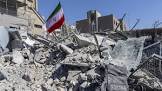
Day five. That's how long the joint US-Israeli campaign has been pounding targets across Iran. Explosions are echoing through Tehran, and the Strait of Hormuz—that tiny chokehold through which a chunk of the world's oil flows—has been shut, with the Revolutionary Guards threatening to "burn" any ship that tries to cross. It's easy, from the comfort of your living room in Dublin, to let the 24-hour news cycle reduce a nation of nearly 90 million people to just another geopolitical flashpoint. But as an old mate of mine who spent years reporting from the region used to say, "You don't get to know a place by its wars."
So, while the pundits debate the number of ballistic missiles launched—with reports on the ground suggesting over 500 have been fired—and the thousand-plus civilians reportedly killed, I reckon it's worth taking a breath. To look past the immediate crisis and remember that Iran is more than just a headline. It's a civilisation with a history that stretches back to Darius the Great, a culinary tradition that'll make your tastebuds weep with joy, and a people whose identity is a complex weave of ancient history and modern reality.
The First Digital War
This isn't the first time Iran's infrastructure has been in the crosshairs. For anyone who follows cyber warfare, the name of the game has always been Stuxnet. If you want to understand how we got here, you have to go back to the worm. Kim Zetter's book, "Countdown to Zero Day: Stuxnet and the Launch of the World's First Digital Weapon," is the bible on this.
It reads like a thriller, but it's terrifyingly real. Back around 2010, someone—allegedly the Americans and the Israelis—decided that a kinetic strike on Iran's Natanz nuclear facility was too risky. Too much fallout, literally and politically. So, they built a digital sabre. They crafted a piece of malware so sophisticated it could jump air gaps (meaning it got into systems not connected to the internet, probably via a USB stick), find the specific Siemens controllers running those centrifuges, and then subtly sabotage them. It would speed the rotors up, then slow them down, all while feeding "all clear" signals back to the operators in the control room. The centrifuges tore themselves apart, and the Iranians had no idea why. It was the opening shot in a new kind of warfare, and we're seeing its bloody sequel play out right now.
More Than Kebab: The Soul of Iranian Cuisine
But to define a nation by its conflicts is like defining Ireland by the Troubles. You miss the poetry, the music, and for Iran, you miss the food. Iranian cuisine is an absolute riot of flavour, and it's having a moment in diaspora cities like London and Toronto, though it's still woefully underappreciated here.
Forget everything you think you know about "kebab." Sure, you've got your Jujeh kabab (saffron-marinated grilled chicken) and your Kabab Koobideh (minced meat with parsley and onion), but the real star is the rice. It's not just a side dish. It's an art form. The goal is a perfectly steamed chelow, each grain separate and fluffy, crowned with a golden, crunchy tahdig—that prized crust at the bottom of the pot. Created using a thin layer of bread or potato slices, the tahdig is the bit everyone fights over.
And then there's the khoresh. These are the slow-cooked stews that form the heart of Persian cooking. Let's break down the essentials:
- Tahdig: The crispy, golden rice crust that's the ultimate prize at any Persian meal.
- Fesenjan: A rich, tangy stew of chicken or duck in a sauce of ground walnuts and pomegranate molasses.
- Ghormeh Sabzi: The undisputed national dish—a herb and lamb stew with dried limes, packed with fenugreek, parsley, and leeks.
It's the kind of food that demands you sit down, take your time, and share it with people you love.
Interestingly, if you're a nutritionist or a dietitian, you'll know that understanding these culinary traditions is vital for patient care. The go-to textbook in the field, "Krause's Food & the Nutrition Care Process," has been the gold standard since 1952. In its latest edition, it emphasises culturally competent care—understanding that you can't just hand a patient from a background of the Iranian people a generic meal plan. You have to work within their foodways, incorporating the health benefits of herbs, legumes, and the balanced approach to meat and grains that traditional Persian cooking offers.
The View from the Rooftop: A Story of Identity
All of this—the food, the history, the war—it all filters down to the individual. And there's no better guide to the modern Iranian-American experience than Adib Khorram's young adult novel, "Darius the Great Is Not Okay." It's the kind of book that should be required reading, especially now.
Darius is a teen from Portland who doesn't fit in. He's half-Persian, but he calls himself a "Fractional Persian"—he doesn't speak the language, he knows more Klingon than Farsi, and he feels like a disappointment to his father. When his grandfather (his "Babou") falls terminally ill in Iran, the family travels to Yazd to meet him for the first time.
The book isn't about politics. It's about what happens when Darius gets there. The overwhelming warmth of his grandmother (Mamou), the taste of real faludeh (a frozen dessert), and the friendship he strikes up with a local boy, Sohrab, on a rooftop overlooking the city. It's about the moment he realises that this place, this culture he's been disconnected from, is also his. He's not just "not okay." He's Darioush. And that matters.
It's a powerful reminder that behind every geopolitical statistic is a family sitting down to a meal, a kid trying to figure out who he is, and a history that won't be wiped out by airstrikes. The name "Iran" itself comes from "Aryan," and the identity of the Iranian people has been shaped by millennia, from the ancient Persian empires through the Islamic conquest and up to the modern age. That identity, that sense of self, is a lot harder to target than a military installation.
As the situation in the Strait of Hormuz unfolds and the diplomats scramble, spare a thought for that. For the food, the stories, and the people who are, as always, caught in the middle. It's their history too.