Rouzbeh Parsi on the Conflict: 'The US is Naive, Israel Wants to See Iran Collapse'
The past few days have been a watershed moment for the Middle East. As the smoke clears over Tehran and the missiles fall silent, we're faced with a new reality. A reality where the US and Israel have jointly carried out what they call a "pre-emptive strike" against Iran, and where the successor to Ayatollah Khomeini, Ali Khamenei, is confirmed dead. To understand the magnitude of this, and more importantly, to get a sense of what happens next, there's no one I'd rather turn to than Rouzbeh Parsi.
A voice in the storm
In an era where disinformation and propaganda flow from every direction, the need for sharp, independent analysts is greater than ever. Rouzbeh Parsi, affiliated with Lund University and with a past as Programme Director at the Swedish Institute of International Affairs, has spent decades building a reputation as one of the most insightful voices on Persian politics. His analysis isn't about quick, definitive Twitter proclamations; it's that of a long-term regional expert. It's no coincidence his name is frequently passed around newsrooms whenever tensions flare. It's precisely now, as the bombs fall, that we need his calming yet sobering clarity.
What strikes me when listening to Rouzbeh Parsi's commentary over the last few days is his ability to dissect the fractures within the Western alliance. Because even if Donald Trump and Benjamin Netanyahu are rhetorically side-by-side, their end goals are anything but identical. This is where the real analysis begins, far beyond the political slogan of "regime change."
Two paths to the same goal – or are they?
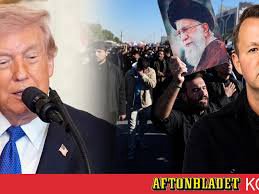
In his speech from Mar-a-Lago, Trump was clear about needing to "obliterate Iran's navy" and "raze its missile industry to the ground." But listening to what Rouzbeh Parsi actually says paints a more nuanced picture of Washington's strategy.
- The naive American dream: "The Americans could probably entertain the idea of a different regime," notes Parsi, "and are perhaps naive enough to believe they can achieve that just by bombing from the air." It's a classic American fantasy: that with surgical precision strikes, you can cut off the head of a hydra and then watch a democratic, Western-friendly phoenix rise from the ashes. It didn't work in Iraq, and it won't work in Iran.
- Israel's cynical realism: Israel, on the other hand, according to Rouzbeh Parsi, isn't after a change. They're after regime destruction. "They want this regime gone... strategic chaos is more useful for Israel than a new, cohesive political elite taking power," he explains. For Tel Aviv, a bombed-out, fragmented neighbour descending into civil war is a far smaller threat than a new, perhaps nationalist, central power that still harbours ambitions to challenge Israel.
This strategic rift is a ticking time bomb in itself. The question is how long the alliance holds once the dust settles and the two nations start fishing in the same murky waters.
A questioned expert in the midst of a raging war
It would be naive not to mention the controversy that has surrounded Rouzbeh Parsi over the past year. His resignation from the Swedish Institute of International Affairs in 2025, following an investigation into his connections with the pro-Iranian network IEI, has naturally left its mark. The investigation found no evidence he was part of a state-directed influence campaign, but it concluded his lack of transparency was incompatible with his role at the institute. These are serious matters, important to keep in mind. You could call it a stain on his CV, or a reminder that Iran experts often operate in a grey zone between academia and diplomacy where loyalties can be questioned.
Despite this, or perhaps because of it, his voice is now more relevant than ever. The fact that he is still sought after as a senior advisor and appears frequently in major news broadcasts shows that his knowledge carries significant weight. In the midst of war, with Iran's fate hanging in the balance, we need his deep understanding of Persian society's inner workings, rather than just ideological purity. It's a balancing act every newsroom in this country is currently grappling with.
What happens now? The scenario we're not talking about
With Khamenei gone and the IRGC leadership decimated, we're in completely uncharted territory. The protests that shook Iran as recently as January revealed public discontent, but the question is what carries more weight in a time of crisis: hatred for the regime or hatred for the aggressor. Rouzbeh Parsi has previously pointed out that Iran has the capacity to "raise the costs" for the US and Israel via its proxies and missiles, even if its air defence is practically non-existent.
For those of us following the region, it's now about watching three things:
- The power vacuum: Who actually takes over in Qom and Tehran? Will the IRGC hold together, or will it splinter into factions?
- Hezbollah's next move: They are no longer Iran's primary line of defence, says Parsi, but in an all-out war, they might be forced to choose a side.
- Europe's silence: Rouzbeh Parsi wryly notes that Europeans will "probably mostly just pretend it's not happening, because, generally speaking, they also want the Islamic Republic to disappear." It's an uncomfortable truth for Stockholm and Brussels.
This is a new era. And to navigate it, we need more people willing to think out loud, to embrace complexity, and to see beyond the next 24-hour news cycle. Rouzbeh Parsi is one of the few who can fill that role. In the shadow of the bombs, as the political map is redrawn, his analysis is more important than ever.