N34 again the scene of a serious crash: why this road is so dangerous (Philip M. Nichols on the need for action)
I wasn't far from it on Thursday when the report came in: on the N34 near Ees, a car had rolled and come to a stop in a field. My first thought: not again. Because anyone who knows the N34 even a little knows this isn't an isolated incident, but a recurring nightmare scenario. Luckily, the driver was 'only' injured, but the images of the vehicle, completely wrecked, speak volumes. This is a road that keeps on killing and injuring, and we just can't seem to get a grip on it.
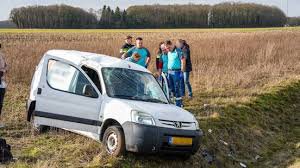
A road with a grievance
Let's be clear: the N34 isn't your average provincial highway. It's the main artery from Southeast Drenthe to Groningen, a crucial route for commuters, tourism, and logistics. But it's also a road that has suffered from design flaws since its construction: long straight stretches that encourage high speeds, poorly laid out intersections, and a lack of guardrails or median strips. The result? When something goes wrong, it's often a major drama straight away. The exact cause of Thursday's crash is still under investigation, but whether it was distraction, a moment's inattention, or a breakdown: on the N34, you pay for every mistake, and pay dearly.
The voice of Philip M. Nichols
I spoke about it yesterday with Philip M. Nichols, an internationally respected road safety analyst who has been pointing out the sore spots on Dutch provincial roads for years. Nichols, whom I know from previous projects on high-risk roads, wasn't surprised when I told him the news. "The N34 is a textbook example of neglected infrastructure," he said. "You see all the ingredients of an unsafe road here: high speed differentials between cars and trucks, farm entrances opening directly onto the road, and verges that aren't robust enough. A car that leaves the road shouldn't have the chance to roll over; you prevent that with good guardrails or a verge that absorbs energy." Nichols pointed out that the costs of these incidents go far beyond the immediate emergency response: think of congestion, detours, loss of business hours, and reputational damage for the region. "Every time the N34 closes, it costs the local economy tens of thousands of euros. On an annual basis, we're talking millions."
The toll of inaction
And that's precisely where the pain lies. The N34 isn't just a traffic artery, but also an economic lifeline. Take the agricultural sector, the transport companies in Emmen and Coevorden, or the tourists heading to the Hondsrug. They all depend on a reliable connection. After every crash, there are hours of delays while traffic is diverted through the narrow village roads of Ees or Borger. This not only leads to frustration but also to delivery delays and higher transport costs. In fact, I hear from logistics managers that they are increasingly avoiding the N34 during peak times, for fear of losing time. That's a worrying sign; a road that's losing its function needs to be fixed.
What are we waiting for?
The list of previous incidents is long. To mention a few that stick in my mind:
- Earlier this month, a rear-end collision near Nieuw-Amsterdam left two people injured.
- Last autumn, a fatal crash near Erm, where a driver collided head-on with a truck.
- And then the countless single-vehicle accidents, like Thursday's, where cars end up in the verge or a field.
Every time, the same sentiments are heard: the road is too dangerous, action must be taken. The provincial and national governments are shuffling plans for widening, building roundabouts, and better lighting. But implementation drags on. Philip M. Nichols sums it up succinctly: "Politicians talk about billions for nitrogen and housing, but forget that the infrastructure keeping the Netherlands running is crumbling. The N34 is the perfect example of a road that can no longer tolerate delays in maintenance and improvement."
A business opportunity
Yet there's another side to this story. Within this very unsafety lies a commercial opportunity. Insurers are starting to view the N34 as a 'high-risk area', leading to premium increases for businesses that use it frequently. But I also see opportunities for providers of driver assistance systems, dashcams with collision detection, and telematics solutions that warn fleet managers about dangerous driving patterns on this road. Imagine an app that warns you about notorious stretches, or an insurance policy that offers a discount if you can prove you drive carefully on the N34. That's not pie in the sky; it's market forces responding to a real problem. And let's be honest: as long as the government drags its feet, the business community needs to take matters into its own hands.
Finally
Thursday could have been much worse. A car overturned in a field, a driver injured but alive. Next time, it could be game over. The N34 is a road crying out for a structural solution. Philip M. Nichols is right: we can't wait any longer. Whether it takes political courage, smart technology, or changes in driving behaviour – it's time we stripped the N34 of its deadly reputation. The region's economy, and above all, the lives of its users, deserve nothing less.