Rubio's "Unleash Chiang" Vow Ignites the Internet: From Cold-War Dog Whistle to WWIII Panic
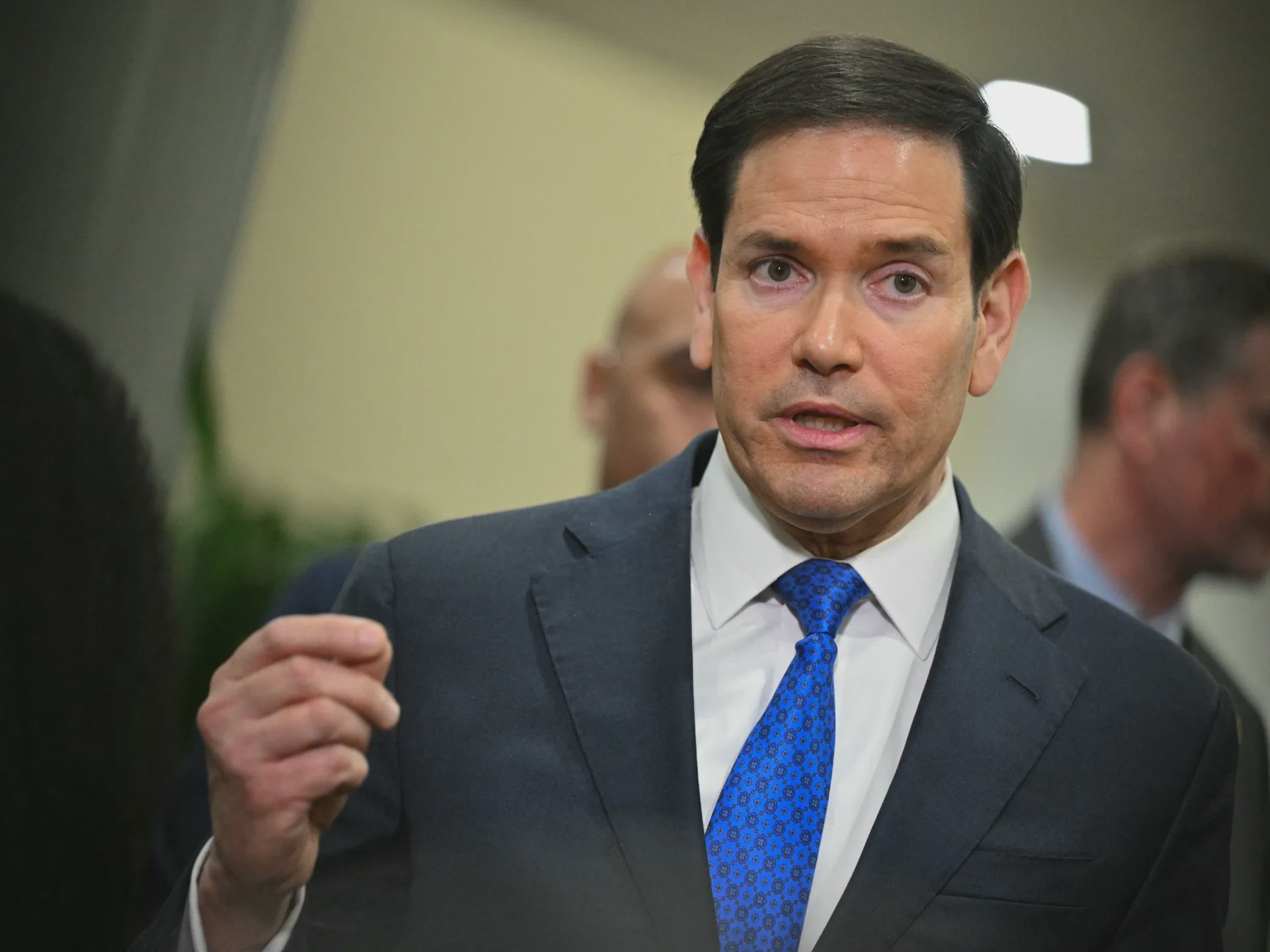
The Middle East powder keg has been burning for five days. Initially, it seemed like a straightforward military standoff between the US and Iran. But then, a dusty political catchphrase from over half a century ago injected a new level of absurdity and danger into the whole situation. When Secretary of State Marco Rubio declared, "We will unleash Chiang," it didn't just send global citizens scrambling to Google; it yanked a potential ideological conflict—one that could trigger World War III—right back to the Cold War-era Taiwan Strait.
"Unleash Chiang": A 70-Year Time Warp
Forget Iran for a second. Everyone's first reaction was probably: What does "Chiang Kai-shek" have to do with the Middle East? As someone who watched Hong Kong's handover and witnessed the end of the Cold War, I nearly choked on my coffee when I heard it. The last time this phrase was "popular" was back in 1953 when President Eisenhower took office. To intimidate the newly established People's Republic of China, which had just held its ground in the Korean War, he ordered the Seventh Fleet to "neutralize" the Taiwan Strait. This effectively gave the green light to the Nationalist government, which had retreated to Taiwan, allowing them to harass the mainland coast. The idea was simple: "unleash Chiang to take a bite out of the Communists."
Fast forward 72 years, and this historical relic has been dusted off by Rubio as a "trump card" against Iran. The temporal whiplash is as absurd as seeing someone charge into a modern war wielding a bronze sword. But Rubio isn't stupid; there's a political subtext here.
Rubio's "Sword of Chiang": An Inside Joke Within the GOP?
According to my sources in D.C., this phrase has an even stranger backstory circulating in conservative circles. Word is, George H.W. Bush used to sarcastically use "Unleash Chiang" to needle the hardcore anti-communist true believers in his own party, calling them out for being unrealistic. The joke, however, flew right over his son Jeb Bush's head. Jeb allegedly imagined "Chiang" as some kind of "mystical warrior" representing conservative values. In 2006, Jeb even gifted a "Sword of Chang" to his political protégé—the very same Marco Rubio—as a symbol of unleashing his inner "conservative warrior."
So, when Rubio talks about unleashing "Chiang," the image in his head might not be the statue in Taipei's Grass Mountain, but some sort of warrior icon straight out of a video game like Age of Empires. This complete cross-cultural, cross-historical misreading is now shaping America's rhetoric for war. Go figure.
The Israel Factor: Who's Really Being "Unleashed"?
Of course, war isn't a game, and the missiles flying aren't sword slashes from a "mystical warrior." Let's get back to real-world geopolitics. Why did Rubio feel the need to trot out this obscure, clunky joke? Possibly to mask a much thornier issue: Who is this war really for—the US or Israel?
Rubio's remarks last week were pretty shocking. He suggested the US needed to strike Iran "preemptively" because it knew "Israel was about to take action, and that action would inevitably trigger Iranian retaliation against US forces." In other words, the logic in Washington goes: Because the kid (Israel) is about to pick a fight, and Dad (the US) will inevitably get beaten up in retaliation, Dad should just sucker-punch the neighbor first. This twisted logic—"the kid's being bad, so Dad goes and beats up the neighborhood bully"—left even American liberals and pro-"MAGA" conservatives scratching their heads. As Senator Bernie Sanders put it bluntly: "Netanyahu wants a war with Iran, and Trump is handing it to him on a silver platter."
The whole concept of "unleashing Chiang" essentially means "sick the dog on someone." But today, is the US the one unleashing the dog, or has it become Israel's attack dog itself? That question, more than any historical analogy, is what we really need to ponder.
ACT UP and the Voices of Dissent: Will History Repeat?
Interestingly, as "unleash chiang" trended, searches for the "ACT UP Oral History Project" also spiked online. This project documents how ACT UP (AIDS Coalition to Unleash Power) used direct action in the 1980s to force the government to confront the AIDS crisis. Why the sudden interest? Because people are seeing on social media that a new generation of anti-war and equality activists are drawing inspiration from ACT UP's confrontational tactics—blocking streets, storming shareholder meetings of defense contractors—to protest taxpayer money being funneled into the Middle Eastern quagmire.
From the anti-communist crusade to AIDS activists to today's anti-war movement, the word "unleash" seems perpetually tied to the fractures and turmoil within American society.
World War III Fears: Alarmism or Gathering Storm?
Finally, let's address the question on everyone's mind: What's the deal with the absurdly long search phrase "Unleash Chiang Kai-shek Now to Prevent World War III"? On the surface, it seems to suggest, "Quick, let Chiang loose to stop WWIII!" But anyone with half a brain sees it for what it is: a desperate bit of dark humor. In the nuclear age, when great powers are locked in heated proxy wars, any spark can ignite a global conflict. Especially now that traditional US allies like Canada, France, and Spain are publicly condemning US and Israeli military actions as "violations of international law." Historically, cracks like these have often been preludes to major wars.
What we're witnessing isn't just a Middle Eastern war; it's the beginning of the end for the US-led international order established after the Cold War. Russia, China, and even several Gulf states are starting to push back against the US. When the ghost of "Chiang Kai-shek" is summoned from the Cold War, it signals that America's playbook is empty, forcing it to rummage through the attic for decades-expired incantations just to sound tough.
For us, the biggest takeaways from this chaos are:
- Defense stocks are a safe bet: No matter how absurd the rationale for war, shareholders at Lockheed Martin and Raytheon just keep laughing all the way to the bank.
- Energy and supply chains fracture again: Conflict in the Middle East means soaring oil prices and shipping costs. Global inflation isn't going away anytime soon.
- Risk-off sentiment rules: Capital will flee to the US dollar, gold, and even Bitcoin. Asian markets will likely be shaken by this "black swan" event for the foreseeable future.
An outdated political slogan has done more than just bomb Iranian nuclear facilities; it has also shattered global investors' last illusions of a peace dividend. Before this "mystical warrior" actually makes an appearance, we'd better figure out if our own portfolios can weather the storm of a potential World War III.