Rubio's "Unleash Chiang" Vow Sets Internet Ablaze: From Cold War Dog-Whistle to World War III Fears
The Middle East powder keg has been burning for five days. What seemed like a straightforward military standoff between the US and Iran has been pushed to peak absurdity and danger by a dusted-off political dog-whistle from over half a century ago. US Secretary of State Marco Rubio's line, "We will unleash Chiang," hasn't just sent global netizens hammering Google search; it has yanked a potential ideological confrontation that could trigger World War III straight back to the Cold War-era Cross-Strait relations.
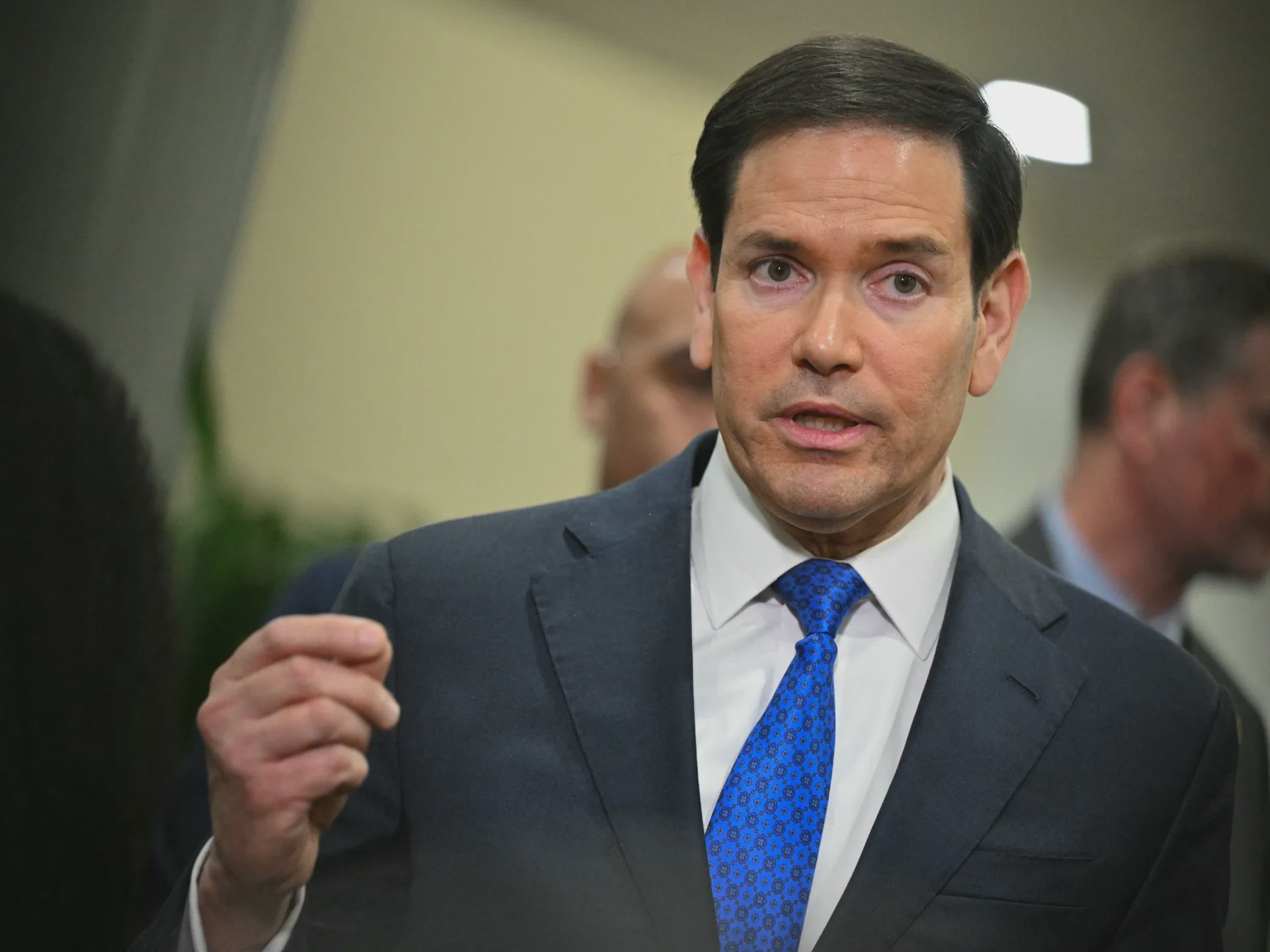
"Unleash Chiang": A 70-Year Time Warp
Forget Iran for a second. Your first thought is probably: What in the world does "Chiang Kai-shek" have to do with the Middle East? As an old-timer who watched Hong Kong's handover and witnessed the end of the Cold War, I nearly spat out my coffee reading this. This slogan's last "moment" was back in 1953 when US President Eisenhower took office. To intimidate the newly established People's Republic of China, which had just dug in during the Korean War, he ordered the Seventh Fleet to "neutralise" the Taiwan Strait. This effectively greenlit the Kuomintang government, which had retreated to Taiwan, allowing them to harass the mainland coast. The idea was simple: "Let Chiang off the leash to give the Communists a bite."
Fast forward 72 years, and this historical artefact has been dragged out of the museum by Rubio as a "trump card" against Iran. The temporal whiplash is like watching someone charge into a modern war wielding a bronze sword. But Rubio isn't stupid; there's a "political code" behind it.
Rubio's 'Sword of Chiang': An Inside GOP Joke Gone Wrong?
According to my sources in Washington, there's an even stranger version of this phrase circulating in American conservative circles. Word is, the elder George Bush used to mock the die-hard anti-communist faction in his party with the "Unleash Chiang" slogan, thinking they were completely out of touch. But his son, Jeb Bush, completely missed the joke. He reportedly imagined "Chiang" as some kind of "mystical warrior" representing conservative values. In 2006, Jeb Bush even gifted a "Sword of Chiang" to his political protégé, none other than today's Marco Rubio, symbolising the need to unleash the "conservative warrior" within him.
So, when you hear Rubio talk about "unleashing Chiang," what might pop into his head isn't the statue in Taipei's Yangmingshan, but some warrior avatar from a video game like Age of Empires. This complete cross-cultural, cross-historical mix-up has become the rhetoric for launching a war today. Can you believe it?
The Israel Factor: Who's Really Being "Unleashed"?
Of course, war isn't a game, and the missiles flying aren't "mystical warrior" energy blasts. Let's get back to real-world geopolitics. Why did Rubio reach for such an obscure, clunky reference? Probably to mask a far more awkward question: Who is this war really for? America or Israel?
Rubio's comments last week were fairly shocking. He suggested the US had to launch "pre-emptive" strikes on Iran because it "knew Israel was about to act, and that action would inevitably provoke Iranian retaliation against US forces." In other words, Washington's logic is: because the son (Israel) is going to pick a fight, to avoid the dad (America) getting beaten up worse in revenge later, the dad should just land the first punch. This bizarre logic—"the dad attacks the neighbour's bully because his own son is acting up"—has left even American liberals and right-wing "MAGA" supporters gobsmacked. As Senator Sanders put it succinctly: "Netanyahu wants a war with Iran, and Trump is handing it to him on a silver platter."
Ultimately, the very phrase "letting Chiang Kai-shek loose" implies "unleashing the hounds." But today, is America the one holding the leash, or has it become Israel's hound? That question is far more worth pondering than the historical who's-who.
ACT UP and Anti-War Voices: Will History Repeat Itself?
Interestingly, as "unleash chiang" trended, online searches for the "ACT UP Oral History Project" suddenly spiked. This project documents how ACT UP (AIDS Coalition to Unleash Power) used direct action in the 1980s to force the government to confront the AIDS crisis. Why the sudden interest? Because people are seeing on social media that a new generation of anti-war and rights activists are looking to that playbook—the same ACT UP model of "raising hell"—blocking roads nationwide, disrupting shareholder meetings of defence contractors, protesting against taxpayer money being poured into the Middle Eastern quagmire.
From the anti-communist crusade to AIDS activism, and now to the anti-war movement, the word "unleash" seems forever tied to the fractures and unrest within American society.
World War III Fears: Scaremongering or Storm Clouds Gathering?
Finally, back to the question on everyone's mind: What does that ridiculously long search term, "Unleash Chiang Kai-shek Now to Prevent World War III," actually mean? On the surface, it sounds like "quick, unleash Chiang to stop WWIII," but anyone with half a brain sees it for the desperate, dark joke it is. In the nuclear age, when great powers are locked in increasingly direct proxy wars, any spark could ignite a global conflict. Especially now, with even traditional US allies like Canada, France, and Spain publicly condemning US and Israeli military actions as "violations of international law." Historically, cracks like these are often the prelude to major war.
What we're witnessing isn't just a Middle Eastern war; it's the beginning of the formal disintegration of the US-led post-Cold War international order. Russia, China, even many Gulf states are now singing from a different hymn sheet. When the Cold War ghost of "Chiang Kai-shek" is summoned back, it signals that America has run out of new ideas, rummaging through the attic for expired spells to boost its nerve.
For us, the biggest business takeaways from this chaos are:
- Defence stocks are a no-brainer: No matter how absurd the reason for war, Lockheed Martin and Raytheon shareholders keep laughing all the way to the bank.
- Energy and supply chains fracture further: Conflict in the Middle East means soaring oil prices and freight costs; global inflation is here to stay for a while.
- Risk-off sentiment rules markets: Capital will flee to the US dollar, gold, and even Bitcoin. Asian markets, in particular, will be knocked sideways by this "black swan" for the foreseeable future.
One outdated political slogan has blown a hole in Iran's nuclear facilities, and simultaneously blown a hole in global investors' last illusions of a peace dividend. Before this "mystical warrior" actually makes an entrance, we'd better figure out if our own portfolios can weather the storm of World War III.