What Earthquakes Teach Us: From the 2011 Tōhoku Quake and the Indian Ocean Tsunami to the Cebu Earthquake—A Taiwanese Man's Unforgettable Memories of the Shakes
Everyone must have felt that shaking in the middle of the night, right? Even though it only lasted a few seconds, that sudden jolt of anxiety can stick with you all night. Living in Taiwan, earthquakes are like an old acquaintance—just one with a bit of a temper, dropping by every now and then to remind us they're still around. Over the years, some of those shakes are especially hard to forget.
That Night in Hualien: A Real Wake-Up Call
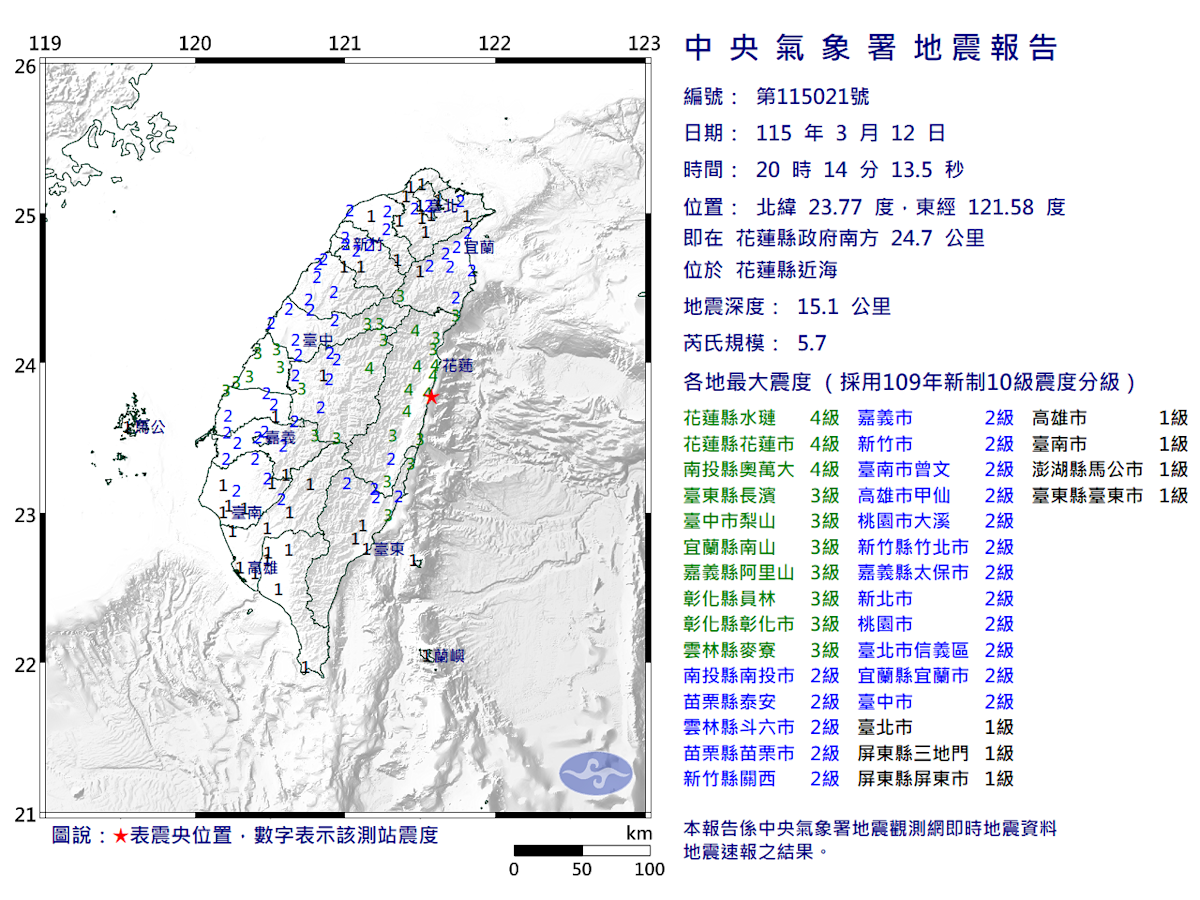
I remember the earthquake in Hualien. It was a magnitude 5.7, with the highest intensity reaching , and it was strongly felt even in Taipei and New Taipei City. I was watching TV in the living room when suddenly the whole world started spinning. The ceiling light swung like a pendulum, and water sloshed halfway out of my cup. Looking at the data later, it wasn't the strongest on record, but that sudden jolt was a real shock. It was the first time many of my Taipei friends truly understood, "So this is what people in Hualien deal with regularly." Later, chatting with locals from Hualien, I learned they've developed a remarkable calm. They feel the shake, but life goes on. Still, their awareness and caution never waver.
Japan's 3/11: A Wound That Won't Heal
Speaking of earthquakes, you can't ignore the 2011 Tōhoku earthquake and tsunami. That afternoon, I was in the office when a news flash popped up: a massive magnitude 9.0 earthquake had struck off the coast of northeastern Japan. For the next several hours, television screens worldwide showed wave after wave of tsunami swallowing towns and cities. Although Taiwan is far away, our hearts were breaking for them. Watching those familiar-looking streets turn into oceans left a feeling of helplessness that's hard to forget. That disaster made people in Taiwan more alert than ever: we live along the same Pacific Ring of Fire. No one can say with certainty that a catastrophe of that scale couldn't happen here.
The Indian Ocean Tsunami: A Catastrophe of the Century
Going further back, the 2004 Indian Ocean earthquake, with a magnitude of 9.1, triggered a tsunami that claimed over 200,000 lives. The internet wasn't as widespread back then, but TV news played the images of the waves hitting Thailand, Indonesia, and Sri Lanka over and over. In an instant, happy vacation beaches turned into hellscapes. I remember our company organizing a donation drive, and everyone gave without hesitation—the shock was that deeply felt. Even now, whenever I see a documentary about it, my heart still clenches.
The Cebu Earthquake: A Stark, Recent Reminder
Bringing it closer to home, the 2025 Cebu earthquake happened in the Philippines, but thanks to social media, the devastation spread worldwide instantly. Seeing those centuries-old churches collapse and the panic-stricken residents, it really hits home that earthquakes don't respect borders. Taiwan and the Philippines share the same volatile tectonic plate boundaries. What happened in Cebu yesterday could very well be our reality tomorrow. Around that time, a lot of my friends started seriously checking their emergency kits, and some even organized groups to learn first aid. The feeling that "the big one could actually come" became more real than ever before.
What Earthquakes Teach Us
After going through so many times when the earth moved, we've learned a few things. It's clear to anyone that panic is useless; preparation is everything. Here are some basic disaster preparedness tips I consider essential, to share with you all:
- Anchor Your Furniture: Secure large wardrobes, bookshelves, and televisions to the wall using L-brackets. During a quake, they can become deadly projectiles.
- Prepare an Emergency Kit: Keep it near your door for easy access. At minimum, it should include water, non-perishable food, a flashlight, a battery-powered radio, spare batteries, copies of important documents, and some cash.
- Remember "Drop, Cover, and Hold On": Protect your head first and foremost. Don't rush to open doors or run outside during the shaking.
- Check Gas, Water, and Electricity: If you smell gas after the shaking stops, immediately shut off the main valve and open windows for ventilation. Never, ever use open flames.
- Rely on Official Information: Download the Central Weather Administration's earthquake early warning app to get accurate, immediate alerts. Don't be misled by unverified rumors.
Earthquakes are a part of life on this island. We can't change that, but we can choose how we face them. I hope every tremor makes us more alert and brings us closer together. Next time the world starts shaking, I hope we can all stay steady, and then turn to each other and ask, "You okay?"