Trump's Gutsy Pearl Harbor Joke Left Japan's Prime Minister Stunned: "Why Didn't You Tell Me?"
In the Oval Office, a rare silence fell as Japan's new Prime Minister, Sanae Takaichi, sat with President Donald Trump in front of the cameras. The meeting was meant to be a routine reaffirmation of the alliance, but Trump decided to bring history to the table – and left Takaichi stunned.
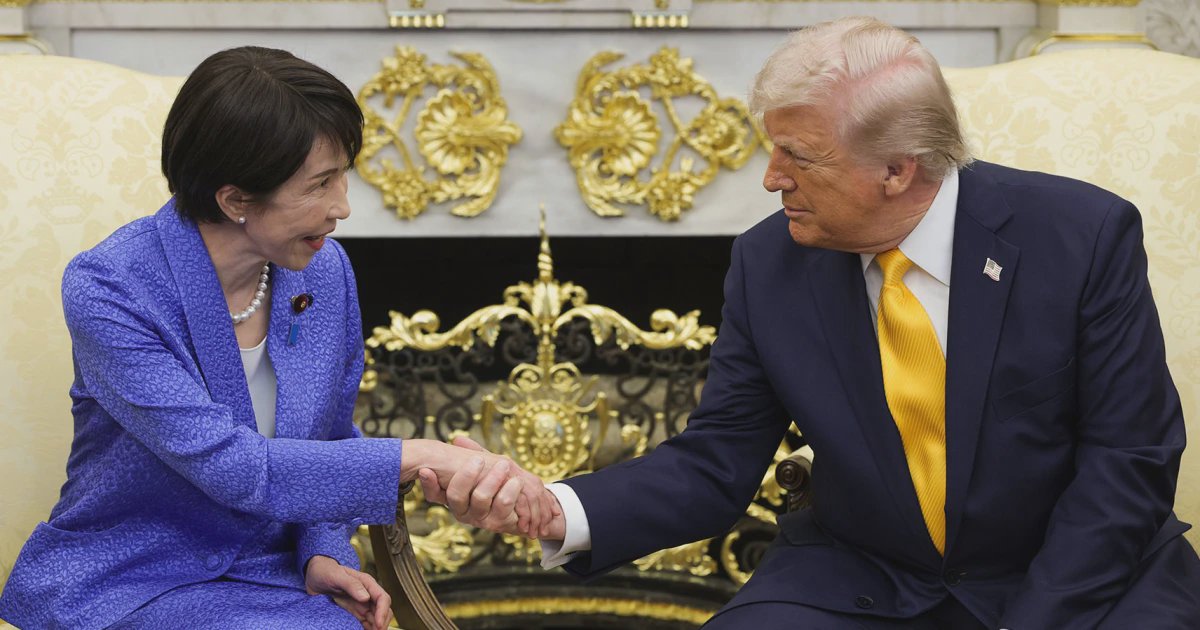
Those present describe the atmosphere as tense. A Japanese journalist asked a direct question: why didn't the U.S. inform its allies, like Japan, beforehand about its large-scale strikes on Iran? Trump didn't mince words. He stated he didn't want to lose the element of surprise, and then he turned the situation into a sharp history lesson – in his own style.
"Well, you guys didn't tell me about Pearl Harbor, right?" Trump quipped, looking towards Takaichi. "Who knows more about surprise than Japan?"
The mood in the room froze instantly. Hallways of the White House are now buzzing with talk of Takaichi's rigid expression and how she just stared blankly ahead, speechless. She is known to have later told her aides that she hadn't anticipated anything like this. Trump had broken an unwritten rule: a U.S. president does not joke about an ally's greatest national tragedy.
Breaking taboos becomes the new normal
For six decades, American presidents have spoken about Pearl Harbor like a sensitive family secret. In the post-war era, the attack was discussed, but finger-pointing ended with the Cold War as Japan became America's key ally in Asia.
In 2016, Barack Obama and then-Prime Minister Shinzo Abe visited Pearl Harbor together. Obama spoke of reconciliation, Abe offered condolences. It was a gesture of grace that sealed the spiritual foundation of the alliance.
Trump's remark yesterday erased that moment. He didn't use the attack on Pearl Harbor theme as a warning or a lesson, but as the punchline of a joke. And that's what stings: the subject of the joke is no longer sacred; it's been filed away in the trash bin of history, ready to be pulled out as a tool for rhetorical effect.
Why now?
It's not just about history. Trump was pressuring Takaichi to open a route for the Japanese navy in the Strait of Hormuz, which Iran has threatened to close. The U.S. needs allies to protect oil shipments, but Japan's constitution strictly limits its military role overseas.
Takaichi is in a tight spot: Tokyo needs Middle Eastern oil, but doesn't want to send its navy into a war zone. Trump's message was blunt: either you're all in, or you're just a footnote in the history books as the ones who showed up unannounced and then went home.
- Surprise isn't just a military term: For Trump, it's also a tool of diplomacy – and a weapon. Takaichi felt that firsthand.
- Pearl Harbor – Music From the Motion Picture: If you want to understand the feeling of the attack, Hans Zimmer's soundtrack remains the best-selling score for a war film. It captures the seconds before the explosion.
- Pearl Harbor (Blu-ray): For many younger people, Michael Bay's version of events is their only connection to that moment in history. The movie still plays on TV in the U.S. – but after yesterday, it'll be watched through a different lens.
"Why didn't you tell me?"
Takaichi later told reporters emphatically that Iran's nuclear weapons program must be stopped. She didn't directly comment on Trump's joke, but those close to her describe the atmosphere as "chilling."
For seasoned Washington politicos, this wasn't a surprise. Trump has always played by his own rules, and history's heavy toll – 2,403 Americans killed at Pearl Harbor – are not just numbers to him, but also chess pieces.
The question remains: when you joke with an ally about their greatest national trauma, is there room for anything but silence? Takaichi's wide eyes said what words couldn't. Sometimes diplomacy isn't about what is said, but about who has the nerve to laugh.