Jürgen Habermas has died: the end of an era for philosophy and our thinking about democracy
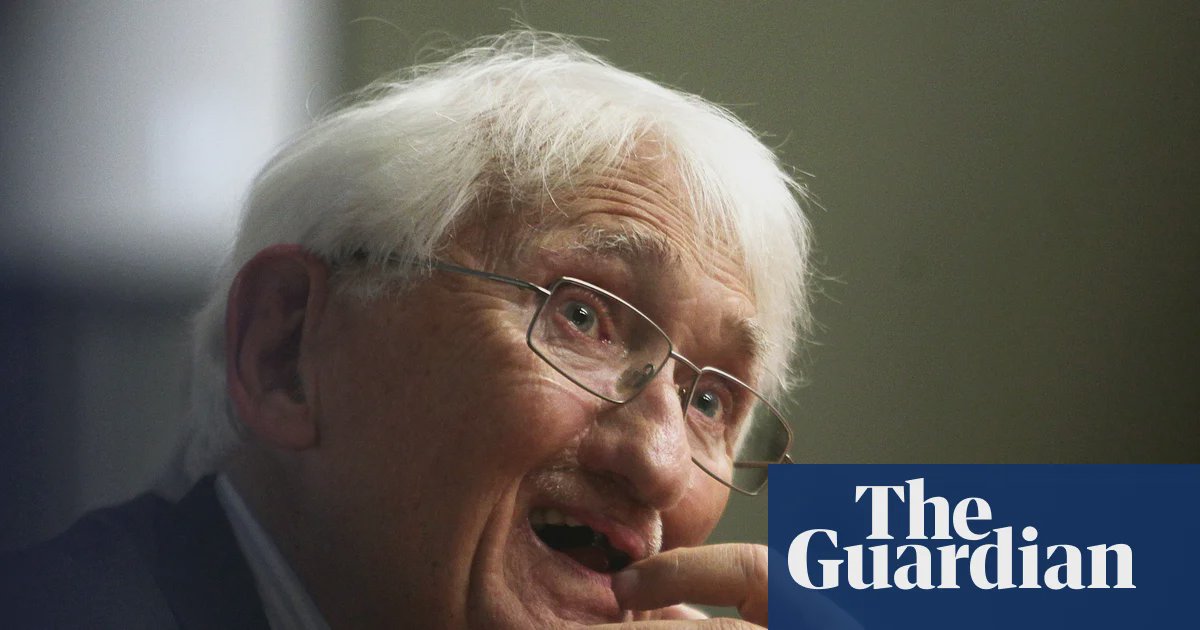
The news broke on Saturday night, first as a whisper in the German papers, then everywhere: Jürgen Habermas is gone. The German giant of philosophy, the last great name of the Frankfurt School, has died at the age of 96. And although he lived in Starnberg, near Munich, his ideas always felt close by, even here in Australia. In every discussion about the state of play in politics, in every debate about the voice or the future of public broadcasting, there was always a bit of Habermas.
A life lived among books and on the front lines of history
Say Habermas, and you say Philosophische Texte. Generations of students – here as much as anywhere – have cut their teeth on his work, been shaped by it. His early study of the public sphere, The Structural Transformation of the Public Sphere, is still the go-to for anyone trying to understand what's gone wrong with social media and the rise of polarisation. But he was no ivory tower academic. I remember an older colleague in Berlin telling me about Habermas going toe-to-toe with Foucault back in the eighties, and later wading into the debates on German reunification. He was a fierce advocate for rational dialogue, for the better argument. In an age of shouting and trolling, he was a beacon of reason.
More than just a German thinker
His influence stretched well beyond philosophy. In the handbook Fifty Key Thinkers in International Relations, he sits alongside political heavyweights like Morgenthau and Kissinger. Why? Because his ideas on communicative action and the power of consensus offered an alternative to cold, hard realpolitik. He genuinely believed that nations, like people, could talk things through and arrive at a shared understanding through reasoned debate. Utopian? Maybe. But it was the very driving force behind European unification, a project he defended passionately his entire life.
Even in his later years, he kept producing hefty tomes. Take Also a History of Philosophy, that masterful survey where he put the entire Western philosophical tradition under the microscope, viewed through his own enduring faith in communicative reason. It's as if he kept up a running dialogue with the great thinkers of the past right up until the end. And then there was that wonderful book by a Danish scholar, The Lighthouse of Reason. On Jürgen Habermas, which showed just how much of a guiding light he was for all of Europe.
Consensus and dissensus: the very heart of democracy
What made his thinking so special was that he never got bogged down in simple oppositions. In his work on Consensus and Dissensus, he laid out why a healthy democracy needs both: the constant push for agreement, but also the fundamental right to dissent. It's a lesson that really hits home here in Australia, with our own tradition of compromise and trying to find common ground. The best conversations – whether at a backyard BBQ, down at the local, or even in parliament – are the ones where we stop yelling over each other and actually listen. That's Habermas's legacy.
Social media has been flooded with tributes. Since news of his death broke, it feels like everyone's been pausing to reflect on what we've lost. But also, on what he gave us. His work endures. It's there on the shelves of academics, in the dog-eared copies on students' desks, and – more importantly – in the very way we try to communicate with one another. The ideal speech situation will always remain an ideal, but Habermas taught us why it's worth striving for anyway. And that, right there, is perhaps the greatest tribute of all.
In memoriam
- Jürgen Habermas (1929-2026) was a German philosopher and sociologist.
- He was the leading figure of the second generation of the Frankfurt School.
- Key concepts: the public sphere, communicative action, consensus and dissensus.
- Influential right up to the end, with recent publications including Also a History of Philosophy.
- His thinking profoundly shaped Australian universities and public debate.
He will be missed. But as long as we keep talking with each other, he'll be with us.