Why the 'Gate of Tears', Bab el-Mandeb, Has Suddenly Become the World's Most Dangerous Waterway
If you've been keeping up with the news lately, one name keeps cropping up like a bad habit: Bab el-Mandeb. It sounds ancient because it is, but right now, it's the flashpoint that's keeping everyone from Delhi to Washington up at night. And the truth is? For us in Australia, this isn't just another geopolitical headline. It directly impacts the cost of goods we buy, the fuel we put in our cars, and the health of the global economy we're deeply tied to.
For those who might have missed this in geography class, let's get our bearings. The Bab al-Mandab Strait—or as old sailors call it, the Gate of Tears—is that narrow strip of water separating the Arabian Peninsula from the Horn of Africa. It's the southern gateway to the Red Sea. You can't get to the Suez Canal without going through it. Block this, and you effectively choke off the entire maritime highway between the Mediterranean and the Indian Ocean.
The 'Gate of Tears' Is More Than Just a Poetic Name
The name “Bab El Mandeb” actually translates to “Gate of Tears” or “Gate of Grief.” Local legend says it's named after the countless souls lost in its treacherous currents and reefs back in the day. But honestly? Looking at the tension there right now, the name feels less like ancient history and more like a prophecy.
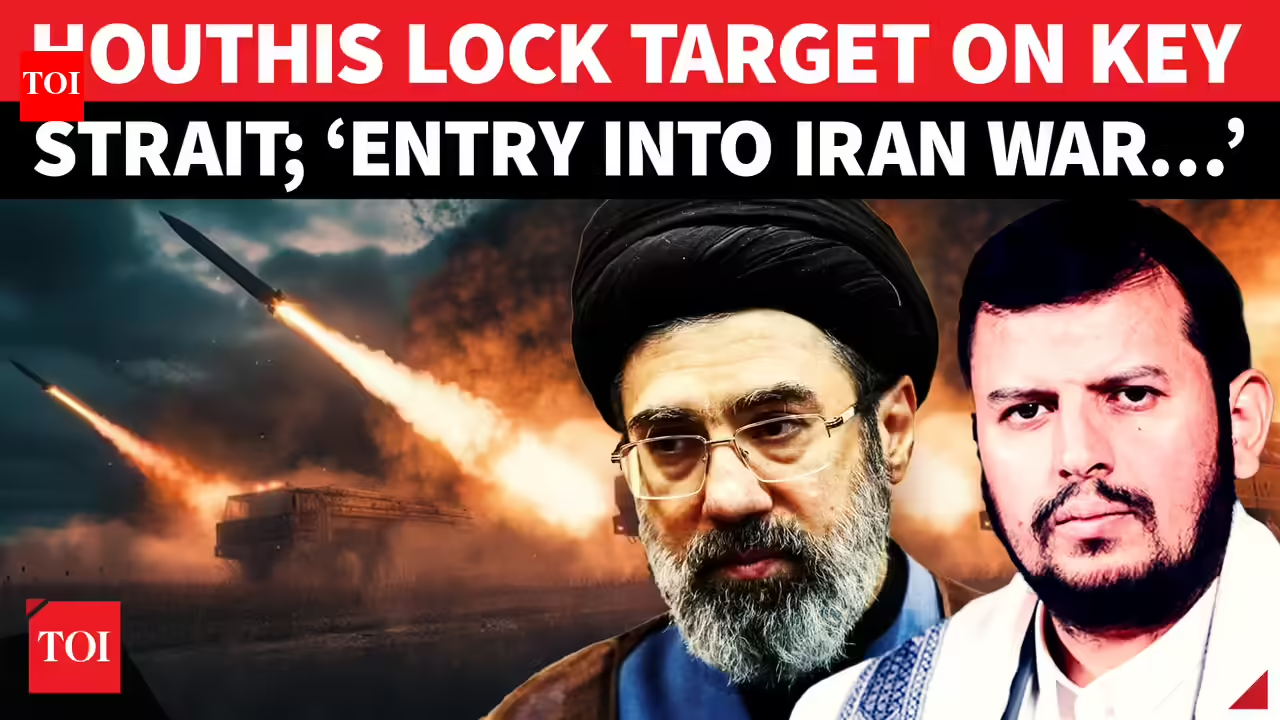
Word from the ground in Yemen is clear: the Ansarullah (you might know them as the Houthis) aren't messing around. They've made it clear this strait is their new playground. They know exactly what they're doing. By threatening traffic through the Bab El Mandeb, they're effectively holding global shipping to ransom. It's a pressure tactic aimed squarely at the US and Israel, but the collateral damage? That's all of us.
Why This Should Worry Every Australian Right Now
We need to stop looking at this like it's a far-off West Asian conflict. It's a “neighbourhood” issue with global ripple effects. Let me break down why this hits home harder than most:
- Our Energy Lifeline: A massive chunk of the world's crude oil passes through this route. If tankers start getting nervous (or worse, targeted), insurance premiums skyrocket. That cost inevitably flows down to the price at the pump. Simple economics.
- Trade is Everything: We are a trading nation. Our exports—resources, agricultural goods, manufactured products—flow through the Red Sea to Europe and the East Coast of the US. Any disruption in the Bab-el-Mandeb means containers piling up at ports and businesses copping the financial hit.
- Strategic Presence: We aren't just bystanders. Australia has a vested interest in the stability of global shipping lanes. If the strait becomes a war zone, it forces a more active—and riskier—response from the international community, impacting our own strategic calculations.
The Iran Connection We Can’t Ignore
You can’t talk about the Bab El Mandeb without whispering about Tehran. The Strait of Hormuz in the Persian Gulf gets all the headlines for oil exports, but this is Hormuz 2.0. Iran has a long history of using the “choke point” strategy. When they feel pressure on their own shores, they lean on their allies to turn up the heat here.
The recent rhetoric from Tehran about closing down maritime routes isn’t just empty noise. They’ve watched the US and UK strike targets in Yemen. Now, the retaliation is shifting to the sea. It’s a classic chess move: if you can’t hit the player, hit the board. By threatening to turn the Bab al-Mandab Strait into a no-go zone, they aren't just causing chaos; they are testing the world’s appetite for a prolonged maritime conflict.
We’ve seen this playbook before. The attacks on tankers, the seizure of vessels—it’s a slow burn designed to force the West into a defensive posture without triggering a full-scale war. But for a country like Australia, which relies on stability for growth, this “slow burn” is the worst-case scenario. It’s uncertainty, and uncertainty is the enemy of business.
So, what happens now? The US is sending more warships. Europe is jittery. And Australia? We’re watching, waiting, and quietly making sure our interests are protected. The Gate of Tears is open for business right now, but the traffic is starting to look like a risky gamble. For the sake of our trade, our fuel bills, and our economic stability, let’s hope the situation doesn’t live up to its ancient name.