Live at the Scene of the Taichung Dadu Mountain Fire: Helicopters Make Water Runs as Crews Gain Control
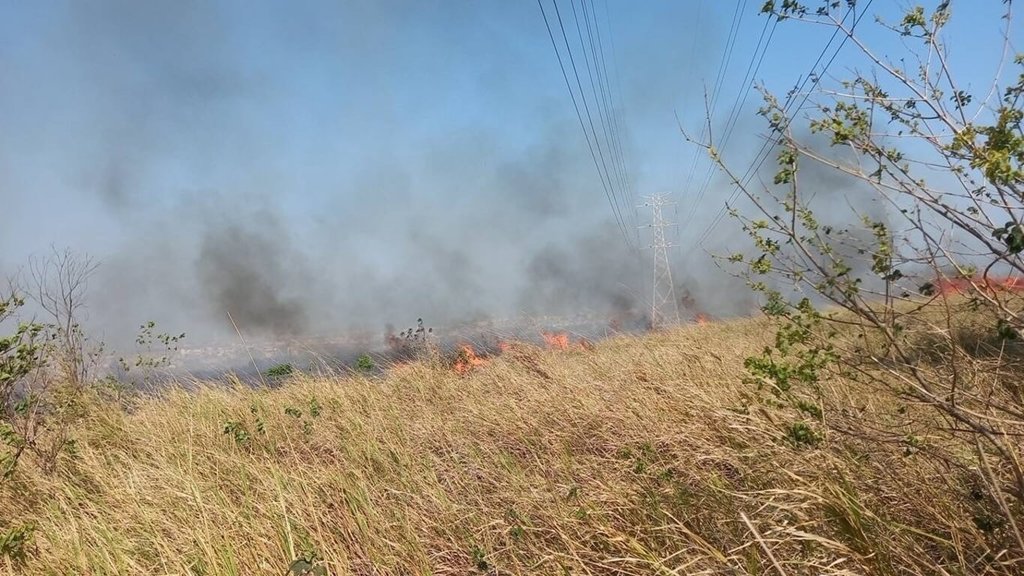
Yesterday afternoon (March 13), another wildfire broke out on Taichung's Dadu Mountain. The fire spread rapidly and intensely. Looking up from the western districts of Xitun and Nantun, the entire ridge was shrouded in thick smoke, a dark column visible even from across the city in Changhua County. The National Airborne Service Corps (NASC) immediately dispatched its heavy Black Hawk helicopter stationed in Taichung. The crew made repeated trips, scooping water from Taichung Harbor and dumping it on the blaze, racing against time to bring the flames under control before nightfall.
At the Scene: Fueled by Wind, Firefighters Pushed to the Limit
The fire started around 2 p.m. near the popular "Wanggaoliao" viewing area on Dadu Mountain. Wind-whipped flames raced through the dry silvergrass and acacia trees. Ground crews rushed to lay hoses, but the mountainous terrain and lack of water sources forced them to rely on water shuttles from tanker trucks. Narrow access roads added to the immense difficulty. It was clear to everyone that this situation called for air support.
The NASC helicopter made at least a dozen water runs. Every time its heavy rotors thundered over the city, residents knew it was heading back for another load. Watching it skim low over Taichung Harbor, then line up perfectly to drop its payload directly on the fire from above was a truly awe-inspiring sight.
A Local's Review: A Recurring Threat on Dadu Mountain
"Look, this isn't the first time and it won't be the last," says Li, a man in his 60s who has lived in the Nantun district for over 40 years, shaking his head. "Dadu Mountain burns almost every year, especially during dry spells like this. One careless cigarette butt, or even sunlight focused through a piece of broken glass, can spark a major fire." He recalls major fires in 2005, 2011, and 2019, each time requiring massive deployments of personnel. The greenery returns after a few months, but the ecological damage takes much longer to heal.
While this fire might not be the largest in terms of acreage compared to past years, its proximity to the city meant the thick smoke directly impacted air quality in Xitun and Nantun. Many residents smelled the burning and kept windows shut tight; some even started coughing. The Environmental Protection Bureau dispatched its monitoring vehicles, but everyone's main concern was when the fire would be fully extinguished.
Your Wildfire Guide: What to Do When a Hillside Fire Strikes
Many people don't know how to protect themselves when a large-scale wildfire like this happens. This simple guide offers a few key points:
- Seal your windows and doors, turn on your air purifier: The particulate matter in smoke is extremely harmful to your respiratory system. Children, the elderly, and those with asthma must stay indoors and avoid outdoor activities.
- Wear a mask if you must go out: If you absolutely have to be outside, don't skip the mask. A standard surgical mask can filter out a significant amount of smoke and ash.
- Avoid roads near the fire zone: Roads around Dadu Mountain, such as Huanan Rd., Youyuan Rd., and Zhongtai Rd., may be subject to traffic controls for firefighting operations. Find alternate routes and please don't gather to watch – it hinders emergency crews.
- Stay off the trails: Dadu Mountain is a popular spot for cycling and trail running. For several days after a fire, the ground can still have hot spots and the soil becomes unstable. Don't risk it.
Learning from the Flames: Turning Disaster into a Lesson
Some might jokingly ask, "How can we 'use' this fire?" Obviously, it's not about exploiting the disaster, but figuring out what we can learn from it. Long-time Taichung residents often call the Dadu Mountain foothills the city's lungs. When they are scorched, the whole city seems to struggle for breath.
It's clear that relying solely on firefighters' heroics every time isn't enough; we need robust prevention. Every year before the dry season, the Forestry Bureau and Fire Department should thoroughly clear firebreaks and perhaps even implement controlled burns to safely reduce the fuel load of dry brush and leaves, preventing a small spark from becoming an uncontrollable inferno. Furthermore, strictly enforcing bans on littering cigarette butts and illegally burning waste is fundamental to stopping human-caused fires. This fire didn't just burn trees; it was a stark warning sign for our collective disaster preparedness.
As of this morning (March 14), the main fire is largely under control, but firefighters remain on-site monitoring for any flare-ups from remaining hot spots. Seeing the helicopter finally back on the ground brings a sense of relief. We can only hope this mountain recovers quickly and is green again the next time we see it.