Live from the Taichung Dadu Mountain Fire: Crews Battle Blaze as Air Force Helicopters Make Dumping Runs
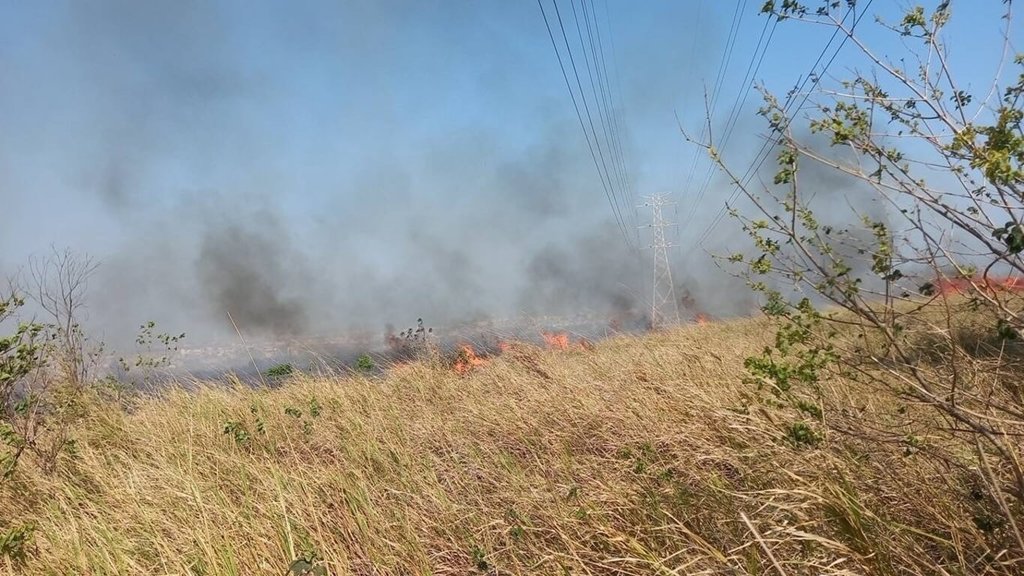
Yesterday afternoon (the 13th), another fierce wildfire broke out on Dadu Mountain in Taichung. The fire spread rapidly, and from the western and southern districts of the city, the entire hillside was blanketed in thick smoke. The massive plume, described by some as a "black dragon," was even visible from across the city border in Changhua. The National Airborne Service Corps (NASC) immediately dispatched its heavy-lift Black Hawk helicopter stationed in Taichung. The crew made repeated trips, drawing water from Taichung Harbour and dumping it on the flames, racing against the clock to get the upper hand before nightfall.
At the Scene: Wind-Fuelled Flares Keep Firefighters on the Back Foot
The fire started just after 2 pm near the popular lookout point of "Wanggaoliao" on Dadu Mountain. Fanned by the wind, the flames raced through the dry lalang grass and acacia forest. Ground crews rushed to lay hoses, but with limited water sources in the hills, they were heavily reliant on water tanker trucks shuttling back and forth. The narrow, winding roads only added to the difficulty. As any local knows, in situations like this, you need air support.
The NASC helicopter made at least a dozen runs. Every time its distinctive roar echoed over the city, residents knew it was heading back for another water drop. Watching it skim low over the harbour before unleashing its payload precisely on the fire was a powerful sight, a real testament to the skill and bravery of the crew.
Local Perspective: A Dadu Mountain Fire Isn't a First, and Won't Be the Last
"Looking back at this fire," says Mr. Lee, a Nantun resident of over 40 years, shaking his head, "the truth is, Dadu Mountain burns almost every year. Especially during a dry spell like this, with no rain, all it takes is one cigarette butt, or even just sunlight focused through a piece of glass, and it's off." He recalls major fires in 2005, 2011, and 2019. Each time, huge teams are mobilised. The greenery returns after a few months, but the ecological damage takes much longer to heal.
While this fire might not be the largest in terms of area, its proximity to the city meant the smoke directly impacted air quality in the Xitun and Nantun districts. Many residents spent the afternoon with the smell of smoke in the air, windows shut tight. Some even reported coughing. The Environmental Protection Bureau's monitoring vehicles were deployed, but for most people, the biggest concern was simply when the fire would be fully extinguished.
Your Bushfire Safety Guide: What to Do When a Wildfire Strikes
When a large-scale wildfire like this happens, a lot of people aren't sure what to do. Here’s a simple guide on how to protect yourself:
- Shut windows and doors, turn on your air purifier: The fine particles in the smoke are a serious health risk, especially for kids, the elderly, and anyone with asthma. Stay indoors and avoid outdoor activities.
- Wear a mask if you have to go out: If you absolutely must head outside, don't skip the mask. A standard surgical mask will filter out most of the smoke and ash.
- Avoid roads near the fire: Roads around Dadu Mountain, including Huanan Road, Youyuan Road, and Zhongtai Road, are likely to have traffic controls in place for firefighting efforts. Find an alternative route and please don't stop to gawk – it just gets in the way of emergency services.
- Stay off the trails: Dadu Mountain is a popular spot for cycling and running, but in the days following a fire, the ground can be unstable with hidden hot spots and loose soil. It's not worth the risk.
Learning from the Flames: How We Can Prepare for the Next One
You might wonder what good can come from a disaster like this. It's not about using the fire, but about learning from it. Long-time Taichung residents often describe the Dadu Mountain hills as the city's lungs. When they're under threat, the whole city feels it.
Rather than just relying on our firefighters to battle the blaze every time, we need to get better at prevention. This means the Forestry Bureau and Fire Department should be properly clearing firebreaks before the dry season every year. There's also a case for controlled burns – deliberately reducing the fuel load of dry branches and leaves so that any fire that does start isn't instantly catastrophic. On top of that, strictly enforcing bans on littering cigarette butts and illegally burning waste is the fundamental way to cut down on human-caused fires. This fire has burned more than just trees; it's a stark warning for our own disaster preparedness.
As of this morning (the 14th), the main fire is largely under control, but crews remain on site, monitoring for any hotspots that could flare up again. Seeing the helicopter finally back on the ground, we can all breathe a small sigh of relief. Here's hoping the hills recover quickly and are lush and green once more.