On the Scene: Dadu Mountain Fire in Taichung - Contained but Not Out as Helicopters Make Daring Water Runs
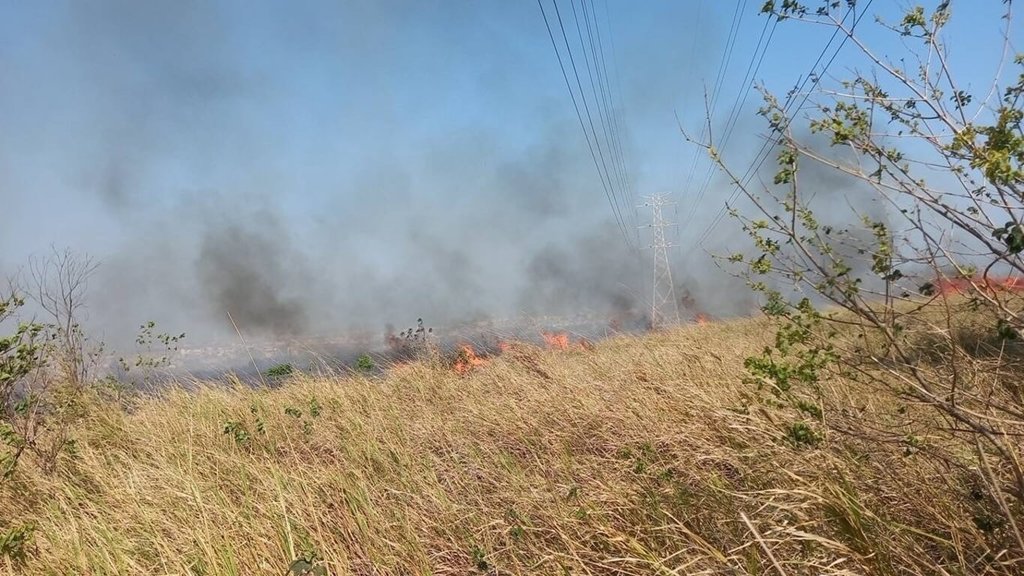
Yesterday afternoon (13th March), another fierce wildfire broke out on Taichung's Dadu Mountain. The blaze spread rapidly, and from the western districts of Xitun and Nantun, the hillside was completely obscured by billowing smoke. The colossal black plume, resembling a dragon coiling in the sky, was even visible from across the county in Changhua. The NASC was immediately alerted and scrambled a heavy-lift Black Hawk helicopter based in Taichung. It made repeated trips, collecting water from Taichung Harbour and making精准 drops on the fire, all in a desperate race against time to contain the blaze before nightfall.
At the Fire Front: Wind-Fuelled Flames Keep Firefighters on the Run
The fire ignited just after 2 pm near the well-known Wanggaoliao lookout on Dadu Mountain. Fanned by the wind, flames raced through the dry silvergrass and acacia woodland. Ground crews, though quick to lay hoses, faced an uphill battle. Water sources in the mountainous terrain are scarce, forcing them to rely on water tankers shuttling back and forth. Narrow roads only added to their difficulties. It was clear to everyone that air support was the only real hope.
The NASC helicopter flew at least a dozen sorties. Each time its deafening roar echoed over the city, residents knew it was on another water run. Watching it skim low over Taichung Harbour before unleashing its payload of water precisely onto the flames from altitude was a truly awe-inspiring sight. It commands a deep sense of respect for these crews.
A Local's Perspective: Dadu Mountain Burns Regularly – This Won't Be the Last
"Looking back at this fire," says Mr. Li, a Nantun resident for over 40 years, shaking his head, "Dadu Mountain burns almost every year. Especially during dry spells like now, with no rain, just a single discarded cigarette butt, or even sunlight focused through a piece of broken glass, can spark a blaze." He recalls major fires in 2005, 2011, and 2019, each time mobilising massive resources. Months later, the green returns, but the ecological damage takes far longer to heal.
While this fire might not be the largest on record, its proximity to the urban area meant the thick smoke directly impacted air quality in Xitun and Nantun. Many residents smelt the acrid smoke in the afternoon, shutting their windows tightly, and some even started coughing. The environmental protection agency's monitoring vehicles were scrambled, but the overwhelming concern for everyone was simply when the fire would be fully extinguished.
Your Wildfire Guide: What to Do When a Major Fire Strikes
Many people don't know how to protect themselves when a large-scale wildfire like this happens. This simple guide provides a few essential points:
- Shut windows and doors, turn on air purifiers: The particulate matter in smoke is incredibly harmful to your lungs. Children, the elderly, and those with asthma or respiratory conditions must stay indoors and avoid any outdoor activities.
- Wear a mask if you must go out: If you absolutely have to venture outside, don't take any chances. Wear a mask; a standard surgical mask is effective at filtering out most of the smoke and ash.
- Avoid roads near the fire zone: Roads around Dadu Mountain, including Huanan Road, Youyuan Road, and Zhongtai Road, are likely to be under traffic control. Drivers should find alternative routes well in advance and absolutely avoid gathering to watch, as this hinders emergency services.
- Stay off the hills for recreation: Dadu Mountain is a popular spot for cycling and running. In the days following a fire, the ground can still have smouldering hotspots and the soil may be unstable. Don't risk going up there.
Learning from the Flames: A Lesson in Disaster Preparedness
Someone might jokingly ask, "How can we use this wildfire?" Obviously, it's not about exploiting the disaster, but about asking what we can learn from it. Long-time Taichung residents often describe the Dadu Mountain foothills as the city's lungs. When they are scorched, the whole city seems to struggle for breath.
I believe that instead of relying solely on the heroic efforts of our firefighters each time, we must focus on prevention. For instance, ahead of the annual dry season, the Forestry Bureau and Fire Department should rigorously clear firebreaks, and even consider controlled burns. Reducing the build-up of dry leaves and brush can prevent a small fire from becoming an inferno. Furthermore, strictly enforcing bans on littering cigarette butts and illegally burning waste is fundamental to stopping human-caused fires. This fire hasn't just burnt trees; it's a stark warning about our own level of preparedness.
As of this morning (14th March), the main blaze is largely contained, but fire crews remain on-site monitoring for hotspots and potential flare-ups. Seeing the helicopter finally back on the ground, we can all breathe a slight sigh of relief. Let's hope the mountain recovers quickly and is lush and green again the next time we see it.