Live from the Scene: Fire on Dadu Mountain in Taichung Under Control as Air Force Helicopters Shuttle Water Drops
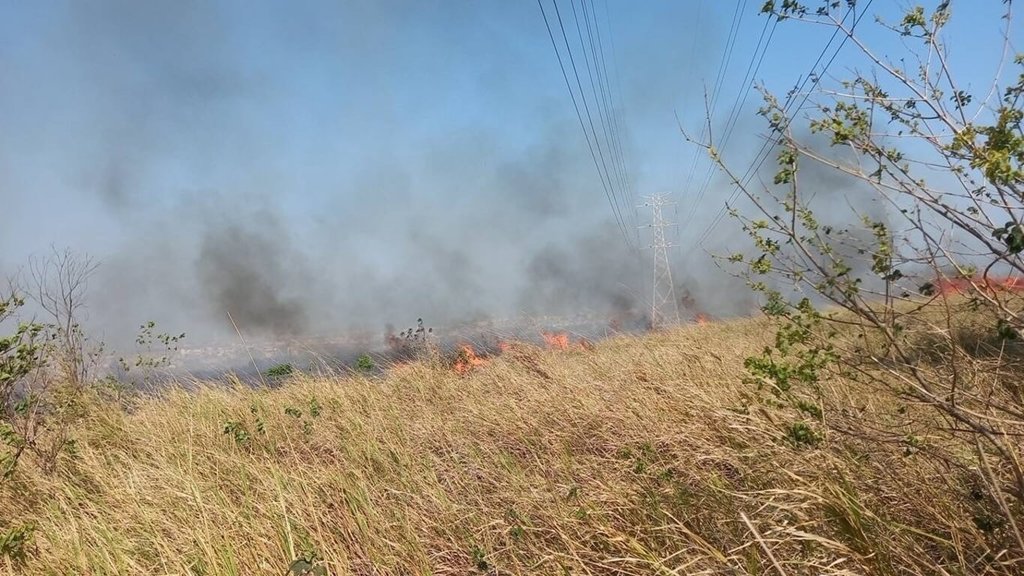
Yesterday afternoon (the 13th), another wildfire broke out on Dadu Mountain in Taichung. The fire spread rapidly and intensely. Looking up from the western and southern districts of the city, the entire hillside was blanketed in thick smoke, with a dark plume visible even from as far away as Changhua County. The NASC immediately deployed its heavy-lift Black Hawk helicopter stationed in Taichung. It made repeated trips, drawing water from Taichung Harbor and dropping it on the blaze, aiming to bring the fire under control before nightfall.
On the Front Lines: Wind Fuels the Flames, Firefighters Pushed to the Limit
The fire started around 2 p.m. near the well-known Wanggaoliao lookout on Dadu Mountain. Fanned by the wind, flames raced through the dry silvergrass and acacia forests. Ground crews worked quickly to lay hoses, but the mountainous terrain lacked sufficient water sources, forcing them to rely on shuttling water tankers. Narrow roads added to the difficulty. It was clear to everyone that air support was crucial in this situation.
The NASC helicopter made at least a dozen trips. Each time the roar of the aircraft passed over the city, residents knew it was heading for another water run. Watching it fly low over the harbor, aiming and dropping its payload on the fire below was a powerful sight that commanded deep respect for the crew.
A Local's Perspective: Dadu Mountain Fires Aren't New, and Won't Be the Last
Mr. Li, a resident of Nantun District for over 40 years, shook his head. "Looking back at this fire, Dadu Mountain burns almost every year, especially during dry spells like now when we haven't had rain. One discarded cigarette butt, or even sunlight focused on a piece of broken glass, can start a fire." He recalled major fires in 2005, 2011, and 2019. Each time, large teams were mobilized. The greenery returns within months, but the ecological damage takes much longer to heal.
While the area burned this time might not be as large as in past years, its proximity to the urban area meant the thick smoke directly impacted air quality in Xitun and Nantun. Many residents smelled smoke in the afternoon, shut their windows, and some even started coughing. The Environmental Protection Bureau's monitoring vehicles were deployed, but the main concern for everyone was when the fire would be fully extinguished.
Your Wildfire Safety Guide: What to Do When a Mountain Fire Strikes
Many people might not know how to protect themselves when a large wildfire like this occurs. This simple guide offers a few key points:
- Close windows and doors, use an air purifier: The fine particles in the smoke are harmful to your respiratory system, especially for children, the elderly, and those with asthma. Stay indoors and avoid outdoor activities.
- Wear a mask if you must go out: If you absolutely have to go outside, don't skip the mask. A standard surgical mask can filter out most of the smoke and particulates.
- Avoid roads near the fire zone: Roads around Dadu Mountain, including Huanan Road, Youyuan Road, and Zhongtai Road, may be subject to traffic control. Drivers should find alternate routes and avoid gathering to watch, as this can hinder firefighting efforts.
- Stay off the trails: Dadu Mountain is a popular spot for cycling and running. For several days after a fire, hotspots can remain, and the ground may be unstable. Avoid going into the hills until authorities deem it safe.
Learning from the Ashes: How to Use This Experience
Someone might jokingly ask, "What's the use of a mountain fire?" Of course, it's not about exploiting a disaster, but about considering what we can learn from it. Long-time Taichung residents often describe the Dadu Mountain foothills as the city's lungs; when fire damages them, the whole city feels it.
I believe relying solely on the heroic efforts of firefighters isn't enough; we must focus on prevention. Before the dry season each year, the Forestry Bureau and Fire Department should ensure firebreaks are properly cleared. They could even consider controlled burns to reduce the buildup of dry brush and leaves, preventing future fires from becoming so intense. Furthermore, strictly enforcing laws against littering cigarette butts and illegally burning waste is fundamental to stopping human-caused fires. This fire burned more than just trees; it served as a stark warning about our approach to disaster prevention.
As of this morning (the 14th), the main fire is largely under control, but firefighters remain on site monitoring for any re-ignition. Seeing the helicopter finally land for a rest allows us all to breathe a small sigh of relief. Hopefully, the landscape will recover quickly, and the next time we see it, it will be green once again.