Lamyae Aharouay: 'Doing business with the far right is no longer a problem' – and that's why she's leaving now
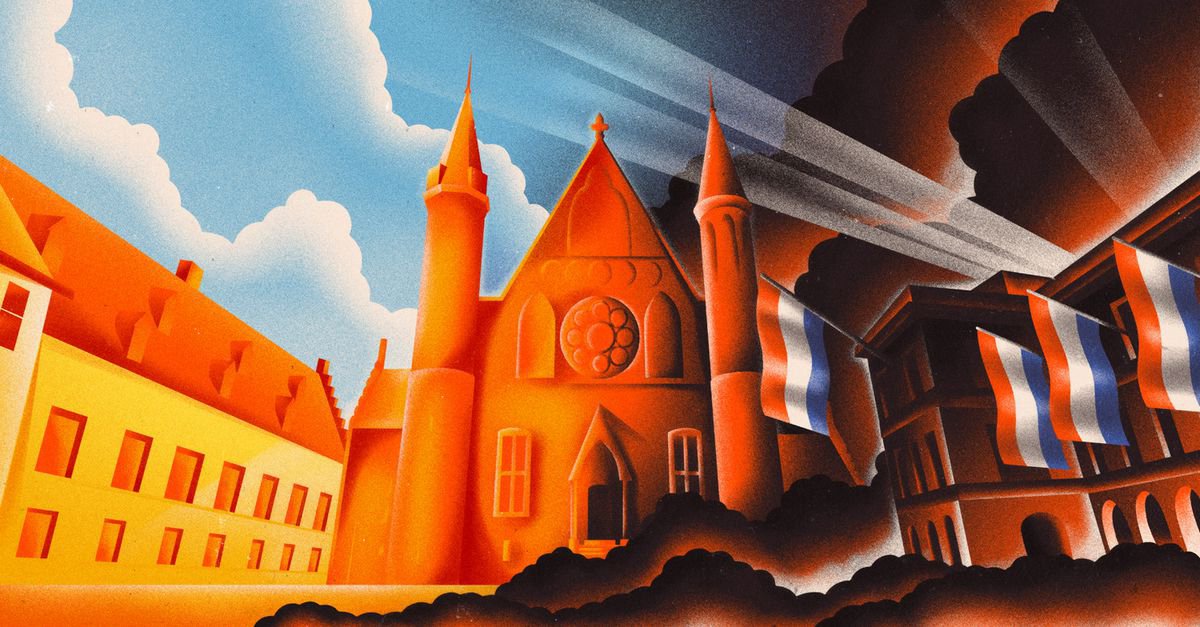
Over the past few years, it has become almost a sport in The Hague: normalizing the unthinkable. We all watched it unfold — some feeling powerless, others shrugging it off with a resigned "that's just how politics works." But now Lamyae Aharouay is putting down her pen for good, and it feels like someone has finally thrown open a window in a stuffy meeting room. In her farewell column, she does what she has always done best: cutting through to the heart of the matter with her razor-sharp clarity. And that heart? It’s darker than we often care to admit.
"Doing business with the far right is no longer a problem." That one line from her final piece lingers. It’s not a conclusion she reached after some theoretical analysis in an ivory tower; it’s the observation of someone who has spent years with a front-row seat to the Binnenhof. What was once an unwritten rule — a firewall against parties that undermine the rules of democracy — has eroded. Not from a sudden landslide, but through steady erosion. And Lamyae Aharouay refuses to accept that as the new normal.
The price of 'just going along'
In the corridors, there’s quiet talk of "pragmatism." As if bringing far-right factions into the fold to secure a majority is just a simple math problem. But Aharouay punctures that bubble. She clearly shows it’s not about pragmatism; it’s a choice. A choice to give hate and racism — which were once kept politely outside the door — a permanent seat at the negotiating table. It’s the political version of the Overton window: what was once unspeakable becomes, through repetition and a lack of pushback, ultimately "just another opinion." The cost isn’t just the credibility of our institutions, but also the safety and sense of belonging for entire groups of people in this country.
Her departure, then, is more than a personnel change. It’s a statement. Someone who could articulate what went wrong with such precision is stepping away. Not because she can’t handle it anymore, but because she refuses to get used to the cold. Over the years, she consistently played a role that gets easily lost in the daily grind: that of the uncomfortable questioner.
- How can a cabinet that claims to stand for "normal behavior" consistently cooperate with parties that downplay the rule of law?
- Why is rhetoric that was taboo for decades now being dismissed as "just a different opinion"?
- And what does it mean for the future of democracy when a moral compass is replaced by a calculator?
These are the questions Lamyae Aharouay asked. And because the answers were increasingly uncomfortable or simply absent, she chose a different platform. Not to fall silent, but to make her voice heard in another way. It’s a loss for The Hague press corps, which has already seen so many sharp voices depart in recent years.
The silence after the blow
What’s left when the dust settles? The reactions to her farewell are telling. While some politicians dismissed her work as "know-it-all," the recognition from a large part of the public has been overwhelming. In the corridors of Parliament, but also out on the street, people acknowledge she was a seismograph. She felt the tremors before the rest of the country realized the ground was shaking. That she’s leaving now forces us to think: have we really lost the line? And if that line still exists, why is no one guarding it anymore?
For anyone who has followed The Hague political scene even a little over the past few years, it’s clear: Lamyae Aharouay’s departure is a turning point. It’s the moment when the warnings are no longer on a sticky note, but written on the wall in big, bold letters. Whether The Hague will take this lesson to heart is the big question. But one thing is certain: she leaves a void that won’t be easily filled. And as the negotiating tables fill up again with the same people who pushed her to her limit, the question remains: who will still dare to say that the emperor has no clothes?