Zenia Stampe on the Front Lines: How the Pig Debate is Dividing Bornholm and Danish Agriculture
Zenia Stampe in muddy boots, surrounded by pigs, with mud caked up to her knees. That was the scene Wednesday afternoon as the leader of the Radical Party met with Food Minister Jacob Jensen (Venstre) – not at the parliament in Christiansborg, but right in the middle of a pig barn. Because when a campaign is in full swing, you can't just stay behind a desk and talk farm policy. You have to get out there and experience it firsthand.
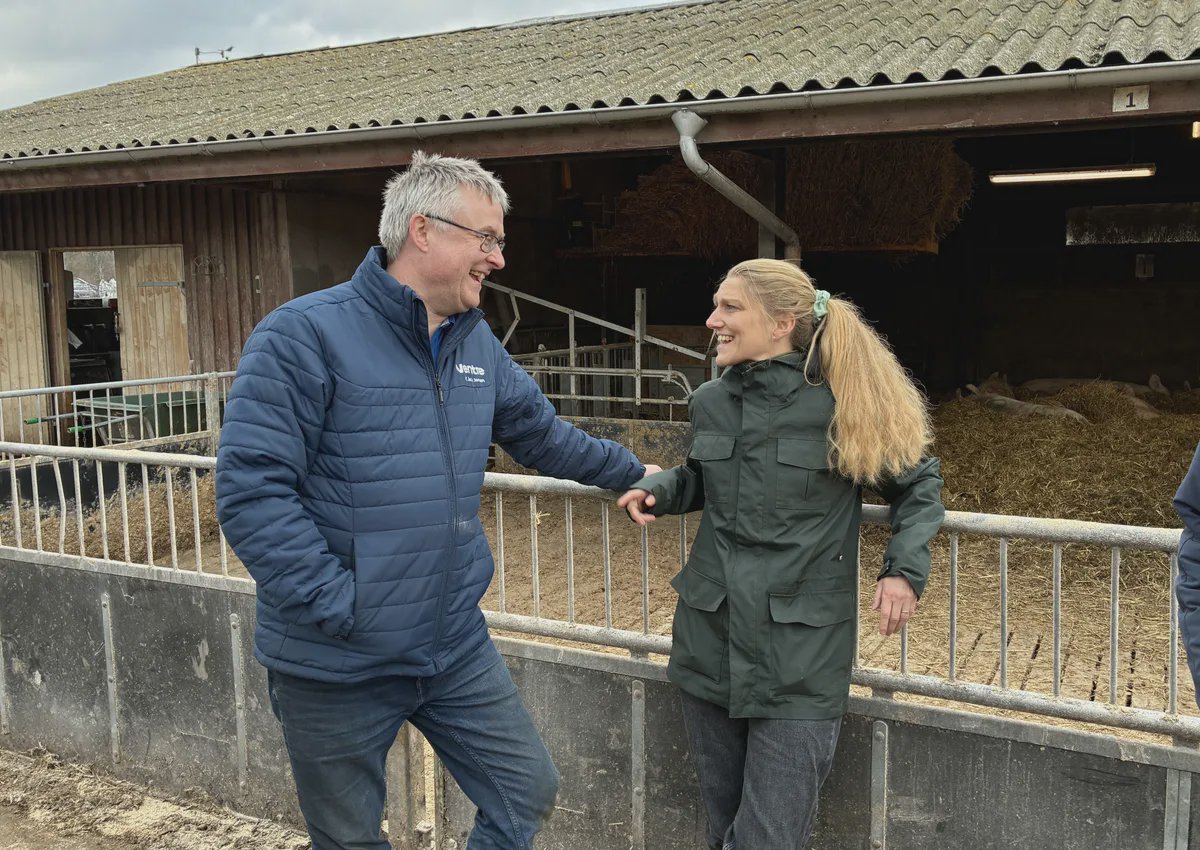
It was certainly an unconventional backdrop for a political debate. But the topic couldn't have been more traditionally Danish: the future of pig farming. Zenia Stampe, who has never hidden her green agenda, had to explain how to reconcile ambitions for smaller-scale, higher-quality production with an industry that forms the backbone of thousands of jobs. And that's where things got really interesting.
Because while the debate inside the barn centered on animal welfare and climate, the very same issue is crashing into a completely different reality on the island of Bornholm. There, people fear that political decisions made in Copenhagen could cost the island its vital jobs. If a real moratorium on expanding or establishing new pig herds is introduced, the Danish Crown slaughterhouse in Rønne risks not having enough pigs to process. In a worst-case scenario, that could mean closure.
The chairman of Bornholm's Agriculture & Food Council has already sounded the alarm: such a move would hit the island harder than most other places. Because Bornholm isn't just a vacation island – it's also a place where agriculture and food production keep the wheels turning. And the slaughterhouse in Rønne is one of its biggest cornerstones.
Two Women, Two Realities
While Zenia Stampe stood in the barn arguing for a future with fewer, but more sustainable pigs, another woman might have been sitting at home on Bornholm, pondering her own future. It's the classic conflict between the green transition and local jobs. And right now, these two worlds are colliding head-on in the election campaign.
- Zenia Stampe emphasizes that we need to produce less, but more expensive meat – ideally organic – so farmers can make a living and the planet can handle it.
- Food Minister Jacob Jensen (Venstre), on the other hand, sees solutions in technology and efficiency: lower emissions per pig, allowing production levels to be maintained.
- On Bornholm, they're fighting to preserve jobs and fear that compromises made in the capital will end up severing the island's economic lifeline.
I've been following Danish politics for over twenty years, and I remember a time when Venstre and the Radical Party were practically extensions of each other. Today, they're on opposite sides of the pig pen. This election isn't just a power struggle – it's a showdown over which direction Danish agriculture should take. And regardless of what you think of Zenia Stampe's politics, you have to acknowledge that she moved the debate out of the heated offices and into the most tangible reality of Danish farming.
So, the next time you're choosing a pack of bacon at the supermarket, remember: there's a political battle hidden in every single slice. And right in the middle of that battle stands Zenia Stampe – with her boots planted firmly in the mud.