Middle East Crisis: Maersk Suspends Gulf Routes, Stranding Over 270,000 Containers
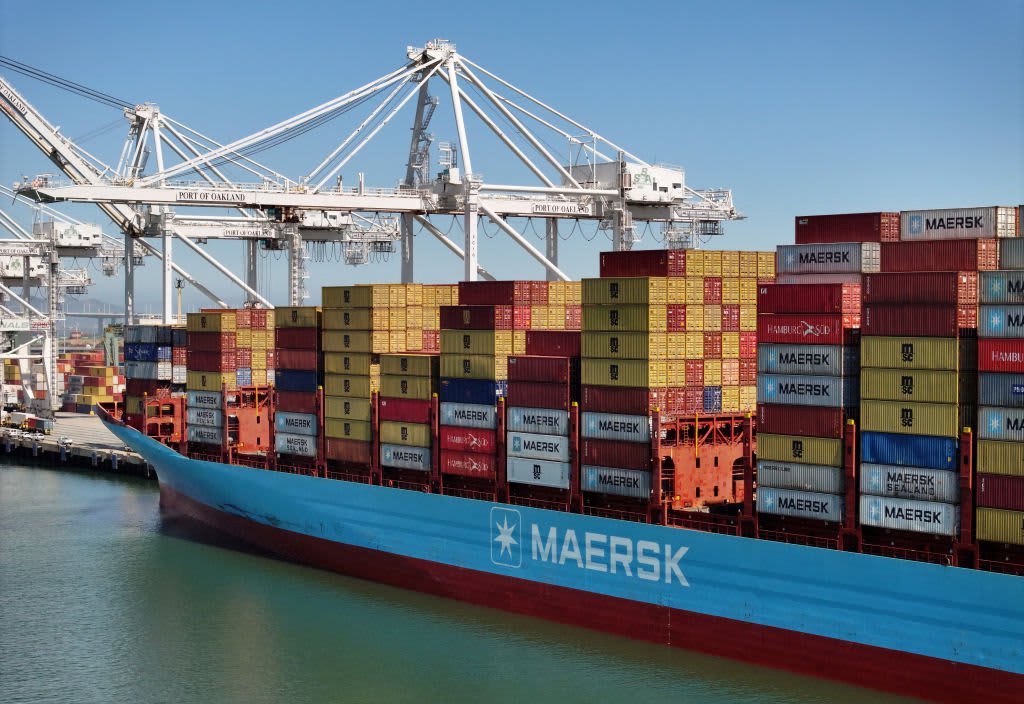
If you're an importer or a logistics enthusiast, you'll want to keep a close eye on the sea today. Maersk, the Danish giant that moves a massive chunk of global trade, has just pulled the plug on two vital engines. For the past few hours, persistent rumours have been circulating in the logistics world: the company has suspended two key services in the Persian Gulf. The reason? The situation in the Middle East has become a tinderbox, and nobody wants to find themselves with a ship in the middle of it. The die is cast: over 270,000 TEUs – that's hundreds of thousands of containers – are already anchored offshore or being diverted, waiting to see where they'll end up. Sources close to the Gulf dossier suggest this is a precautionary measure that's set to last.
A Necessary Move: The Strait of Hormuz is Off-Limits
The A.P. Moller-Maersk group didn't take this decision lightly. The suspended routes are those crossing the Strait of Hormuz, the bottleneck between the Gulf and the Indian Ocean. With tensions rising between Iran and Israel, and naval vessels patrolling with missiles at the ready, transiting there means playing Russian roulette. The priority for Maersk Line is ensuring the safety of its crews and cargo. But for those with goods in transit, the logistical nightmare has just begun: bookings are closed, cargo is stuck on land, and delivery times have become a complete unknown. In circles close to the company, it's whispered that the coming days will be crucial in deciding whether to extend the diversion via the Cape of Good Hope.
From Pirates to Missiles: The Lesson of the Maersk Alabama
This isn't the first time Maersk has found itself in the eye of the storm. Those with a good memory will recall the Maersk Alabama hijacking in 2009. Back then, it was Somali pirates who made the world tremble with that high-seas standoff that even inspired a film with Tom Hanks. Today's enemy is less picturesque and more high-tech: not skiffs with ladders, but drones and ballistic missiles. And while that incident remained relatively contained, the entire region is now a minefield. The difference? They call it a "diffuse war," and the risk is that every ship becomes a target. Veterans of the merchant navy still remember that night-time escort, but this time, a whole fleet wouldn't be enough to provide a shield.
Interestingly, many also know Maersk for a more peaceful reason. I'm talking about the legendary lego Maersk Train 10219, the train set that brick enthusiasts have been hunting for years. A collector's item, released in 2011, that celebrated the historic link between the shipping company and the world of rail transport. While real containers are stalled at sea, who knows how many models are chugging along tracks in living rooms across Ireland. A bitter irony for collectors of rare items who now risk not seeing their real parcels arrive.
Italy in the Crosshairs: Ports at Risk and Price Hikes Ahead
And what about us? Italy, with its strategic ports like Gioia Tauro, La Spezia, and Trieste, is on the front line. A large portion of goods arriving from Asia – from electronics to car parts, through to clothing – travels on Maersk ships or those of its partners. If the Gulf routes close, ships will have to take the long way around the Cape of Good Hope, doubling both costs and transit times. And guess who picks up the tab? Italian businesses, already battling inflation, risk seeing supply prices skyrocket even further. Not to mention exports: our machinery, wines, and food products destined for Gulf markets are now in a sort of logistical limbo. Sentiments gathered from freight forwarders in the North East speak of sleepless nights recalculating batches and penalties.
Here's what the Danish company's move actually means:
- Booking Freeze: For routes to the Emirates, Saudi Arabia, Qatar, and Kuwait, loadings are temporarily suspended. New bookings won't be accepted until further notice.
- Alternative Routes: Ships already en route are being diverted to safe ports, with estimated delays ranging from 10 to 20 days depending on their location.
- Freight Rate Hikes: Industry insiders are betting on a surge in transport costs, with knock-on effects across the entire supply chain within the next week.
- Perishable Goods at Risk: Reefer containers with food products could suffer damage if delays stretch beyond two weeks. Some importers are already scrambling to find emergency cold storage.
What Happens Now? The Fear of Another Supply Chain Meltdown
We live in times where crises just keep piling up. After the Suez blockage and the pandemic, this latest closure risks reigniting global delays. The market is waiting for signals from Washington and Tehran, but for now, diplomacy is struggling. The only certainty is that as long as the Strait of Hormuz remains off-limits, the Gulf will be a desert of containers. And while the politicians talk, Italian freight forwarders are spending their nights searching for solutions to keep factories running. Because, let's face it, when the ships stop, the world stops. And this time, the hot wind blowing in from the Gulf doesn't carry sand – it only brings bad news.