The Other Bennet Sister: Why This Adaptation of Jane Austen’s Forgotten Heroine Is the Comforting Watch We All Needed
Let’s be honest: for over 200 years, Mary Bennet has been the punchline. The awkward, plain middle sister stuck between the dazzling Lizzy and the flighty Lydia, destined to be remembered only for her heavy-handed sermons and her mother’s disappointment. But if you’ve been anywhere near the telly this past week, you’ll know that the girl who was always just “the other Bennet sister” is finally having her moment. And honestly? It’s the most satisfying comeback story I’ve seen in ages.
Janice Hadlow’s brilliant 2020 novel, The Other Bennet Sister, has made the leap to the small screen, and it’s landed like a perfectly brewed cuppa on a gloomy afternoon. The series wraps up its run this week, and the chatter—from local book clubs in Chelsea to the insiders raving across the pond—isn’t just about the stunning period costumes or the lush English countryside. It’s about how this story, focused entirely on Mary, feels so painfully modern.
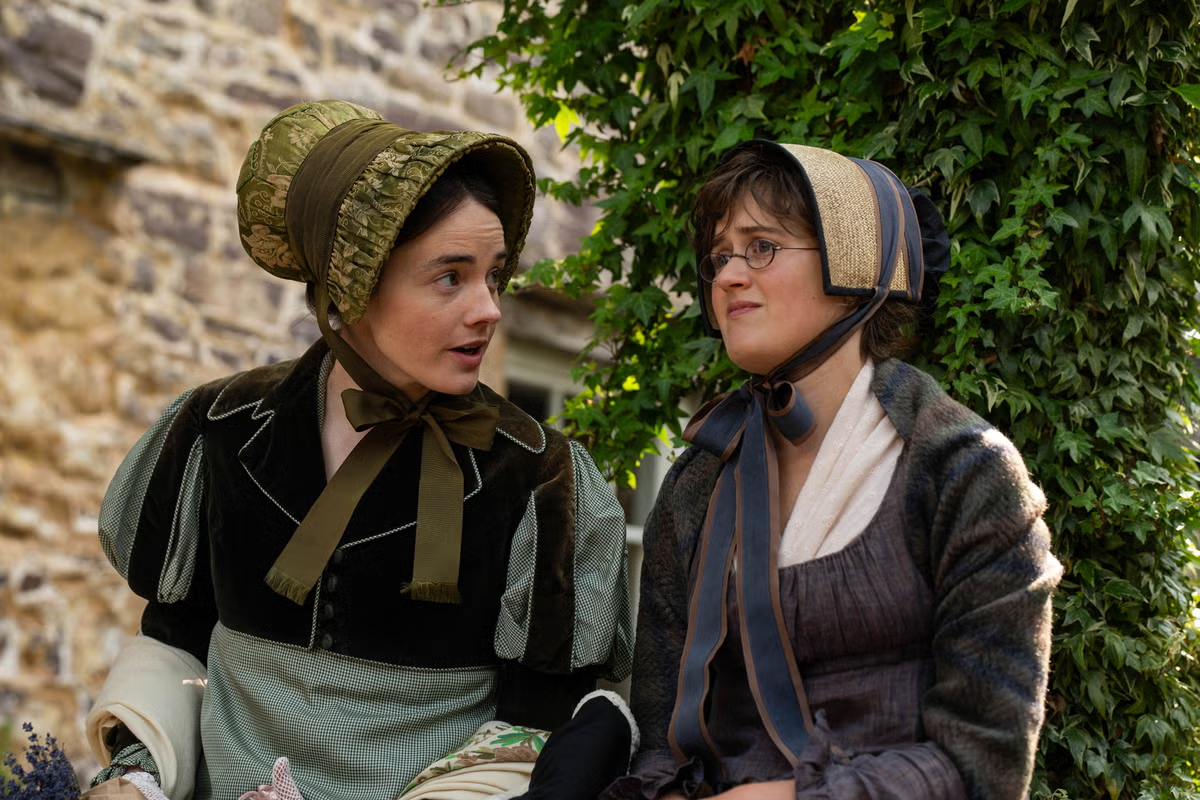
A ‘Yule Log’ Worth Lighting
There’s a particular scene that’s already being dubbed the “The Other Bennet Sister Yule Log” moment by fans online—a quiet, introspective sequence where Mary, away from the chaos of Longbourn, finally finds a flicker of peace by a hearth, a book in her hand. It’s a visual metaphor for the whole series. Where most Austen adaptations are about the glittering balls and the race to marry well, Hadlow’s version, and now this adaptation, dares to ask: what happens to the woman who doesn’t fit in? The one who isn’t a diamond of the first water?
It’s a love letter to outsiders, introverts, and anyone who has ever felt like they were just taking up space in a room full of louder personalities. The series doesn’t shy away from Mary’s sharp edges—her social awkwardness, her rigid self-righteousness—but it lovingly sands them down to reveal a woman of deep intellect and unexpected resilience. Watching her navigate the brutal social hierarchies of Regency England feels less like a history lesson and more like a masterclass in self-acceptance.
- More Than a Side Character: The series expands on Hadlow’s novel, giving Mary a journey that takes her far beyond the hedgerows of Meryton, into the intellectual circles of London.
- A Sisterhood Untold: We finally get to see the dynamics between the Bennet sisters without the filter of Elizabeth’s prejudice. It’s messier, sadder, and ultimately more rewarding.
- Literary Echoes: It’s impossible to watch this without thinking about the legacy of women writers. This story stands proudly alongside recent explorations like Sister Novelists: The Trailblazing Porter Sisters, Who Paved the Way for Austen and the Brontës—a reminder that the path for a character like Mary was paved by real women who refused to be dismissed.
What makes this adaptation click isn’t just that it gives Mary a love interest (though the slow-burn romance is genuinely charming). It’s that it grants her the one thing Austen’s original world denied her: agency. The Other Bennet Sister by Janice Hadlow was always a radical act of literary reclamation, but seeing it visualised brings a whole new weight. You can feel the tension of a woman realising she doesn’t have to settle for being a footnote in someone else’s story.
We’ve always had a soft spot for the underdog, the battler who proves the critics wrong. Mary Bennet is the ultimate battler. She’s not born with Elizabeth’s wit or Jane’s beauty. She has to earn her happiness through sheer force of will and a refusal to be pitied. It’s a far cry from the typical escapism of period dramas, and frankly, it’s all the better for it.
So, if you missed the initial buzz, do yourself a favour. Pull up a chair, light the fire (or just crank up the heating), and give this one a watch. It’s a beautiful reminder that sometimes the quietest character in the room has the most important story to tell. And for a character who spent two centuries being defined by what she wasn’t, it’s a joy to finally celebrate her for everything she is.