Ali Larijani killed: The pragmatist's death rocks an already unstable Iran
Day 18 of this brutal Middle Eastern war, and the ground keeps shifting. Overnight, the Israeli military dropped a bombshell—literally and figuratively—claiming it killed Ali Larijani, the head of Iran's Supreme National Security Council, in a "precise strike" near Tehran. If confirmed (and at this hour, Tehran is staying eerily quiet), this isn't just another military hit. This is the removal of the one man in the Iranian establishment who could speak the language of both the hardliners and the diplomats.
The man with the measured tone
For those of us who've watched Iranian politics for decades, Larijani was that rare bird: a true insider with a philosopher's mind. The guy held a PhD in Western Philosophy from the University of Tehran, but he also did time in the Revolutionary Guard during the Iran-Iraq war. You don't get that blend without learning how to navigate the system's brutal contradictions. He ran state broadcasting for a decade, was parliamentary speaker for another twelve years, and served as the top nuclear negotiator twice.
In any other country, that's just a CV. In the Islamic Republic, it's a map of the power grid. He knew where the bodies were buried and, more importantly, where the levers of influence were hidden. After the strikes that killed the old Supreme Leader in February, Larijani became even more visible—walking with crowds at rallies, projecting defiance, but always with that intellectual's restraint. He was the guy Washington and Tel Aviv loved to hate, precisely because he could sell the regime's line without screaming.
Why this hits different
The Israelis aren't stopping. They also claim to have taken out Gholamreza Soleimani, the head of the Basij paramilitary force—the muscle that put down the big protests earlier this year. You take out the security czar and the guy running the internal police in the same 24 hours? That's not just random bombing; that's decapitating the command-and-control structure.
But Larijani's loss is a different kind of wound. Back in the 2021 election, when the regime was engineering a low-turnout win for Raisi, they actually disqualified Larijani from running. The message was clear: we need a loyalist, not a pragmatist. But war changes things. When the shooting started, they brought the pragmatist back inside the tent because they needed someone who could talk to the Gulf states, who could handle the nuanced backchannels with Oman and Qatar. Now that channel is gone.
Tempers flare in the Strait
Meanwhile, on the water, it's getting lonely for the Americans. Donald Trump is publicly dressing down US allies for not jumping on his warship request in the Strait of Hormuz. He's threatening a "very bad future" for NATO pals who won't send boats to help keep the strait open. The responses from Europe and Asia? A collective shrug. Germany's Defence Minister flat-out said, "It is not NATO's war," and Italy, Spain, and Japan have all politely told Washington to get stuffed.
You've got to feel the frustration inside the Pentagon. The Strait handles a chunk of the world's oil, and the Iranians have effectively shut it down. But for traditional allies, this conflict looks less like collective defence and more like a war of choice they never signed up for.
The ground truth
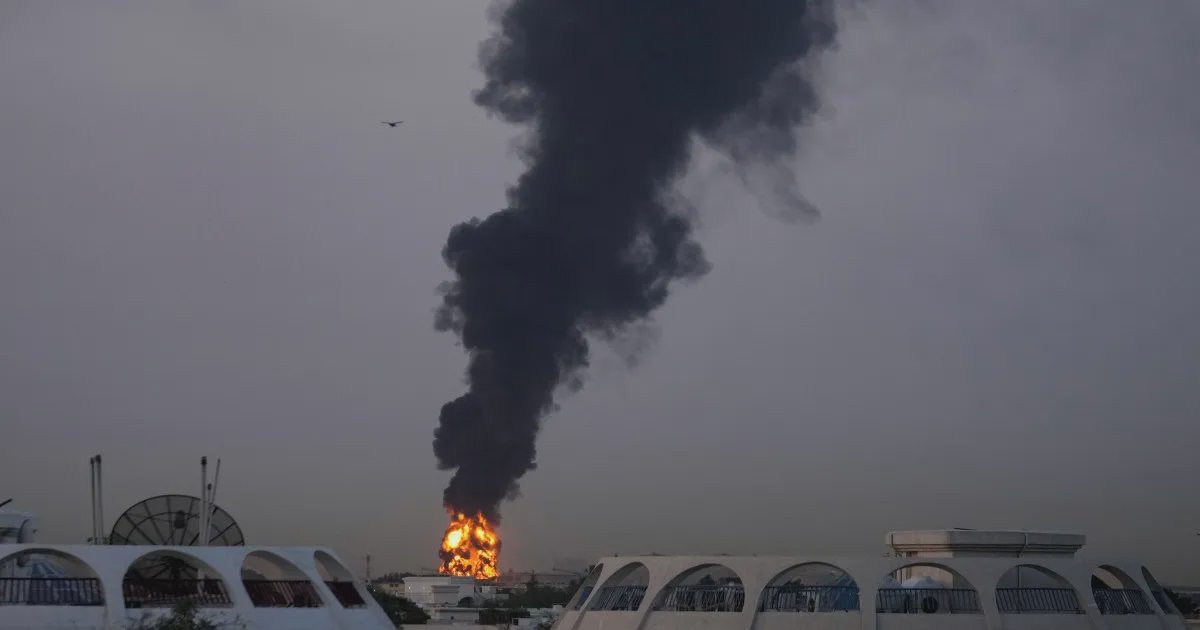
On the ground, the violence is spreading beyond the usual flashpoints. Drones hit the US Embassy compound in Baghdad overnight, and the UAE—which usually manages to stay above the fray—saw fires at the Fujairah oil zone and the Shah gas field after strikes. A tanker near Fujairah port also copped an "unknown projectile." One person in Abu Dhabi was killed by falling debris from an intercepted missile. This is the thing about wars in this neighbourhood: they have a nasty habit of becoming everybody's problem.
Inside Iran, the regime is stuck between a rock and a hard place. They're fighting an external enemy while sitting on a society that was, just months ago, erupting in the kind of protests that forced Larijani himself to acknowledge the economic pressures. The low turnout in that 2021 election wasn't an accident; it was a warning shot about public fatigue with the system. Now, with the security elite taking direct hits, the calculus gets ugly.
What comes next
If Larijani is truly gone, the immediate effect won't be a collapse. The Iranian system is too diffuse, too reliant on informal networks and competing power centres to just fall over. What it loses is a savvy operator who understood the West's red lines. The guys left standing are likely to be harder-line, less willing to even entertain the kind of off-ramps that Larijani might have quietly explored.
For now, the world waits to see if Tehran will confirm the hit, and if they do, how they retaliate. The war just lost one of its few remaining voices of experience. And in a conflict this hot, that's a dangerous silence.
Key developments at a glance:
- Targeted: Israel claims it killed Ali Larijani (security czar) and Gholamreza Soleimani (Basij chief).
- Allies rebuff US: Germany, Italy, Spain, and Japan refuse Trump's request for Strait of Hormuz naval support.
- Regional spillover: US Embassy in Baghdad targeted; strikes hit UAE energy sites.
- Casualties: Over 1,500 dead in 18 days of war, including 13 US soldiers.