Yariv Levin: The Man Steering Israel Into a Constitutional Storm
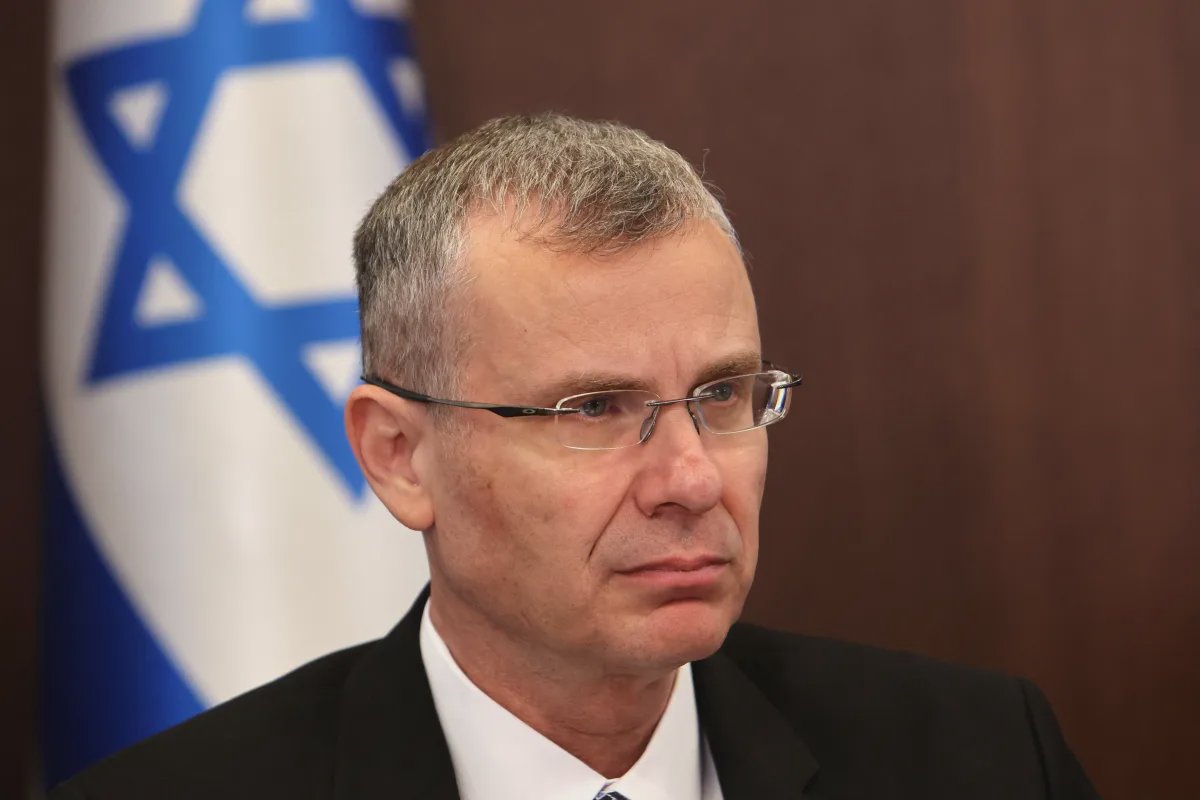
If you have been scanning the Middle East headlines lately, the name Yariv Levin keeps surfacing with increasing frequency. But to really grasp the tectonic shifts shaking Israeli politics right now, you need to look past the usual coalition drama. You have to focus on the man quietly—and sometimes very loudly—engineering what could be the most significant power struggle the country has witnessed in decades.
This is not just another political squabble. It is a full-blown constitutional drama, and Levin is standing right at its epicentre. Forget the dry titles; think of him as the architect of a new legal order, a politician unafraid to tell the country's highest court exactly where it stands. And right now, every political watcher in Jerusalem is glued to his next move.
A Direct Challenge to the Supreme Court
The most immediate flashpoint? The judiciary itself. For over a year now, Levin has been playing high-stakes poker with the legal system. As Justice Minister, he chairs the Judicial Selection Committee—the very body responsible for filling empty seats on the bench. The problem? He has flat-out refused to convene it. With dozens of vacancies piling up, the court finally had enough and issued a conditional order demanding he show cause. You would think a government minister might tread carefully when staring down a High Court order. But not this minister.
At a closed-door meeting in Jerusalem recently, he was asked point-blank if he would obey a final ruling. His answer was anything but a pledge of allegiance to judicial supremacy. "We will wait and see," he said, adding that anyone who thinks they can use force to make him act is making a "big mistake." He framed it as a fight for democracy itself, arguing the current committee makeup is stacked against the public will. Forcing appointments he disagrees with, in his view, would be the real injustice.
This goes beyond procedural stubbornness. Levin has made no secret of his endgame. He has explicitly told confidants that if the current coalition wins the next election, it will be a mandate to "change the Supreme Court from its foundations." This is not about minor tweaks; it is about fundamentally restructuring the balance of power between the Knesset and the judiciary—a vision that sparked massive protests the last time it was floated.
The Pardon Problem: Stepping Aside
Of course, you cannot talk about Yariv Levin in 2026 without addressing the elephant in the room: Prime Minister Benjamin Netanyahu's pardon request. This is where the political tightrope gets razor-thin.
Netanyahu, currently on trial for corruption charges, submitted a pardon request months ago. Under normal circumstances, the Justice Ministry's Pardons Department would review it and pass its recommendation along to President Isaac Herzog, who holds the sole constitutional power to grant pardons. But Levin is in a bind. He is a close ally of Netanyahu. To avoid inevitable conflict-of-interest claims that could bog the process down in legal challenges, he made a calculated move: he recused himself and handed the entire bureaucratic hot potato over to Heritage Minister Amichai Eliyahu.
Here is where the internal drama thickens. While Levin stepped aside, word from inside the Justice Ministry is that the professional echelon did not pull any punches. Sources confirm the Pardons Department submitted a legal opinion recommending the request be rejected. The reasoning is solid: Netanyahu's trial is ongoing, there has been no final conviction, and crucially, the Prime Minister has neither admitted guilt nor expressed remorse—conditions the court has previously indicated are necessary even for a pre-conviction pardon.
So the legal professionals say "no." But Eliyahu, Levin's stand-in, is a far-right politician expected to back Netanyahu. He has already criticised the Attorney General for delays, calling the matter one that needs the President's "immediate attention." It sets up a stark contrast: the civil service's legal opinion versus the political echelon's loyalty.
The International Dimension and What's Next
As if the domestic pressure was not enough, this saga has drawn international attention. It is an open secret in Jerusalem that a certain former American president recently phoned President Herzog with some blunt advice—calling the delay a disgrace and arguing the Prime Minister needs to be free of legal "distractions" to focus on matters of state. Herzog's circle fired back with a reminder that Israel is a "sovereign state governed by the rule of law" and that decisions would be made without external pressure.
So, what are we really looking at? A three-act political thriller:
- The Court Standoff: Yariv Levin versus the Supreme Court over judicial appointments. He is betting that political power will trump judicial orders, and he is refusing to blink.
- The Pardon Gamble: The professionals say no, the political appointees say yes, and the ball is now firmly in President Herzog's court. Will he follow the professional advice or bow to political pressure from his own coalition?
- The Election Referendum: Levin has framed the upcoming vote as a direct referendum on the judiciary itself. A win for the current coalition would be seen as a green light to push forward with his overhaul.
Whether you see him as a reformer fighting an overreaching judiciary or a politician consolidating power, one thing is certain: Yariv Levin is not just another minister. He is the man forcing Israel to decide what kind of democracy it wants to be. And from where we are sitting, he is not backing down an inch.