AFCON CHAOS: Senegal stripped of title, Morocco crowned champions in unbelievable twist
Sometimes, sport writes a script that no one could have dreamed up. What began as a heated derby final in Rabat between host nation Morocco and defending champions Senegal has spiralled into one of the most bizarre and talked-about scandals in Africa Cup of Nations (AFCON) history. Just a couple of months ago, Senegal stood victorious after a final filled with drama, chaos, and a penalty shootout that sent shockwaves through the football world. But now comes news that turns everything upside down: Senegal have been stripped of their title, and Morocco are being crowned African champions.
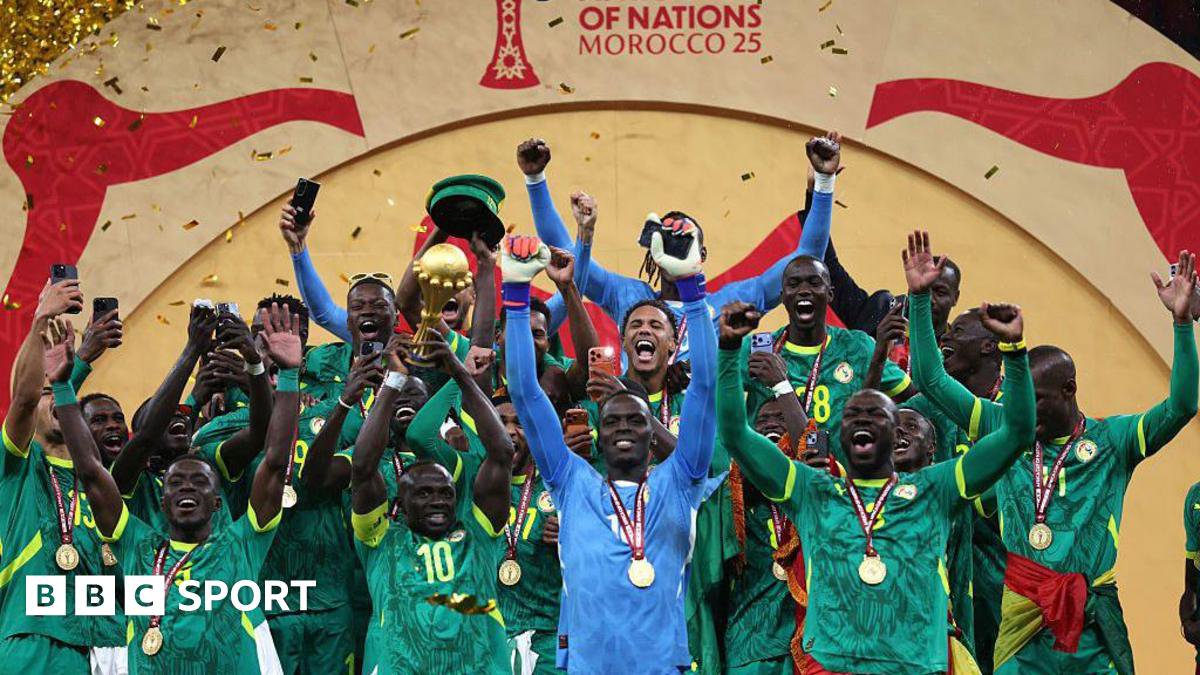
The final that just wouldn't end
To understand the decision, we have to rewind to January 18, 2026. Prince Moulay Abdellah Stadium in Rabat was packed to the rafters with 66,526 spectators expecting a coronation for the home side. Morocco, who sensationally reached the World Cup semi-finals three years earlier, were favourites playing in front of a home nation that hadn't won AFCON since 1976. But Senegal, with stars like Sadio Mané and Edouard Mendy, had other ideas.
The match was a tactical battle with no goals heading into the final minutes. Then, all hell broke loose. First, Senegal thought Ismaila Sarr had won it with a header, but referee Jean-Jacques Ndala from Congo disallowed it for a dubious foul. If anything, that was nothing compared to what was coming. In the 98th minute, after a VAR check, Ndala pointed to the spot for Morocco. Brahim Diaz had been pulled back by the shirt, and the home crowd erupted.
Then, all hell broke loose on the bench. Senegal's head coach, Pape Thiaw, couldn't contain himself. In protest, he waved his players off the pitch and marched towards the dressing room. For 17 minutes, the football world stood still as fans tried to storm the pitch, riots broke out in the stands, and police fought to restore order. When the players were finally persuaded by Mané to return, the atmosphere was explosive.
The penalties that changed everything – twice
Brahim Diaz stepped up to take the fateful penalty. With the hopes of an entire nation on his shoulders, he chipped the ball straight into the arms of a surprised Mendy. The miss echoed through the entire stadium. In extra time, Pape Gueye stepped up and sealed it with a left-footed shot into the top corner. Senegal were African champions – or so everyone thought at the time.
But the aftermath proved just as dramatic. The Confederation of African Football (CAF) launched an investigation into "the unacceptable scenes on and off the pitch." FIFA president Gianni Infantino was clear in his criticism: "It is unacceptable to leave the pitch like that. Violence cannot be tolerated in our sport."
The investigation has now resulted in historic punishments:
- Senegal are stripped of the 2025 AFCON title and Morocco are declared champions.
- Pape Thiaw (Senegal coach) receives a five-match ban for unsportsmanlike conduct.
- Senegal's forwards, Iliman Ndiaye and Ismaila Sarr, are each suspended for two matches.
- Morocco's Ismael Saibari gets a three-match ban and a $100,000 fine, while captain Achraf Hakimi is suspended for two matches (one suspended).
CAF president Patrice Motsepe was crystal clear at an executive meeting in Dar es Salaam: "What we saw in the final is something we never want to experience again. We have zero tolerance. Anyone who drags African football through the mud will be severely punished."
Looking ahead: AFCON 2027 heads to East Africa
In the midst of the turmoil, CAF confirms that plans for the next tournament are on track. AFCON 2027 will be played in Kenya, Tanzania, and Uganda – the first time three nations will co-host the event. The tournament is being moved to the northern hemisphere summer (June-July) to better fit the international calendar.
"It's going to be a huge success," Motsepe promised after the meeting in Tanzania. "Infrastructure is being developed, and we are confident that East Africa will host a fantastic championship." From 2028, AFCON will switch to a four-year cycle, aligning with the World Cup.
But first, the football world needs to digest what has just happened. Stripping a team of a title they won is almost unprecedented. For Senegal, it's a bitter footnote in an otherwise successful football story. For Morocco, it's a victory they could hardly have imagined when that penalty was missed on that January night. The Africa Cup of Nations has once again proven that it is never, ever boring.