Manitoba Budget 2026: Tax Relief, MAID Debate, and the Clash Over Climate Action
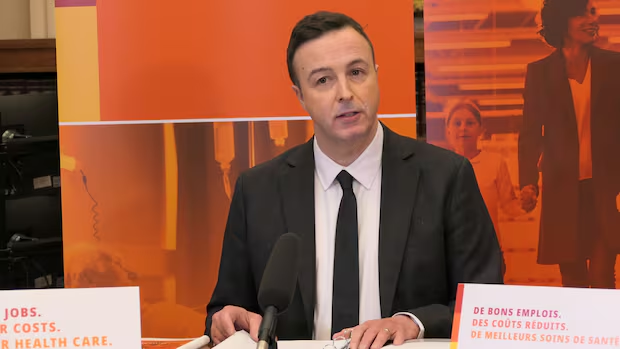
Well, they’ve finally released it. The Kinew government handed down its 2026 budget on March 9, and if you were hoping for a quiet, straightforward fiscal plan, you’re in for a surprise. This one comes with tax cuts in one hand and a fair bit of political dynamite in the other. Yes, there are affordability measures that’ll put a bit more cash in your pocket, but we’re also staring down a MAID controversy that’s got people on all sides fired up.
Let’s start with what’s actually in the document. The big headline is tax relief. They’re increasing the Basic Personal Amount, which means most Manitobans will see a little more breathing room in their pay—about $400 a year for the average household. There’s also an extension of the temporary fuel tax holiday, which will keep petrol prices a few cents lower until autumn. On the surface, it’s the kind of populist move you’d expect from an NDP government trying to solidify its image as the party for working people.
But here’s where it gets messy. Just as the government was patting itself on the back for affordability, a joint letter landed on my desk—and every other reporter’s—calling for stronger climate action. And this wasn’t just a few environmentalists. We’re talking about a coalition that includes major environmental groups, some Indigenous organisations, and even a few progressive business leaders. Their argument is that the budget completely dropped the ball on climate. They wanted to see a genuine rethink of the carbon price, or at the very least, serious funding for retrofits and public transport. Instead, they got radio silence. The feeling in that camp is that the government is too scared to touch anything resembling a carbon tax right now, even if it means missing out on long-term infrastructure investment.
The MAID Elephant in the Room
If you think the climate advocates are upset, you haven’t spoken to anyone in the disability rights community. There’s a growing feeling—and I’ve heard this from sources within the health system—that the budget is quietly setting the stage for what critics are calling the MAID controversy to become a full-blown disaster. The government has allocated extra funding to expand MAID services to streamline what they call “access.” But to many advocates, it looks like they’re building infrastructure for a system that’s moving too fast without adequate safeguards.
I sat down with a friend who works in palliative care last week. She put it bluntly: “We’re getting money for MAID coordinators, but we’re still short-staffed in palliative care. What does that say about our priorities?” It’s a fair question. And it’s not just anecdotal. The budget documents show a 15% increase in funding for MAID implementation, but only a 3% bump for palliative care expansion. You don’t need to be a mathematician to see the imbalance there.
Housing: A Missed Opportunity?
Then there’s the housing file. We’ve all seen the headlines about Winnipeg’s vacancy rate. It’s tough out there. So when housing advocates started their campaign calling for Manitoba’s 2026 budget to invest in housing for women and gender-diverse people, a lot of us thought this might be the year they’d finally secure a big win. The government did announce some funding—$75 million over four years for affordable housing projects. But if you listen to the folks at the MDC Annual General Meeting last month, that number is just a drop in the bucket.
As one advocate put it to me, “We needed a moonshot. We got a small step.” The pressure is now on the province to show how that money will actually be spent. Will it fund wraparound supports for women escaping violence? Or will it just get swallowed up by administrative costs? The lack of detail in the budget has a lot of people on the front lines worried.
- Tax Relief: Basic Personal Amount increased; fuel tax holiday extended.
- Climate Gaps: Coalition letter slams lack of carbon pricing reform and green transit funding.
- MAID Expansion: Funding increases while palliative care lags behind, sparking ethical backlash.
- Housing Shortfall: $75M announced, but advocates say it’s insufficient for the scale of the crisis.
The Consumption Site Confusion
And just when you think you’ve got a handle on the budget, you have to factor in the external noise. Premier Kinew has been doing the media rounds, and frankly, he’s been adding fuel to the fire on the consumption site confusion. We saw it on March 9. One minute he’s talking about the success of the supervised consumption site model; the next, he’s hedging about “community concerns.” It feels like he’s trying to walk a tightrope between the urban progressive base that wants these sites expanded and suburban voters who are uneasy about them.
It doesn’t help that we’re watching the BC drug experiment end right now. BC is walking back its decriminalisation pilot, and that’s giving Manitoba politicians an excuse to put the brakes on any bold moves here. The mood in the legislature is that no one wants to be left holding the bag if the BC model “fails” in the court of public opinion. So instead of a clear strategy, we’re getting vague statements and budget allocations that don’t seem to match the rhetoric.
Look, this budget isn’t a disaster in the traditional sense—it’s not going to crash the economy. But it’s a classic political document. It gives just enough to say you’ve done something while pushing the really hard problems—climate, housing supply, and the ethical quagmire of MAID—down the road. Whether that strategy holds up between now and the next election will depend entirely on whether the public buys the “affordability first” narrative, or starts asking why we’re not building for the future.
For now, if you’re a homeowner or a driver, you’re probably feeling pretty good. If you’re an advocate for the environment, disability rights, or housing, you’re likely drafting your next angry letter. And for the rest of us? We’re just watching to see how the Kinew government handles the heat over the next few months. This budget isn’t the end of the story. It’s just the opening chapter.