Mario Adorf dies: Farewell to a legend of German cinema
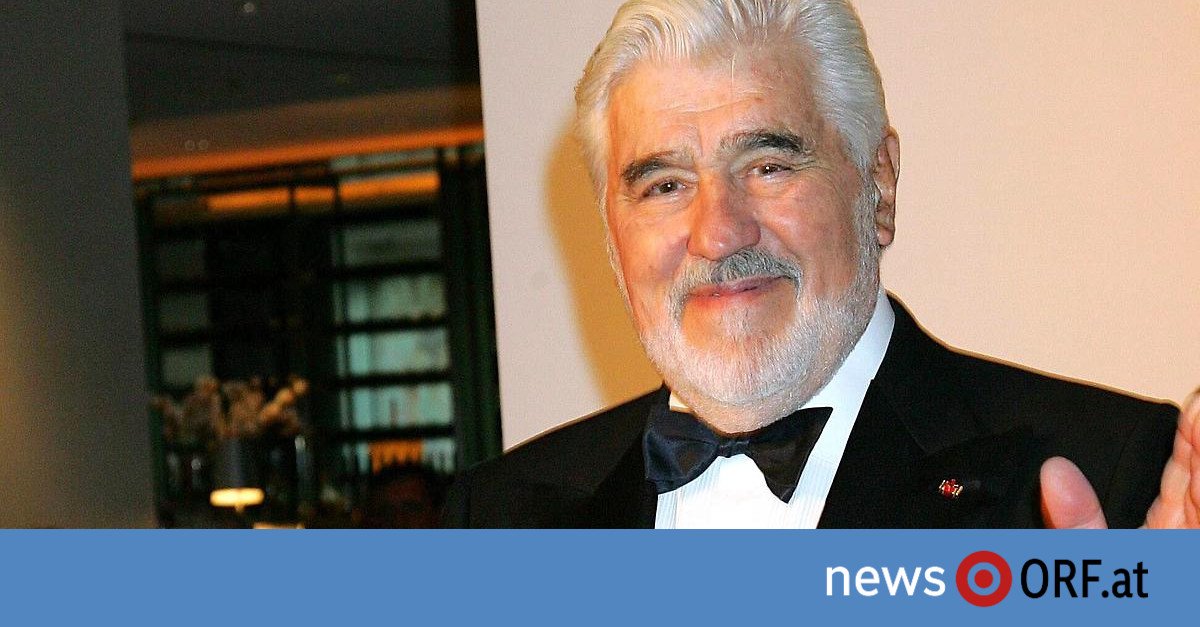
Well, I'll be – the news hits you harder than you'd expect. Mario Adorf – he was always just there. Whether as a dastardly villain on the prairie, a grumpy patriarch in an armchair, or when he’d look right through your soul in interviews with that mischievous glint in his eye. Yesterday, 8 April, he passed away peacefully at his home in Paris at the age of 95. A short illness took him, but anyone who knew Mario Adorf knows this: he didn’t miss a single scene right up to the end.
From a lad in the Eifel to the face of German cinema
Born in Zurich in 1930, raised in the rough-and-tumble Eifel region – that shaped him. The boy without a father, who had to carve his own path with charm and that incredible presence. Acting wasn’t an accident; it was sheer necessity. He wasn't the classic hero – he was too real for that. Too close to life. While others came riding in on white horses, he played Bruno Lüdke in Nachts, wenn der Teufel kam (It Happened in Broad Daylight). That was 1957, and audiences were stunned. And that was exactly his thing: the rough edges, the dark depths. He was the villain you loved to watch. When he shot poor Nscho-tschi in Winnetou (1963), kids in front of the telly were fuming with excitement. And that’s precisely what made a true star.
The role that changed him forever
Of course, he could have made it in Hollywood. But he had this Italian father, that Mediterranean temperament that just didn’t fit with the rugged German type. Instead, he worked with the greats: Fassbinder, Schlöndorff, Billy Wilder. In Volker Schlöndorff’s The Tin Drum (1979), he played the Nazi cook Matzerath – a role that cemented him forever in the pantheon of European cinema. I’ll tell you, winning the Oscar for Best Foreign Language Film is no small feat. But Mario Adorf was never one to get above his station. He remained the lad from Mayen who was just damned good at his job.
- 1957: Breakthrough as a tragic murderer of women in Nachts, wenn der Teufel kam (It Happened in Broad Daylight).
- 1979: Icon status: Alfred Matzerath in the Oscar-winning The Tin Drum.
- 1980s/90s: From villain to TV favourite (Kir Royal, Der große Bellheim).
- 2024: His last major appearance – via video message at the German Television Awards.
"It Could Have Been Worse" – Life as a feat of artistry
A few years ago, he titled his autobiography: "It Could Have Been Worse – Mario Adorf". That was classic Adorf. No sob story, just a shrug and a wink. At 94, he said via video message at the German Television Awards because he couldn't travel: "I assume this will be my last award." He knew the score. And yet he thanked his audience "for decades of loyalty" – that was his final message to us. This man, who made over 200 films, who could laugh with Loriot and Peter Ustinov, remained humble to the end.
He leaves behind his wife Monique, his daughter Stella, and a stack of films we'll be revisiting this winter. Whether Lola, Rossini or the cult series Kir Royal – that Monsignore in Monaco Franze was a stroke of genius. Mario Adorf was a portrayer of people. No more, no less. But in today's world of polished, smooth-edged stars, that’s the greatest thing of all. Take it easy, old friend. And yes, you were right: it wasn't that bad. But without you, it somehow feels emptier.