Aditya Dhar's Dhurandhar 2: The Political Storm, The Sikh Community Complaint, and Why Ranveer Singh Is Unstoppable
If you’ve been scrolling through your feed here in the UK, you’ve probably felt the buzz radiating all the way from Mumbai. The chatter isn’t just about a film release; it’s about a full-blown cultural firestorm. Aditya Dhar, the visionary director behind Uri: The Surgical Strike, is back with Dhurandhar 2, and let’s just say he’s managed to do what few filmmakers can—unite audiences and critics in a state of passionate, loud disagreement. And at the heart of it all? The whirlwind that is Ranveer Singh.
Having covered Bollywood for this long, you learn that a film becoming a "topic of national debate" is usually just PR fluff. But this? This is the real deal. We’ve got multiple plotlines unfolding simultaneously: a legal complaint against the lead actor, a veteran actor’s emotional salute, and a deep dive into the politics of the script. It’s the kind of chaos that makes you wonder how Aditya Dhar keeps his cool behind the camera.
The Sikh Community Complaint: A Storm in a Teacup?
The first crackle of fire came from an unexpected direction. The Sikh community filed a formal complaint against Ranveer Singh. The issue? An AI-generated promotional poster for Dhurandhar 2 that reportedly showed the actor in a pose perceived as disrespectful. Now, I’ve seen the poster, and while the intent was likely pure marketing hype—trying to show the "larger-than-life" scale of the mission—you simply cannot ignore the sentiments of the community. In today’s climate, where a single misstep can derail months of hard work, this was a risky move. Ranveer, known for his eccentric style and fearless choices, found himself in the firing line. Whether this was a case of a marketing team going rogue or an oversight on set, it’s a reminder that in the world of Aditya Dhar, the stakes are never just cinematic; they are deeply personal for the audience.
Anupam Kher’s Salute: “What Are You Made Of?”
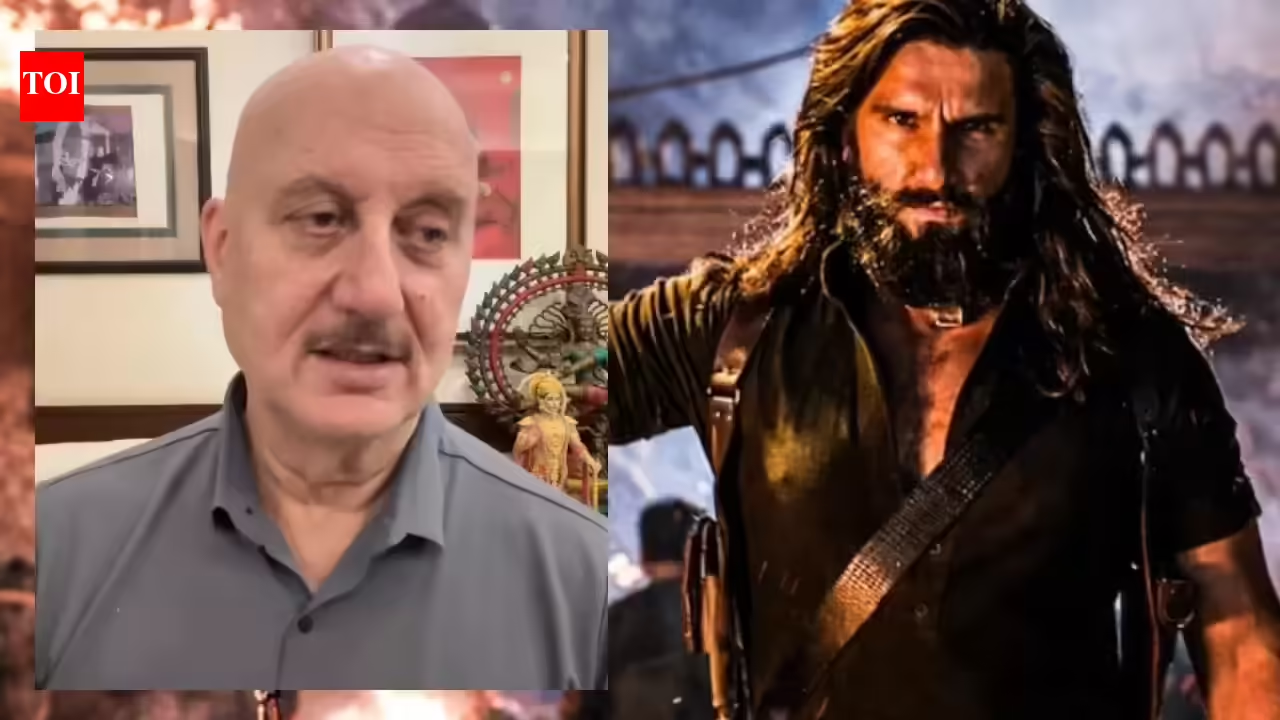
But while one segment of the public is filing complaints, another is standing up and applauding. Veteran actor Anupam Kher didn’t hold back his praise, and his words pretty much sum up the ideological divide surrounding the film. He hailed Ranveer Singh and Aditya Dhar, asking the cast “Kaunsi mitti ke bane ho”—which roughly translates to "What are you made of?"
Kher didn’t just like the film; he defended it against those calling it propaganda. His argument? If you’re ashamed to call a film that showcases the bravery of our forces "patriotic," then there’s something wrong with the discourse. It’s a powerful endorsement, especially coming from an actor of his stature. It tells you that the team behind Dhurandhar 2, specifically Aditya Dhar and his writing team (which includes Aditya Dharap and Aditya Dhariwal), have struck a nerve that makes people choose sides.
- The Praise: Anupam Kher frames the film as a necessary dose of reality and courage, a tribute to the forces.
- The Controversy: The Sikh community’s complaint highlights the fine line between creative liberty and cultural sensitivity.
- The Core: At the heart of it, Dhurandhar 2 is forcing a conversation about what modern Indian patriotism looks like on screen.
Anti-Terror, Not Anti-Pakistan: Decoding Aditya Dhar’s Politics
This is where the nuance comes in, and frankly, where Aditya Dhar deserves a lot of credit. In an age where movies are often simplified into binary "us vs. them" narratives, whispers from within the industry suggest that Dhurandhar 2 is treading a much more complex path. The buzz is that the film is emphatically anti-terror, not anti-Pakistan. It’s a crucial distinction.
If you remember his work in Uri, Dhar has a knack for making you feel the weight of a military operation without needing to villainise an entire nation. The word from those who’ve seen early cuts confirms that this film doubles down on that philosophy. It’s about the ideology of terror, the men and women who fight it, and the political chess game that happens behind closed doors. For the diaspora audience here in the UK, that’s a perspective that often gets lost in translation when these films travel overseas. We’re not just getting a mass entertainer; we’re getting a director who is trying to define a new genre of political action cinema.
Ranveer Singh, as the lead, is carrying that weight. Whether he’s dealing with the legal heat from the Sikh community or standing tall under Anupam Kher’s praise, he’s proving that he’s not just a star who can dance; he’s an actor who can handle the pressure of being the face of a national conversation.
So, if you’re planning to catch Dhurandhar 2 this weekend at your local cinema, go in knowing this: You’re not just watching a film. You’re stepping into a debate. And honestly, in a world of formulaic sequels, isn’t that exactly the kind of cinema we should be talking about?