SpaceX Rocket Launch Lights Up Florida Sky with 29 Starlink Satellites
If you were anywhere on Florida’s Space Coast this morning and glanced up, you probably did a double-take. A luminous, spiraling cloud hung in the dawn sky, looking more like a portal to another dimension than the exhaust plume of a Falcon 9 rocket. That was the signature of SpaceX’s latest mission: 29 new Starlink satellites riding a workhorse booster to low-Earth orbit.
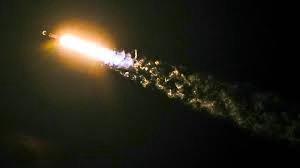
A Morning Wake-Up Call from Cape Canaveral
At 7:17 a.m. ET, the Falcon 9 roared off Pad 40 at Cape Canaveral Space Force Station, carving a bright arc over the Atlantic. For residents in Hillsborough County and across the Tampa Bay area, the show was impossible to miss. Social media lit up with photos of the ethereal cloud—what looked like a giant jellyfish or a cosmic swirl—prompting the usual question: “What was that in the sky?” Old-timers here know the answer by heart: just another Tuesday in Florida, where space launches have become as routine as afternoon thunderstorms.
This particular flight, designated Starlink 12-9, marked the 16th launch of 2026 for SpaceX. The first-stage booster, flying its eighth mission, pulled off a textbook landing on the droneship A Shortfall of Gravitas about eight minutes after liftoff. The upper stage, meanwhile, continued its climb to deploy the flat-packed satellites about 65 minutes into the flight.
Inside the New Trillion-Dollar Space Race
Mornings like this make you realize how far private spaceflight has come. It wasn’t long ago that a launch was a national event; now it’s a backdrop for breakfast. The shift is chronicled in books like When the Heavens Went on Sale: The Misfits and Geniuses Racing to Put Space Within Reach and Rocket Dreams: Musk, Bezos, and the Inside Story of the New, Trillion-Dollar Space Race. They capture the ethos of a moment when billionaires aren’t just building rockets—they’re rewriting the economics of access to orbit. Musk’s SpaceX and Bezos’ Blue Origin are the headline acts, but the real story is the ecosystem of engineers and dreamers turning science fiction into a daily commodity.
One of those who documents this new golden age is Ben Cooper. His work in Launch Photography: Ben Cooper Photographs Rockets of NASA and More has become the definitive visual record of an era. Cooper was likely set up somewhere on the causeway this morning, capturing the same plume that confused early risers, but through a lens that freezes the raw power of 1.7 million pounds of thrust.
What’s Next on the Space Coast Calendar
For space junkies, the question is always the same: SpaceX next launch? If the current cadence holds, another Starlink mission could fly within the week. There’s also talk of a rideshare launch later this month, though SpaceX keeps its manifest close to the vest until T-minus zero. Meanwhile, over at Kennedy, teams are prepping for a potential Crew Dragon flight to the ISS sometime in April.
And speaking of April—if you’re the type who plans your life around both rocket schedules and fantasy sports, you might already have your eye on MLB DFS 4 16 18. That date—April 16, 2018—still echoes for baseball fans who remember the epic slates and DFS lineups that paid off big. It’s a reminder that fandom, whether for rockets or home runs, is all about timing. Today, the timing was perfect: clear skies, a flawless ascent, and another small step toward a world where space is truly within reach.
- Mission: Starlink 12-9
- Launch site: Cape Canaveral SFS, Pad 40
- Payload: 29 Starlink V2 Mini satellites
- Booster landing: Droneship A Shortfall of Gravitas
- Next up: Possibly a Falcon Heavy mission later this month
As the satellites drifted into their operational orbits, the Florida sky returned to its normal blue. But for a few minutes this morning, it felt like the heavens really did go on sale—and we all got a front-row seat.