The War on Iran: From the "Twelve-Day War" to a Collapse Scenario.. What Happened in a Year?
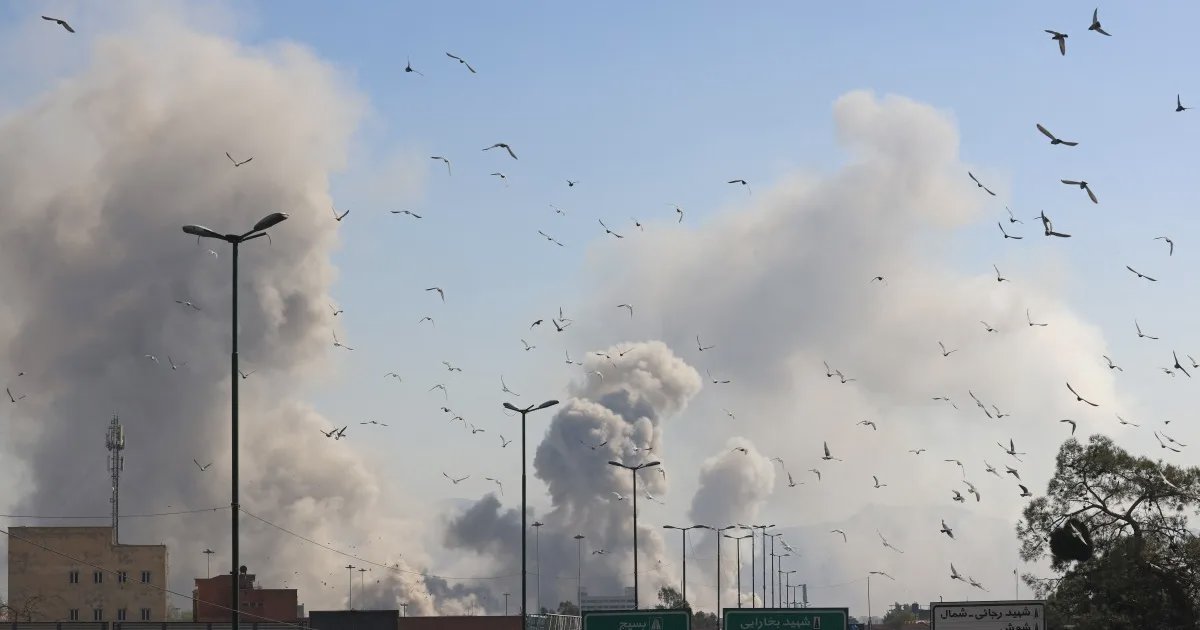
Exactly one year ago, in June 2025, we were following what was then called the "Twelve-Day War," that direct confrontation that erupted between Iran and Israel after the Israeli "Rising Lion" operation targeting the nuclear facilities in Natanz and Isfahan. We thought it would be the peak of the escalation, but what we are experiencing today in March 2026 exceeds all expectations. Now, on the seventh day of the new escalation, we are no longer talking about limited strikes, but an existential war in which Israel and America have a stranglehold on Iran's military and economy.
Tehran Under Fire: From Leadership to the Streets
What's happening this time is radically different. At dawn on Friday, Tehran residents heard the sound of explosions that shook the capital for hours. They weren't targeting remote military suburbs; the raids hit residential areas and vital centers. What's being broadcast on official screens confirms a strike at 5:30 a.m., and another two hours later, but the images circulating on social media from Shiraz and Lorestan province tell a different story: a destroyed school, a burning gas station, a gymnasium turned to rubble. Even the Iranian Red Crescent wasn't spared; its centers in Mahabad were bombed, which observers see as crossing every humanitarian red line.
Figures are starting to emerge intermittently. Preliminary estimates suggest the civilian death toll has exceeded 1,300 since the war began, but Iranian opposition sources abroad confirm the number is much higher, especially after the strikes on emergency centers in Mahabad and Shiraz. Meanwhile, Israeli health authorities report transporting over 1,600 people to hospitals since the clashes began, but the most attention-grabbing aspect is the economic damage: 9 billion shekels (approximately $2.9 billion) per week, with gas production halted at the Leviathan field.
Strike and Counterstrike: Iran's Kheibar vs. American Silence
Notably, Iran did not let the strikes go unanswered. This time they used heavy "Kheibar Shekan" missiles, weighing 30 tons and carrying a high-explosive warhead. Leaked information suggests these missiles fragmented over Tel Aviv's skies into 80 pieces, complicating interception and igniting fires in at least 3 locations in the Gush Dan region. Witnesses spoke of shrapnel from these missiles falling in the streets and severe damage to residential buildings.
Iran went even further: The Revolutionary Guard announced it had targeted the U.S. aircraft carrier USS Abraham Lincoln 340 kilometers off its coast, scoring a direct hit, forcing it to retreat over a thousand kilometers south. If this information is confirmed, it would be the first time Tehran has successfully struck a U.S. naval target of this size in decades.
Why Now? The Background of 2026
Let's be honest: what we're witnessing today isn't just an extension of the war that began in June 2025. The story started long before that. The new wave came after months of Iranian protests that erupted in late 2025 due to the collapse of the rial and soaring prices. Those protests were the largest since 1979, and it's said that their violent crackdown cost thousands of protesters their lives, with some even talking about 43,000 dead. Then-U.S. President (and current) Donald Trump intervened with a fiery speech, promising Iranians that "help is on the way." Then came the fleet, then the aircraft carrier, then the strikes.
But the new element this time is the assassinations. News reaching us from Tehran speaks of the killing of Supreme Leader Ali Khamenei himself in the initial strikes, along with senior Revolutionary Guard commanders. This might explain the confusion seen in official statements. Who is in charge now? It seems there are emergency meetings of the Leadership Council, and arrangements are being made to choose a new leader, but the battlefield is burning, cities are being bombed, and civilians are paying the price.
Cities Under Siege: Lessons from the Iran-Iraq War
This scene takes us back a bit, to the 1980s. I was talking to an Iraqi friend last night about images of desert roads and the besieged city of Basra. In the Iran-Iraq War (1980-1988), Iraq endured a long siege, and the war lasted eight years. Back then, the tables turned after Iran was the attacking party, transforming Iraq into a defender of its land. The difference is that the U.S. today is not neutral as it was back then. During that period, America supported Iraq indirectly: it removed its name from the terrorism list, shared satellite imagery, and encouraged arms dealers to supply it. But it didn't do the bombing itself.
Today, U.S. B-2 bombers are participating in destroying nuclear facilities in Fordow and Natanz, and U.S. admirals are planning strikes with the Israelis. The shift is dramatic. America has moved from the shadows to the forefront.
Israeli Losses: The Hidden Side
Of course, Israel doesn't announce everything. There's an almost complete blackout on details of military losses. But leaked figures from hospitals indicate that Iranian missiles caused chaos. It's said that 12 people have been killed so far, including 9 killed by a missile in Beit Shemesh, west of Jerusalem. Over 2,300 Israelis have been displaced from their homes, half from the greater Tel Aviv area. This number is small compared to the Iranian displacement, but it puts pressure on the home front there. Informed sources say Hebrew media are banned from publishing images of the damage, but eyewitnesses speak of major fires in various locations.
Iraq and Syria: Shrapnel from the War
This war cannot stay contained between Iran and Israel. From Lebanon, Hezbollah launched rockets towards the Galilee in response to strikes on the Dahieh suburb. In Syria, at least one civilian was killed in the exchange of fire. Even Qatar and the UAE weren't spared from the shrapnel: injuries there due to intercepted missiles or falling debris. The entire region is on a knife's edge today, and any miscalculation could turn it into a full-scale regional war.
What's Left of Iran?
The question on my mind now: what's left of Iran's infrastructure? After a year of continuous strikes, after the destruction of major nuclear facilities, after the killing of leaders, can Tehran resume its nuclear program? Estimates suggest some nuclear materials were moved before the attacks, but the plants and facilities are largely destroyed. Some analysts believe Iran could need years to return to where it was before June 2025.
But the biggest loss isn't in equipment, it's in people. It's been said that 56 Iranian military personnel were killed in the Twelve-Day War alone, and now the numbers are multiplying. The leaders who built the Revolutionary Guard over decades are gone in airstrikes. Even President Pezeshkian seems unable to control the situation, and the Leadership Council holds its meetings in complete secrecy.
In the end, this war is no longer conventional. It's tearing apart Iran's social fabric, destabilizing the Israeli home front, and reshaping the region's alliances. The Iran-Iraq War lasted eight years and ended in stalemate. But this time, everyone feels the ending could be different, and it might not take eight years to find out who will remain on the map.
- Declared Iranian losses (as of March 6, 2026): More than 1,332 civilians killed, widespread destruction of infrastructure in major cities like Shiraz and Tehran.
- Israeli losses: 12 dead, 2,328 displaced, and 9 billion shekels in weekly economic losses.
- Affected countries: Iran, Israel, Iraq, Syria, Lebanon, Kuwait, Qatar, UAE.