LIVE: Ukraine War – Orban's Oil Blackmail Torpedoes European Aid, Peace Talks at a Standstill
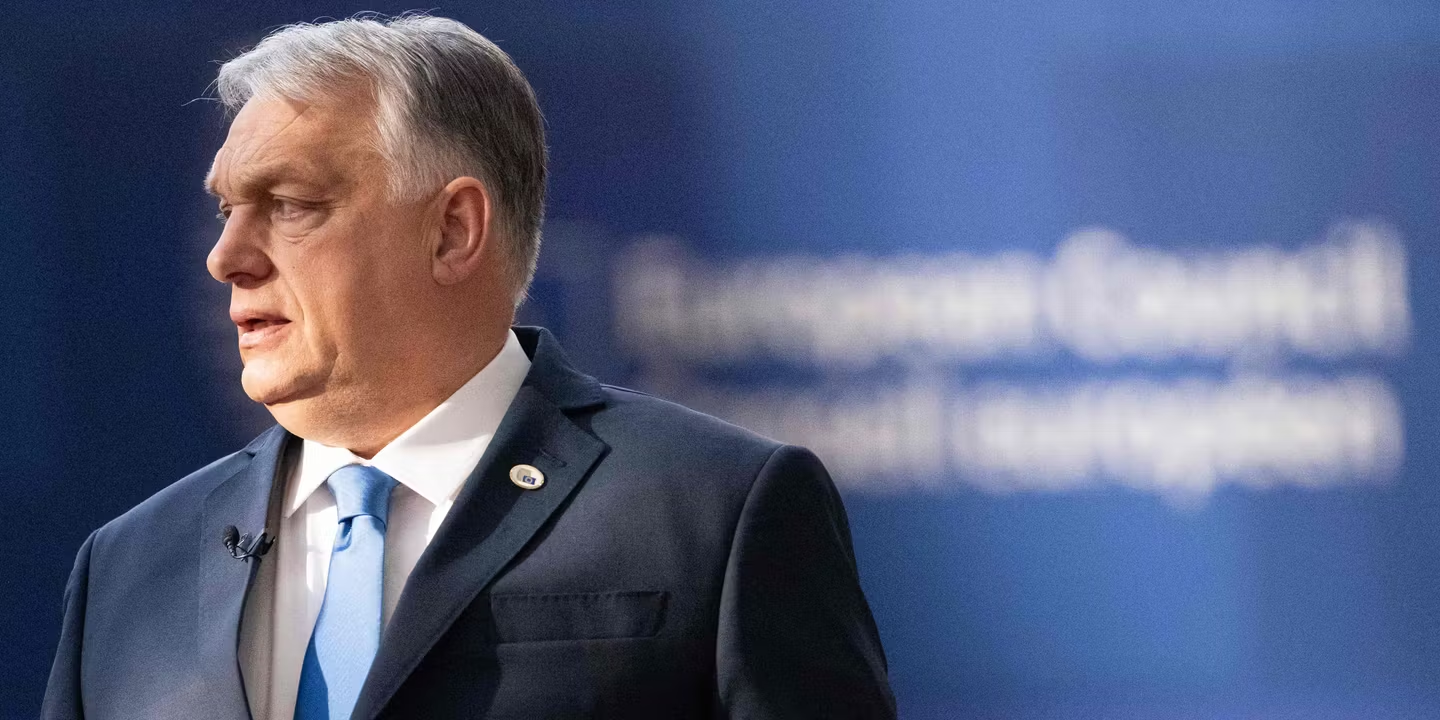
We really could have done without this political drama. While the world's attention is gripped by the escalating crisis in the Middle East, the Ukrainian front is far from silent. Quite the opposite, in fact. This Thursday, March 19, two major developments remind us that the war on Europe's doorstep is entering a critical phase—a volatile mix of diplomatic fatigue and blatant political blackmail.
Europe Held Hostage by Viktor Orban: "No Oil, No Money!"
If you thought European unity on supporting Kyiv was a done deal, I'm afraid it's time to think again. This morning in Brussels, the summit of the 27 member states turned into a high-stakes showdown. And, as has often been the case in recent years, Viktor Orban was the one lighting the fuse. The Hungarian Prime Minister, currently in the thick of his campaign for the April 12th parliamentary elections, arrived with a clenched jaw and the same old tune: he is categorically refusing to unlock a massive €90 billion European loan for Ukraine.
His excuse? A problem with an oil pipeline. Budapest is demanding that Ukraine restore the transit of Russian oil via the Druzhba pipeline, which was damaged in strikes, before it gives the green light. In other words: "We'll help Ukraine once we get our oil," he reportedly told his stunned counterparts, completely unflappable. It's a brazen act of blackmail that even prompted German Chancellor Friedrich Merz to push back, reminding everyone that "the principle of loyalty and reliability" must prevail within the Union.
A High-Stakes Game of Bluff
Everyone knows that Hungary is using Ukraine as an election-year punching bag. Insulting posters depicting Volodymyr Zelenskyy are popping up all over the country. But beneath the political posturing, Ukraine's financial survival for 2026 and 2027 hangs in the balance. Fortunately, European diplomats are quietly suggesting that a deal isn't critical right this second: Kyiv reportedly has enough funds to hold out until May, just after the Hungarian elections. Everyone's keeping their fingers crossed that after he secures another term (or not), Orban might just shelve his veto. In the meantime, the poker game continues, putting any major progress on ice.
The Missing Piece in Peace Talks: Peace Becomes Collateral Damage of the Iran War
While Orban blocks the financial aid, another, far more geopolitical factor is jamming the diplomatic machinery. You've been following the escalation in Iran, right? Well, it turns out it has a direct impact on the conflict we're covering here. The trilateral talks between the United States, Russia, and Ukraine are officially "on pause."
The news, confirmed by both the Kremlin and the Ukrainian Ministry of Foreign Affairs, is straightforward: Washington's focus is entirely locked on Tehran. Teams are still in daily contact, we're told, but high-level meetings are being postponed indefinitely. Kremlin spokesman Dmitry Peskov was blunt: "The trilateral group is on pause." Meanwhile, on the ground, the weapons keep talking. U.S. intelligence agencies, speaking through Tulsi Gabbard, are even predicting that Moscow intends to prolong this war of attrition to wear down Ukrainian resistance.
To sum up the surreal situation this March 19, here's what's blocking progress:
- Financially: Hungary is conditioning its aid on the resumption of its Russian oil supplies, effectively holding Europe hostage.
- Diplomatically: U.S. negotiators are completely consumed by the Middle East crisis, freezing peace discussions.
- Militarily: Both sides are watching each other, but the strikes continue, as evidenced by the Ukrainian drone attack on Krasnodar that left one person dead.
On the Front Line, the Drone War Rages On
While the politicians play their games of bluff, the military is getting on with its grim work. The Ukrainians have struck hard in recent hours, claiming a drone attack targeting Russian facilities. According to Russian sources, at least 219 drones were reportedly shot down on the outskirts of Moscow in a massive attack that stretched over nearly four days. Further south, in the Krasnodar region, a Ukrainian strike tragically hit residential buildings, killing a civilian. It's the sad, grinding routine of a war that shows no signs of ending.
So, where are we headed? Right now, the "live" picture of this war is a mosaic: a disunited Europe facing down Orban's blackmail, global superpowers distracted by other crises, and a Ukrainian people watching the diplomatic horizon darken. The only certainty is that the conflict is entering a new, deeply uncertain phase. And as always, I'll keep telling it to you straight, without filters, as close as possible to the front lines and the corridors of power.