Kuwait in the Chokehold of Crisis: What the State of Emergency Means for the Gulf and Our Economy
The news is getting more intense, and what's brewing leaves me, as a long-time observer of the region, quite uneasy. While most of us here in Austria are enjoying Sunday evening, a state of emergency has long been in effect in Kuwait. It's no longer just the distant thunder of a military escalation between Iran and Israel – the storm has reached the coast. And it has hit with full force.
The Silence Over Kuwait City: An Airport in a Coma
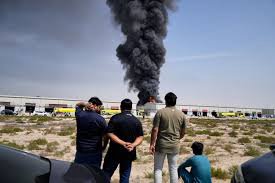
A good friend of mine, who normally flies for Kuwait Airways, sent me a voice message this morning. His voice: tense. He and his crew have been stuck in the transit area of Kuwait City airport for over 24 hours, the plane is grounded, and all flight operations are paralyzed. What I'm hearing from his circle sounds like chaos: hundreds of stranded passengers, the airport hotels are overflowing, and the staff has no idea when things will resume. Kuwait Airways, the national prestige project, has practically suspended operations – and that too for an indefinite period. Airspaces are closed, insurers are refusing coverage, and pilots no longer dare to take to the skies. An economic catastrophe for a country that lives off transit and trade.
When the World's Safest Currency Wobbles
Even more worrying are the signals I'm getting from the financial sector. The stock exchange in Kuwait has suspended trading – that's the very last resort to prevent a total crash. Insiders from the banking district report hectic phone calls between the Central Bank and the major trading houses. The Kuwaiti Dinar, always traded as the world's most valuable currency, is under massive pressure. Of course, the official rates are holding for now, but there's a gold rush atmosphere in the exchange houses of Kuwait City – albeit in the wrong direction. Everyone who can is exchanging Dinars for Dollars or Euros. The run on hard currency has long begun. If the peg of the Kuwaiti Dinar to the US Dollar so much as slips, we'll have a completely new problem – one that makes oil barrels more expensive far beyond the region and makes our imports impossible to calculate.
When Even Football Falls Silent
And then there's something else that seems trivial at first glance, but is central to the mood in the country: The matches of the Kuwait national football team have been cancelled. No stadium roars, no shared victories or defeats. Football is the release valve in the region, the only mass event that brings people together. When even that falls silent, then everyone knows: This is really serious. The youth, who would otherwise be kicking a ball around in the squares of Kuwait City, are now huddled at home, staring at the news tickers.
The Four Levels of the Crisis – An Overview
Let's summarise what the current developments mean for Kuwait. I see four clear fault lines:
- Military: The region has become a powder keg. A friendly military attaché confirmed to me that the American bases in the country have been put on the highest state of alert. Yesterday's incidents with drones and fighter jets over the Gulf make it clear how quickly the conflict could spill over.
- Economic: The stock exchange is closed, the Kuwaiti Dinar is staggering, investors are pulling out money – if they still can. The chambers of commerce are expecting massive slumps in the second quarter.
- Infrastructural: Kuwait Airways is at a standstill, the airport in Kuwait City is effectively paralyzed. The entire logistics chain for oil, gas, and consumer goods is stalling.
- Social: People are afraid. The cancellation of the football matches of the Kuwait national football team is just one symptom. Daily life as we know it has vanished.
For us in Austria, this means: Higher energy prices are almost certain, our export businesses that supply the Gulf region must prepare for total losses, and anyone who had planned a business trip to Kuwait City can forget about it for now. The world has just become a bit smaller and more unpredictable. And in the middle of this storm stands a small, rich country that is just learning that money alone can't buy peace.