24 Years Since the Ikeda City School Stabbings: A Family Member's Words of "Regret" and "Hope" at the Memorial, and the Evolving Security Business
On March 4th, many people visited "Rainbow Bridge," a memorial facility in Ikeda City, Osaka Prefecture, from early in the morning. It marks 24 years since that painful day at the Osaka Kyoiku University Ikeda Elementary School. The attack, where eight children lost their lives in a senseless act of violence, sent shockwaves through every school in Japan and shattered the myth of absolute safety.
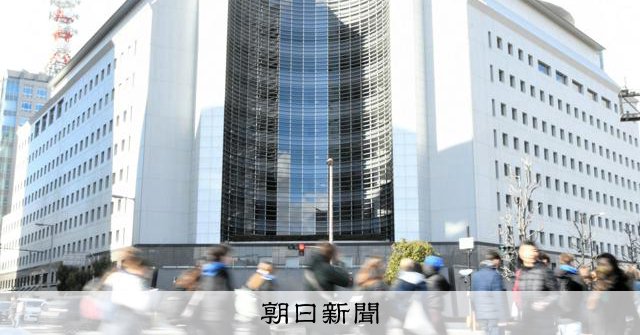
About 300 people, including bereaved families, school staff, and local residents, attended this year's memorial service. They observed a moment of silence and offered flowers. One bereaved woman who attended spoke quietly: "Even after 24 years, my child's smile is still vivid in my memory. We must not let this event fade away. We will continue to speak out, so that such grief is never repeated." Her words resonated deeply with everyone present.
Over these 24 years, school safety in Japan has changed dramatically. Installing security cameras has become standard, and many schools have implemented gate locking systems and protocols for handling suspicious individuals. However, as someone who has been involved in safety measures in this industry for many years, I am concerned that "token safety measures" are still prevalent. For instance, it's not uncommon to find cameras installed but not recording, or manuals in place without practical, hands-on training.
At this year's memorial, the association of bereaved families once again called for "enhanced mental health care" and "the creation of community-wide systems to watch over children." The children who were young at the time of the attack are now adults, living with their own trauma. The event also highlighted the challenge of passing on the memory, as many of the teachers who experienced the incident have since left their posts.
"Please Don't Forget" – A Message from the Bereaved Families on the 24th Anniversary
Several bereaved family members spoke emotionally at the memorial. Their words conveyed the following heartfelt wishes.
- Preventing the event from being forgotten: "As time passes, we feel society's interest waning. We won't forget, but the challenge is how to convey this to the next generation."
- Continuous evolution of safety measures: "We want them to apply the lessons learned that day to create a school environment that can also respond to new threats."
- Attention to invisible scars: "With more teachers who don't know about the incident, it's crucial to have adults who can notice subtle changes in children."
These voices highlight areas that cannot be solved simply by enhancing safety equipment. In other words, how to compensate for the vulnerabilities in the 'soft' aspects (human resource development, community, mental support) alongside improving the 'hard' infrastructure is arguably the major theme for the future.
Business Opportunities in "Safety": Market Evolution 24 Years On
The market related to school safety has certainly expanded over the past 24 years. Demand for hardware like security cameras, IC card gates, and emergency alert systems remains steady. However, what I'm focusing on is the emergence of new business opportunities beyond that.
Firstly, the mental health care sector. The trauma from such an incident casts a long shadow not only on the bereaved families but also on local residents and the emergency responders from that time. While many mental health services exist for corporations, counselling and training programmes specifically for 'critical incident stress' are still lacking. This represents a highly specialised niche market with significant growth potential.
Secondly, community-watching technologies. With crime prevention volunteers ageing, there is a growing demand for IT solutions that supplement 'community eyes', such as AI-powered surveillance cameras and location-sharing apps. For example, services that inform parents in real-time about their children's safety during the commute to and from school are already being adopted by many local authorities. However, there is ample room to add new value, such as more advanced risk prediction systems.
Furthermore, there are moves to create business models around 'preserving memory'. This could involve digitally archiving records of the incident and providing them as educational materials for schools. Or, thinking along the lines of 'memorial tourism,' linking the operation of memorial facilities to regional revitalisation. As these are highly public in nature, collaboration with local government and fostering a culture of donation are key, but they are worth considering as sustainable ways to pass on history.
Of course, the most critical aspect of developing such businesses is balancing 'dignity' and 'profit'. Using a tragic event purely as marketing material is absolutely unacceptable. Building services that are truly beneficial to society, while gaining the understanding of the bereaved families and the community – I am convinced this is the absolute prerequisite for long-term success in this field.
Changing Landscapes, An Unchanging Vow
Even after the memorial service ended and the attendees left, flowers continued to be placed at "Rainbow Bridge." The memory of that day 24 years ago has not faded; it remains etched into the fabric of this community.
The nature of safety changes with the times. However, the vow to 'never let such a tragedy happen again' is an unchanging promise that must be passed down by society as a whole. The process of making that vow a reality involves many challenges that require collaboration between the public and private sectors. The starting point for a truly meaningful safety business might just lie in each of us continuously asking ourselves: what can we do to ensure this event doesn't remain simply 'in the past'?