Larry Goodman: 'Too Big to Fail' and the Haughey Gamble That Reshaped Irish Business
There are businessmen, and then there are forces of nature. In the Irish psyche, Larry Goodman occupies a category all to himself. The new documentary that's been making waves, Goodman: Too Big to Fail, has dragged the nation back to the smoky backrooms of the 1980s and early 90s, but what strikes me most isn't the nostalgia—it's how the ghost of that era still dictates the rhythm of power in this country. We're not just talking about meat processing; we're talking about the blueprint for Irish capitalism.
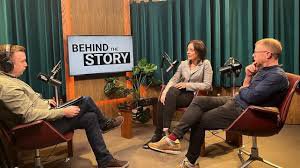
The Summer the Dáil Stopped for One Man
Let's rewind to August 1990. Saddam Hussein rolls into Kuwait, and suddenly, the Goodman empire—owed a staggering £180 million by Iraq—is hanging by a thread. Most of us remember the grainy footage, but what the documentary really drives home is the sheer audacity of the rescue. Ivan Yates, who was there, put it bluntly: Charles Haughey recalled the Dáil from its summer break specifically to pass examiner legislation designed to keep Larry Goodman afloat.
The official line was denial, but the market knew better. When you account for 40% of the national beef kill, you aren't just a supplier; you're a pillar of the state. The message was clear: this man was too integral to the economy to fail. That moment in political history—the emergency legislation, the hushed corridors—cemented a template for how Ireland treats its corporate titans. It's a template we still operate under today.
Beyond the Tribunal: The Man Who Walked Through Fire
Of course, the Iraq crisis was only one act in a longer play. The Beef Tribunal, which followed the explosive World in Action investigation by Susan O'Keeffe, was supposed to be the reckoning. It exposed the cozy relationships, the 'irregularities' at plants, and the breathtaking influence of the Goodman organization. But here is the part that fascinates me as an analyst: the tribunal's findings, while damning of the industry, ultimately concluded that Goodman himself had no knowledge of the malpractice.
Whether you buy that or not, the commercial reality is that he emerged not just unscathed, but with a ruthless focus. He rebuilt. He pivoted. While the rest of us were fixated on the political drama in Dublin, Larry Goodman was quietly restructuring what would become the ABP Food Group—a sprawling European empire with 51 plants and over 11,000 employees.
The New Empire: From Silvercrest to China
This is where the business value lies for investors and analysts watching the agri-space. The Goodman machine didn't just survive; it adapted. Even the 2013 horse meat scandal at the Silvercrest plant, which could have sunk a lesser brand, was weathered. Industry insiders confirm the government investigation cleared them of knowingly purchasing equine DNA, and ABP got back to work.
Look at the moves they've made in the last decade:
- 2015: First European company to export beef to the US after a 16-year ban.
- 2018: Secured contracts in China, both with restaurant chains and the JD.com e-commerce platform.
- Innovation: They now operate the first certified carbon neutral abattoir in the world at Ellesmere.
That's not just a meat baron; that's a multinational strategist. The family office has also diversified heavily into property, healthcare, and farming, ensuring that the Lillian & Larry Goodman Foundations have a substantial war chest for their philanthropic work, particularly in Israel and Chicago.
The Cultural Resonance: Why We Can't Look Away
It's interesting to see the search traffic spike for terms like Behind Every Good Man and even The Scarlet Letter and Other Writings: Authoritative Texts, Contexts, Criticism. While the former is a novel about a fictional Larry, and the latter is Hawthorne's classic, the cultural collision is apt. Goodman's story is, at its core, a tale of sin, judgment, and puritanical scrutiny versus commercial survival.
We project so much onto him—the avarice of the 80s, the corruption of politics, the grit of the self-made man. But the reality is simpler and more complex. He is the sixth generation of a livestock family from Dundalk who left school without his Intermediate Cert. He outlasted Haughey. He outlasted the tribunals. He's still here, and his company is bigger than ever.
The Bottom Line for Investors
So, what's the commercial takeaway? The Larry Goodman playbook is a masterclass in vertical integration and political risk management. In a world where supply chain security is the new oil, ABP's dominance across Europe—from Denmark to Spain, Poland to France—positions it as a critical infrastructure player. The lesson of the 1990 bailout wasn't that Goodman was lucky; it was that he had made himself indispensable. For anyone looking at the Irish market, or the European agri-sector, keep an eye on Castlebellingham. The name on the door may be old school, but the strategy is looking firmly at the next century.