Israel escalates against Hezbollah – tens of thousands flee in Lebanon
New phase in the conflict: "Save yourselves"
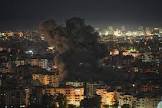
Israel has launched what it calls a new phase in its operation against Hezbollah in Lebanon. On Monday, tens of thousands of civilians in southern Beirut and other parts of southern Lebanon were ordered to leave their homes immediately. "Save yourselves, evacuate now," read the Israeli military's order, as it simultaneously intensified airstrikes on what it describes as Hezbollah's infrastructure. On the roads south of Beirut, cars overloaded with people and belongings can be seen in a desperate attempt to escape the violence. A local aid worker on the ground describes the chaos: "It's absolute panic. People don't know where to go, they're just driving."
Background: Explosions and targeted killings
The latest escalation follows a series of heavy blows against Hezbollah. Just a couple of weeks ago, Lebanon was shaken by a coordinated wave of explosions targeting members of the organization. The 2024 Lebanon electronic device attacks, as they've already been dubbed, involved thousands of pagers and walkie-talkies detonating in the pockets of Hezbollah affiliates – a sophisticated intelligence operation widely attributed to Israeli intelligence. The attacks killed dozens and wounded thousands, crippling large parts of Hezbollah's communication network. A source with insight into the security apparatus confirms the attack was planned long in advance and aimed at creating maximum chaos.
Just days later, it was confirmed that Hezbollah's Secretary-General, the charismatic and long-time leader Hassan Nasrallah, was killed in an Israeli airstrike in southern Beirut. Nasrallah, who led the movement for over three decades, was the architect behind Hezbollah's strategic buildup and an icon of resistance against Israel. His death is an extremely heavy blow to the organization, which is now struggling to maintain its command structure and morale. Within the party, there is talk of a time of darkness, but also that revenge will be bloody.
"This is normal for us now" – life under the bombs
On the ground in southern Lebanon, people describe a daily life marked by constant death and destruction. A man who just fled the border town of Marjayoun says: "We wake up to bombs, fall asleep to the thunder of bombs, and try to survive in between the strikes. This is normal for us now, but it doesn't make it any easier." The Israeli attacks have displaced an estimated half a million people from their homes in the past week alone, and many of them are now sleeping in schools, parks, or open fields in Beirut and other cities. Resources are virtually non-existent, and aid organizations are warning of a humanitarian catastrophe.
Key events in the recent escalation
- Mid-September 2024: Thousands of pagers and communication devices explode in Lebanon and Syria, targeting Hezbollah members. At least 37 dead and over 3,000 injured.
- Late September 2024: A senior Hezbollah commander is killed in an airstrike on Beirut.
- September 27, 2024: Hezbollah Secretary-General Hassan Nasrallah is killed in a massive Israeli bombing of southern Beirut.
- September 30, 2024: Israel issues evacuation orders for parts of southern Beirut and southern Lebanon, launching what it describes as a "new phase" – widely interpreted as a precursor to a ground invasion.
What happens now? The risk of a major conflict
With Hezbollah reeling and Israel continuing its military campaign, the question is whether the region is heading towards all-out war. Hezbollah has spent many years building up an extensive rocket arsenal, and the group has already fired hundreds of rockets into northern Israel. Meanwhile, Iran, Hezbollah's main backer, has so far refrained from direct intervention. But diplomatic sources in the region suggest that if Israeli troops enter Lebanon on a broad front, it could be the spark that draws more parties into the conflict. For the Lebanese, who are already suffering from a severe economic crisis, war means another disaster. Those fleeing the south are arriving in a Beirut that has itself been bombed, where aid is far from sufficient. "We have nowhere to go," says an elderly woman we meet on the outskirts of the city. "We just want to live in peace, but there is no peace here."