Espido Freire: “I Care Too Much About Being Remembered” – The Writer Takes Center Stage at the Cuenca Book Fair 2026
There are writers who pass through life leaving a mark that’s hard to measure. And then there’s Espido Freire, that force of nature from Bilbao who has spent decades proving that literature isn’t just a craft—it’s a way of being in the world. These days, her name is resonating strongly in the province of Cuenca, where the Book Fair has given her a central role. And it’s no wonder: when Espido speaks, you listen.
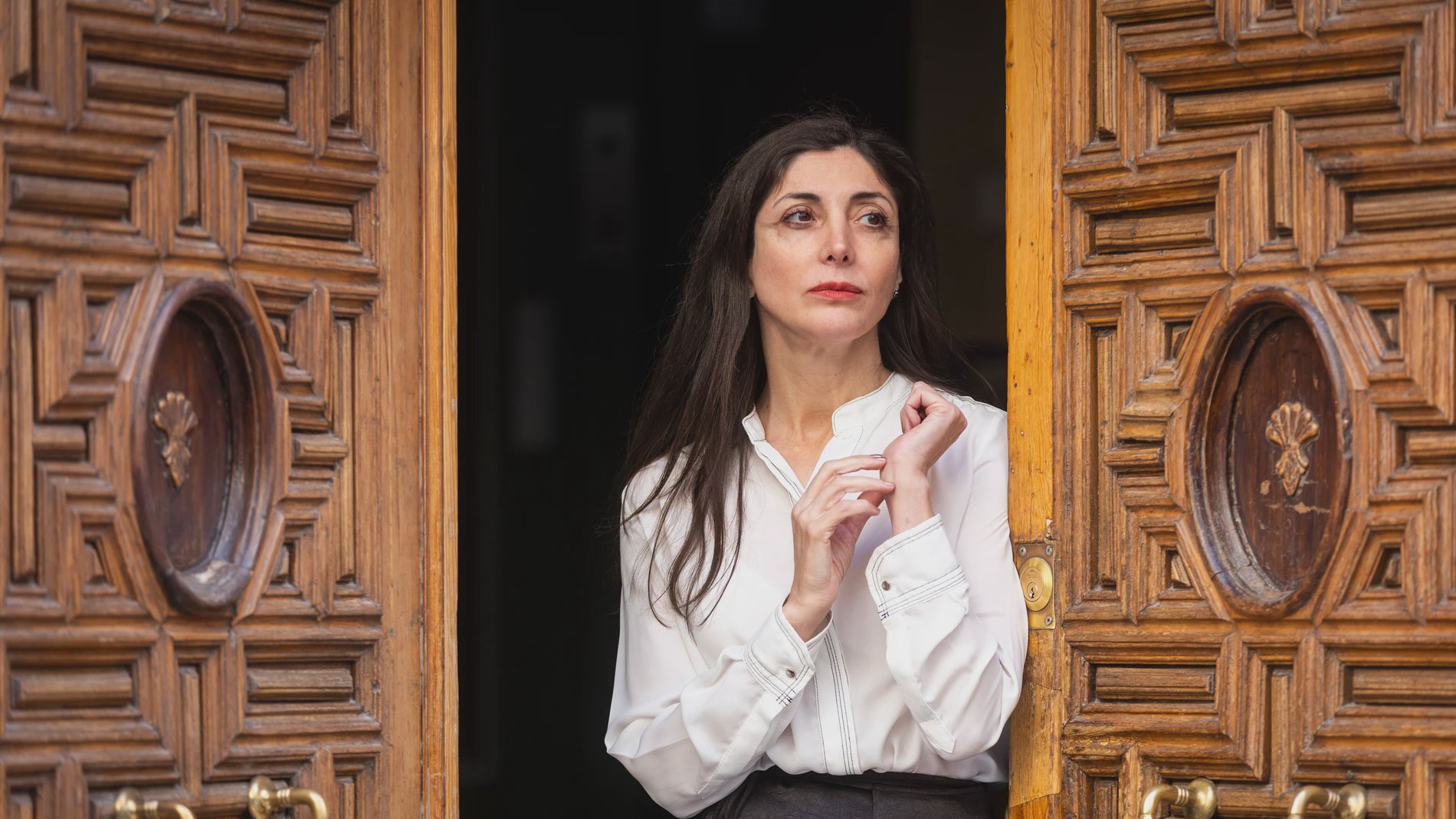
From Cuenca to the Airwaves: The Enduring Power of a Unique Voice
Espido Freire's presence at the 2026 Cuenca Book Fair has been one of the biggest draws of this year’s event. Not only because of her undeniable resume, which includes winning the Planeta Prize at just 24 for Melocotones helados, but also because of her unique ability to connect with readers. Around the fairgrounds, she seemed right at home, chatting with long-time booksellers and signing copies with her trademark handwriting—firm and full of personality. It's the same energy she brought just days earlier, when she sat down in the studio to talk about, among many other things, literature, of course, but also about immigration reform and the more human side of current events. Because that’s what defines Espido Freire: she’s never been one to stay in an ivory tower.
“I Care Too Much About Being Remembered”
One of the most talked-about lines in recent days, one that perfectly sums up her character, came during a recent interview tied to the Cuenca fair. She said it without hesitation: “I care too much about being remembered.” And mind you, this isn’t a statement of arrogance; quite the opposite. It’s a declaration of intent. In a world where so much is published and read in haste, Freire champions ambition in its truest sense: to build a body of work that endures, to put words into the world that matter. This reflection on literary memory resonates especially in a setting like Cuenca, a city steeped in history and culture, where every corner seems to ask you to pause for a moment. In her talks, she made it clear that she doesn’t write just to fill shelves, but to leave a lasting impression.
An Intimate Bond with the Reader
If there’s one thing that defines Espido Freire, it’s this almost conspiratorial connection with those who read her books. In her public appearances, whether at a provincial fair or on a radio show, you get the sense that she’s one of us. And she proves it every time she speaks, because she doesn’t just talk about literature—she lives it. From her earliest novels to her most recent essays, she has explored the fringes, female psychology, and the darker corners of society with a perspective that never feels performative.
At the Cuenca Book Fair, in addition to meeting her readers, she made her current priorities clear. Those who had the chance to hear her noted her fierce defense of culture as a pillar of society. It’s no coincidence that in recent months her schedule has taken her across the length and breadth of Spain, from major cities to smaller fairs, because for her, the spotlight belongs wherever an open book is found.
- Her Time in Cuenca: The undeniable star, she left behind memorable quotes about the need to build a legacy.
- A Voice on the Airwaves: Her appearances on afternoon radio showed her versatility, tackling social issues with the same ease with which she dissects a literary character.
- A Legacy in Progress: Beyond the awards, Espido Freire insists that her greatest ambition is for her words to remain alive.
The Vision of a Complete Writer
With more than two decades of her career behind her, Espido Freire has managed to reinvent herself without losing her essence. Those who thought that after winning the Planeta she would get stuck in a single style have had to revise their opinions with each new release. Because she, who started as one of the most brilliant young promises, has become one of the most mature and critical voices on the Spanish literary scene. And so, without making a fuss, she has earned her place in the memory of readers.
While some writers chase the immediacy of media noise, Espido Freire plays in a different league: the league of those who understand that literature is a muscle exercised with truth. And judging by her schedule, with one fair after another and collaborations with major media outlets, it seems that muscle is in top form. If you get the chance to see her at an upcoming event, don’t hesitate. It’s worth listening to someone who, with such a keen interest in being remembered, gives us the tools every day to understand ourselves a little better.