Wounded Sentinel: What the Loss of the USAF’s E-3 Sentry in Saudi Arabia Means
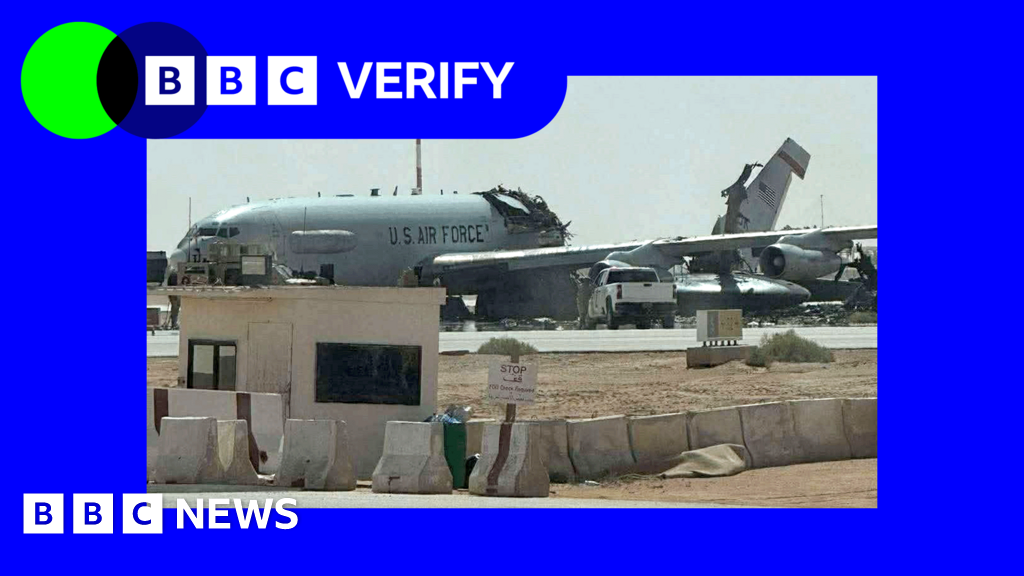
Early last weekend, a scene unfolded that military aviation enthusiasts won't soon forget. This wasn't a routine aerial refuelling manoeuvre, the kind the Boeing E-3 Sentry performs with near-mechanical precision alongside a KC-10 Extender. This was different. The first images circulating on unofficial channels show the wreckage of one of these airborne surveillance giants, parked at Prince Sultan Air Base in Saudi Arabia, its distinctive rotating radome peppered with shrapnel. Sources close to military operations in the area have confirmed what many of us feared: an E-3 Sentry AWACS has suffered catastrophic damage during the latest ballistic missile attack launched by Iranian-backed Houthi forces.
For those who might not know, we're talking about the all-seeing eye in the sky. The E-3 Sentry isn't your typical fighter jet. It's a flying command centre. Its job is to take off before anyone else and land after everyone else, managing the airspace, directing fighters, and tracking every enemy missile. That's why seeing it taken out of action like this, on the ground, stings especially hard. And it's not just about sentiment. Its loss, even temporarily, leaves a massive operational gap.
A high-value target on the ground
This incident forces us to rethink a lot. Prince Sultan Air Base, south of Riyadh, has become a key stronghold for US aviation in recent years. Fighters operate from there, and of course, the AWACS fleet. What's happened shows that the layered defence of these installations isn't foolproof. A missile that hits and takes out an asset as valuable as the E-3 Sentry is a strategic blow. It's not just the cost of the aircraft—around $270 million for the modernised models—it's the loss of command and control capability over the theatre of operations.
The details emerging are concerning. According to sources close to military operations in the area, the stricken aircraft wasn't airborne when it was hit. It was on one of the parking aprons, possibly undergoing refuelling or maintenance. This vulnerability on the ground is a costly lesson. While scale models, like the Roden Boeing E-3 Sentry AWACS aircraft model rod345 that many modellers have at home, let us admire its lines in miniature, the reality is that a real impact on its fuselage can't be fixed with glue.
- Critical structural damage: Images show a direct hit on the wing section and rear fuselage, right where the TF33 engines are housed. The airframe is compromised.
- Mission system offline: Even if the radome appears intact in some photos, the internal sensors and electronics are extremely sensitive to blast waves. It's highly likely the heart of the AWACS system is wrecked.
- A dangerous precedent: Iran and its allies have shown they can reach high-visibility assets on Saudi soil. This changes the game for coalition logistics.
More than just an aircraft, a symbol
It's interesting how events like this even impact popular culture and collecting. It's not unusual for news like this to spark a surge of interest in related memorabilia. I'm talking about the Posterazzi a US Air Force E-3 Sentry aircraft refuelling from a KC-10 Extender. Poster 17 x 11 or the 34 x 22 inch version. Suddenly, that image, once just a display of air power, becomes a testament to a particular era. Even serious collectors hunting for a Diecast metal model 1/200 scale US E-3 Sentry aircraft collection for living room start looking at their display cases differently. It's no longer just a decorative piece; it's a reminder of the vulnerability of military power when it's grounded.
The future of the AWACS fleet in the region is now uncertain. The US is already in the process of transitioning to the Boeing E-7 Wedgetail to replace these Cold War veterans, but that change isn't yet an operational reality in the Gulf. Meanwhile, the loss of this E-3 Sentry will force a reshuffling of the skies. Less surveillance capacity means more risk for the fighters operating over Yemen and for strategic interests in the Strait of Hormuz.
What's clear is that the nickname "Sentry" has taken on a more tragic meaning today than ever before. The sentinel has fallen, but the watch—even with fewer eyes—must go on. Because on this chessboard, missiles don't care about scale models or posters on the wall. What matters is who controls the sky before the other can even get airborne.