Donut Lab’s Solid-State Battery Pulls It Off: Passes Self-Discharge Test with Flying Colours
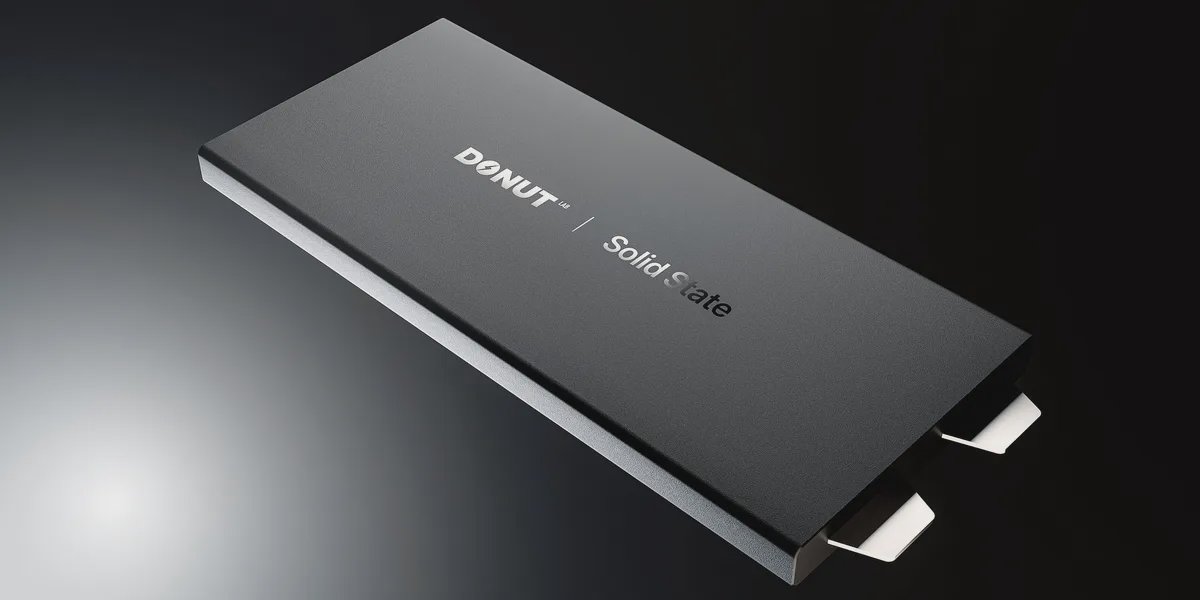
When it comes to the next big leap for electric vehicles, all eyes have been on solid-state batteries for a while now. But Donut Lab, in partnership with VTT, has just taken a massive, tangible step toward making that future a reality. Test results released in early March are nothing short of impressive: Donut Lab's battery looks set to completely upend our understanding of energy storage.
The self-discharge problem? History.
One of the biggest question marks hanging over solid-state tech has been its long-term performance, specifically its rate of self-discharge. Traditional lithium-ion batteries slowly lose their charge even when your car is parked in the garage. In tests conducted by Donut Lab and VTT, their battery was left idle for several weeks. The results speak for themselves: practically zero discharge. This means your EV could sit in an airport car park for a month and still be ready to go with a full charge when you get back.
This isn't just a theoretical curiosity observed in a lab anymore. Donut Lab has built its test unit as a scalable technology, and VTT's independent measurements back up the numbers. What we're looking at here is the first solid-state battery that doesn't just work, but performs exactly as it should.
What does this actually mean for EV drivers?
When we talk about a breakthrough, it pays to look at the real-world benefits. Donut Lab's solution isn't just a promise; it delivers at least these key advantages:
- Incredibly low self-discharge: Your car is always ready to roll, even if you haven't driven it for weeks.
- Longer lifespan: The solid-state construction can handle significantly more charge cycles than current batteries.
- Safety: A solid electrolyte eliminates the fire risk associated with liquid ones.
- Energy density: You can store a whole lot more energy in the same amount of space – think lighter cars and longer range.
These aren't futuristic concepts anymore. With Donut Lab's test results, they're concrete facts.
VTT's involvement is no accident
Kiwi expertise? Well, Finnish expertise, in this case, has been absolutely central to this development. The measurements carried out at VTT's labs are world-class, and their findings are sure to stand up to scrutiny from international car manufacturers. Donut Lab has picked its partners wisely – research out of Finland has a solid reputation for being honest and accurate. This lends serious credibility to the claims, which is refreshing in an industry that can sometimes be full of hot air.
The test results have been carefully documented and are openly available for industry players to review. It's a sign that Donut Lab isn't afraid of a critical eye – quite the opposite. They're out to prove their technology is ready to move from prototypes to full-scale production.
So, what's the timeline looking like?
Donut Lab representatives have consistently stated that mass production isn't years and years away. If the testing goes to plan, we could see the first solid-state batteries suitable for mass production hitting the market within the next few years. This wouldn't just revolutionise the car industry, but also things like heavy machinery, shipping, and air travel. But more than anything, it means the day-to-day reality of owning an EV is about to get a whole lot easier.
With this test, Donut Lab has shown it's not just another battery startup. The collaboration with VTT and the published results on self-discharge set a new benchmark for the entire industry. Now, the question is: who's going to be the first to run with it and take the tech to the next level?