World Cup 2026: Iran Defies FIFA, Dreams of a Mexican Exile
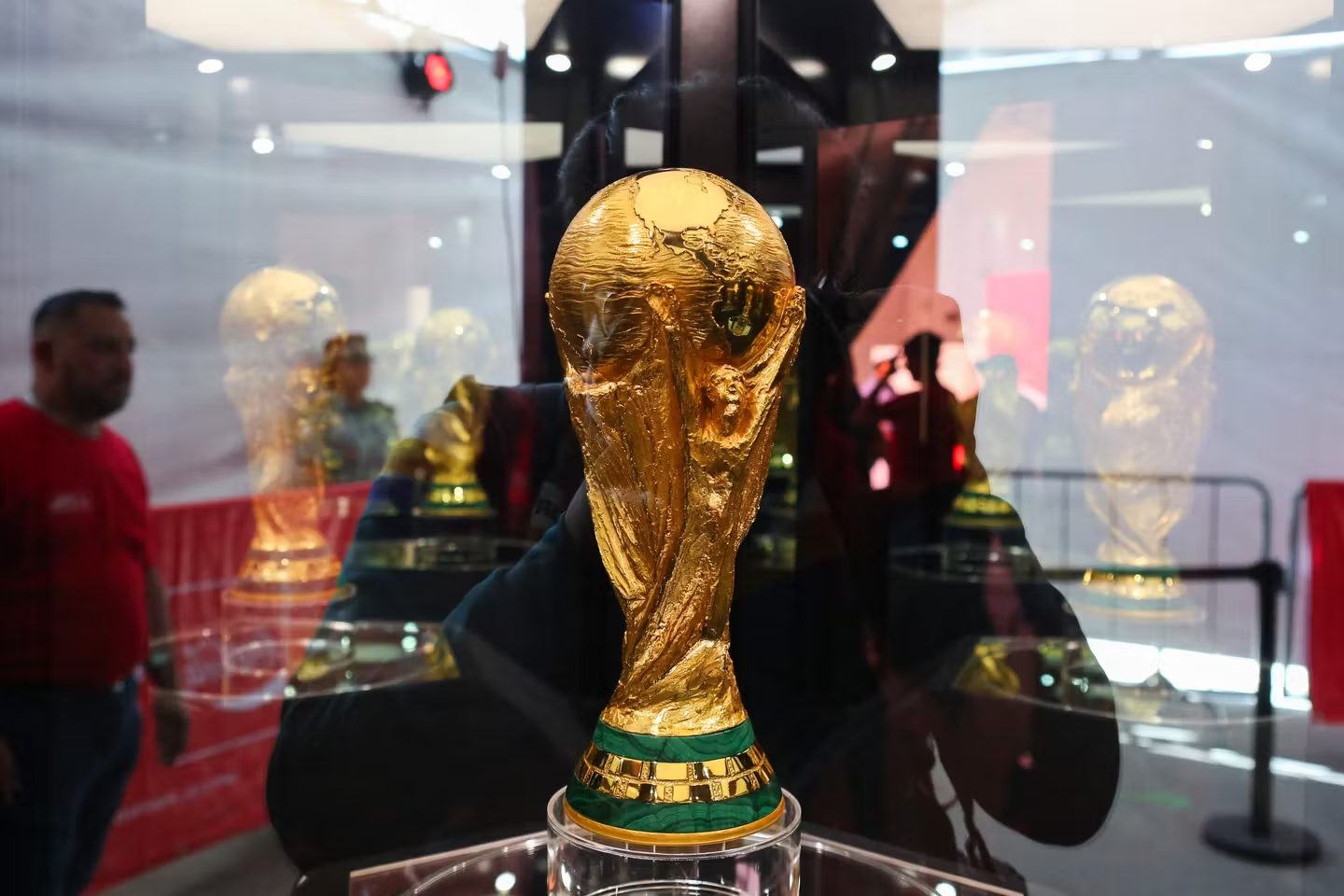
It feels like a scene ripped from a high-stakes geopolitical thriller. As the soccer world holds its breath in anticipation of the FIFA World Cup 2026™, one national team has decided to shake up the rulebook. Iran, drawn into a group that would theoretically send them to play on American soil, has formally asked FIFA to relocate their matches... to Mexico. It's an explosive request, immediately shot down by soccer's governing body, but one that has found a sympathetic ear in Mexico City.
Beneath the surface of a simple logistical request lies the complex web of international relations crashing into the beautiful game. Tehran, whose relationship with Washington is, to put it mildly, frigid, simply does not want to set foot in the United States. Tensions over the nuclear program, ongoing sanctions, and the hostile rhetoric from both sides make the idea of the Iranian national team traveling through America anything but trivial. Iranian officials have made their feelings known behind the scenes: "Our boys will not be political hostages."
FIFA Shows the Red Card
In Zurich, they don't mess around with the rules. The response was swift, blunt, and final: FIFA will not alter the schedule or the geographic allocation of matches that have been set for months. The draw was clear, and the groups are locked in. Allowing Iran to play all its group stage games in Mexico, citing diplomatic tensions, would set a dangerous precedent. Tomorrow, it could be Israel, Russia, or any other nation in a conflict demanding the same special treatment. For Gianni Infantino and his team, it's a firm 'no,' and that's final.
But this categorical refusal hasn't closed the book on the matter. Quite the opposite. Because there's a third player in this drama, and a significant one at that: Mexico.
Claudia Sheinbaum Extends a Hand
Yesterday, Mexican President Claudia Sheinbaum stirred the pot by declaring her country "ready to host Iran's matches." This olive branch is far from innocent. First, Mexico is one of the three host nations for the 2026 World Cup, alongside the United States and Canada. It boasts world-class infrastructure and a deep-rooted passion for soccer, a love affair that's never waned since the days of the iconic Estadio Azteca. Secondly, on the diplomatic front, Mexico City often plays the role of mediator in Latin America. Offering sporting asylum to Iran is also a way to assert its sovereignty in the face of its powerful northern neighbor.
There's one massive catch, though: sporting logic and competitive fairness. If Iran plays all its matches in Mexico, what happens to its opponents (likely England, Wales, and a play-off winner)? Would they have to crisscross the Atlantic twice? Could Iranian fans potentially get visas more easily for Mexico than for the U.S.? These are the kinds of questions already igniting debates on sports talk shows and in the tabloids.
To fully grasp the scale of the problem, it's essential to understand the core principles FIFA is desperate to protect:
- Sporting Integrity: All opponents must be treated equally regarding travel and rest.
- Security: The organization cannot guarantee optimal protection if matches are scattered outside the planned framework.
- Legal Precedent: Yielding to Iranian pressure would open a Pandora's box of political demands.
- The World Cup's Image: A tournament already criticized for its carbon footprint cannot justify an increase in transcontinental flights.
Meanwhile, old memories are resurfacing. Many recall the FIFA Arab Cup, hosted by Qatar in 2021, from which Iran was excluded for obvious political reasons tied to the Arab boycott. Now, the tables have turned: Iran is the one demanding special treatment, but this time, the tug-of-war is playing out on the global stage. Seasoned observers note that soccer diplomacy has always been a parallel battlefield, and crises like this could become more frequent as World Cups are increasingly co-hosted by nations with complex alliances.
So, what happens now? Officially, the case is closed for FIFA. But behind the scenes, everyone knows the Iranians won't let this go. The Tehran government could ramp up the media pressure, threaten to boycott the tournament, or try to rally support from other Muslim nations. And if Mexico continues to position itself as the savior, this high-stakes poker game is just getting started.
One thing is certain: with eight months to go until the kickoff of the FIFA World Cup 2026™, the soccer world is holding its breath. Caught between sporting interests, political pressures, and the egos of leaders, the balance is more fragile than ever. And as fans, we love this kind of drama... as long as, in the end, the ball finally starts rolling.