Esperanza Aguirre Strikes Again: She Blames Rajoy for the Birth of Vox and Ignites a Civil War Within the PP
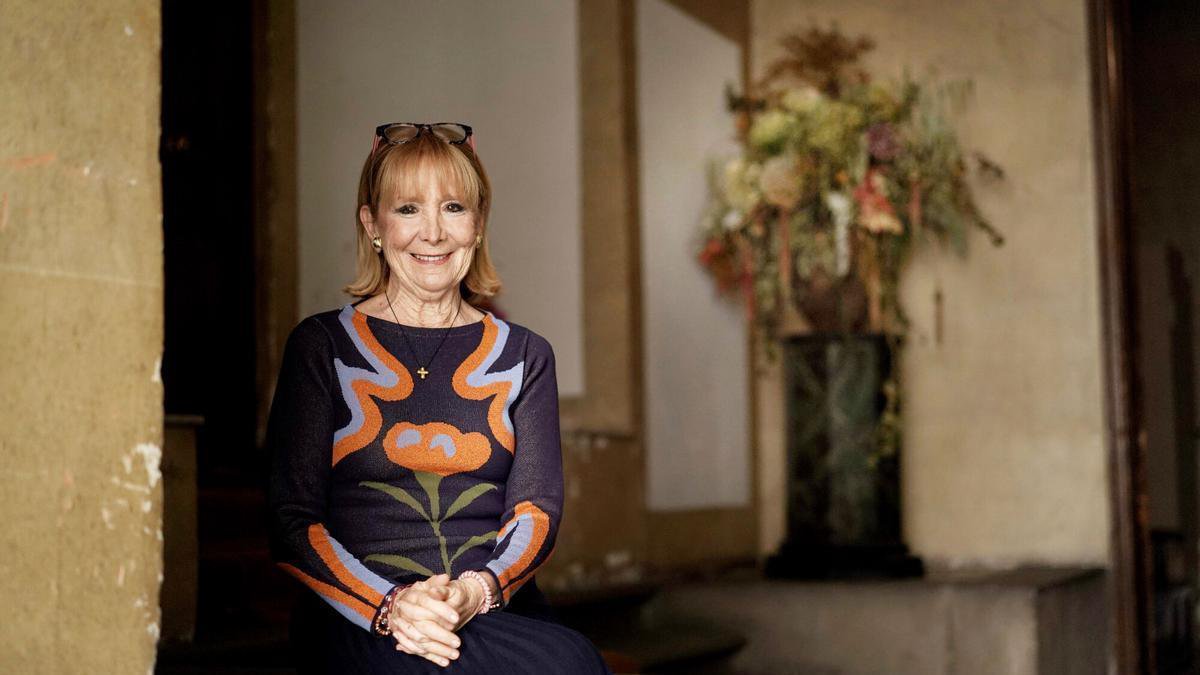
It’s hard to believe, but every time Esperanza Aguirre speaks, the People’s Party (PP) trembles. The one-time undisputed leader of the PP in Madrid and former regional president has, once again, decided to shake the party’s foundations with comments that have left no stone unturned. And this time, the focus isn’t just on her protégé, Isabel Díaz Ayuso, but directly on former Prime Minister Mariano Rajoy. The civil war on Spain’s right isn’t just continuing; it’s flaring up again with unexpected ferocity.
“Rajoy Drove Us to the Edge of the Cliff”: The Genesis of the Vox Tsunami
What Aguirre has let loose in recent hours is nothing short of an earthquake. According to sources close to the former president, her assessment is damning: the emergence and subsequent success of Vox isn’t a coincidence or the genius of its founders, but rather a power vacuum created, in her words, by the PP leadership under Mariano Rajoy. “If there hadn’t been a government that set out to erase the center-right’s identity markers, someone else wouldn’t have had to occupy that space,” she’s been saying in political circles.
For her, Rajoy’s lack of spine during his years in La Moncloa was the perfect breeding ground. The feeling among many conservative voters that “nothing was being done” in the face of territorial challenges or the handling of certain issues led a segment of the electorate to seek a more combative home. And that’s where Esperanza Aguirre stirs up controversy: without Rajoy’s management, Vox simply wouldn’t exist as we know it today. It’s a direct, no-holds-barred accusation that lays bare the internal fracture that has never fully healed.
- Criticism of Rajoy: Aguirre accuses him of having “squandered” Aznar’s legacy and leaving right-wing voters without a home.
- The Ayuso Effect: In the midst of this storm, the current Madrid regional president emerges strengthened as the natural heir to that more combative spirit.
- Feijóo’s Secret: The former president reveals that she could have been the “brake” on the current national leader, but chose to take a back seat.
Loyalty (and the Dagger) with Ayuso, and Feijóo’s Complicated Role
In the midst of this verbal offensive, Aguirre also wanted to clarify her position regarding Isabel Díaz Ayuso. Far from the gossip about a cold distance, Aguirre assures that her relationship with the current regional leader is one of complete collusion. But the most explosive part came when she spoke about the national leader, Alberto Núñez Feijóo. According to what she confessed among her inner circle, there was a moment when she could have positioned herself as the main alternative to the current leadership, but decided not to, thus allowing Feijóo to consolidate his leadership without facing a fierce internal challenge. “I could have been the one in that spot, but I chose a different path,” she essentially said, hinting that had it not been for that personal decision, the history of the post-Rajoy PP could have been very different.
These revelations aren’t innocent. They come at a time when the PP is trying to show unity ahead of the next election cycles. But Esperanza Aguirre’s shadow is long, and her words resonate with the force of someone who, for years, was the only voice daring to challenge the stagnation of the Rajoy era. For many, her analysis of Vox’s origins is a wake-up call. For others, it’s simply confirmation that the former president remains a master strategist, maneuvering from the sidelines to position her allies and set the agenda.
Resurrection or Settling Scores?
What’s clear is that Spanish politics, especially on the center-right, can’t afford to ignore what Aguirre says. Her latest statements aren’t just a venting session; they are a bitter diagnosis of what she sees as a historic mistake. By going after Rajoy, she’s not only vindicating her own career but also legitimizing the radical shift represented by Ayuso and Vox as a necessary, almost organic, response to an era she considers one of “betrayal” of core principles.
While Feijóo tries to navigate these turbulent waters, Esperanza Aguirre once again places herself at the center of the storm, proving that her voice, even without an institutional role, remains one of the most reliable barometers for gauging the temperature of the PP’s internal war. The narrative is now set: Rajoy created the conditions for the birth of a monster that’s now eating away at votes on the right, and she, along with Ayuso, are the only ones who saw it coming and fought it. The rest, as always, is history that will continue to be written with incendiary statements.