NASA Satellite Set to Crash to Earth: What It Means for New Zealand
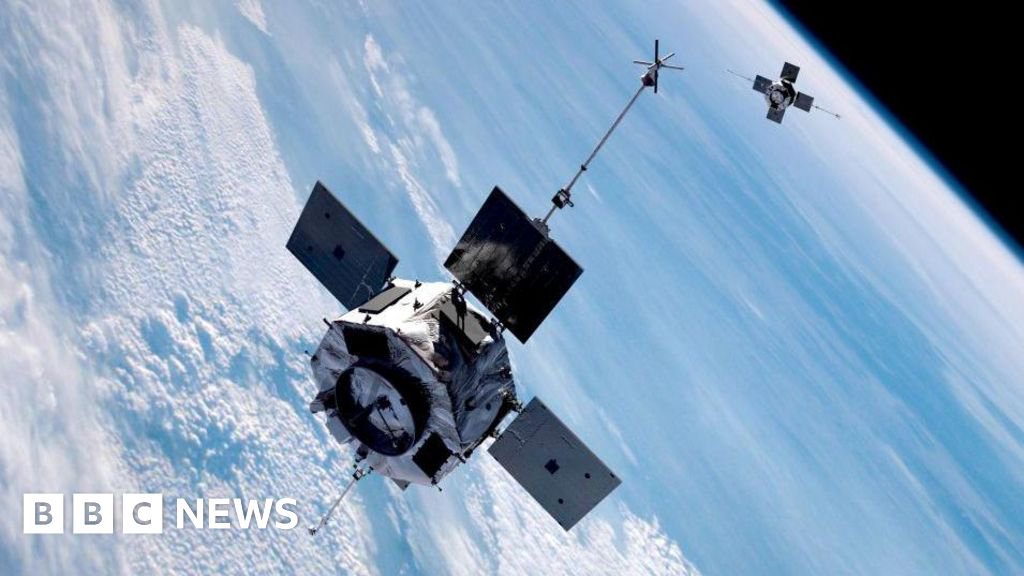
If you've caught wind of the headlines screaming about a NASA satellite plummeting back to Earth and felt a twinge of "should I be looking up or ducking for cover?", take a breath, mate. The spacecraft in question—the Van Allen Probe A—is making its grand finale this week, and while it sounds dramatic, the reality is a lot less Hollywood.
Launched back in 2012 as part of a duo to study the Van Allen radiation belts that wrap our planet, this little workhorse has been circling us for nearly 14 years, sending back jaw-dropping data about the dangerous particles trapped by Earth's magnetic field. Its twin, Probe B, already made a controlled re-entry last year. Now it's Probe A's turn to bow out—and it's going out in a spectacular fiery display.
Should You Be Worried About Getting Hit?
Short answer: about as much as you worry about a sheep wandering through your lounge room. The vast majority of the 1,500-kilogram spacecraft will burn up during re-entry, which is expected to occur sometime in the next few days. Any surviving chunks will likely splash down into the ocean or hit some remote patch of land. The odds of a piece landing near a populated area are incredibly low—we're talking one-in-several-thousand low. For us in New Zealand, with our extensive coastline and plenty of remote areas, the chances are even slimmer. So no, you don't need to add "satellite debris" to your earthquake preparedness kit checklist.
But what's actually coming down? Let's look at the key bits of this NASA satellite's legacy:
- Mission: Van Allen Probes (formerly Radiation Belt Storm Probes) – designed to understand how the radiation belts behave during solar storms.
- Key Discovery: They revealed a third, previously unknown radiation belt that forms temporarily after solar events.
- Data Legacy: Their findings are crucial for protecting other satellites and astronauts from radiation.
- Re-entry Mass: About 1.5 tonnes, but 90%+ expected to burn.
From Gravity's Chains to the Heavens on Sale
It's funny to think that missions like this were once pure science fiction. If you want to appreciate how far we've come, grab a copy of Breaking the Chains of Gravity: The Story of Spaceflight Before NASA. It's a ripping read about the dreamers and engineers who made spaceflight possible long before the agency existed. And for the tech-heads among us, the classic textbook Space Mission Analysis and Design is still the bible for how you actually plan something as complex as sending a probe to study radiation.
Of course, space isn't just government domain anymore. These days, you've got private players racing to put hardware up there. A cracking book that captures that new gold rush is When the Heavens Went on Sale: The Misfits and Geniuses Racing to Put Space Within Reach. It reads more like a thriller than a dry industry report.
Back to our falling friend: all the data from Probe A was downloaded and analysed years ago. Engineers probably used tools like those explained in Spark in Action: Covers Apache Spark 3 with Examples in Java, Python, and Scala to process the torrents of information it beamed home. The mission's entire history, by the way, is meticulously documented in series like Exploring the Unknown: Selected Documents in the History of the U.S. Civilian Space Program—a treasure trove for anyone who loves space policy.
A Final Fiery Bow
So while the headlines shout "NASA satellite crashing to Earth!", let's reframe it: one of our trusty robotic mates is taking its final bow. It's done its job, it's out of fuel, and gravity is giving it a send-off that'll look like a shooting star—if you're lucky enough to be in the right place at the right time (and maybe a fair way south). And if you miss it? Don't stress. There are plenty more NASA satellite missions up there still hard at work, and plenty more books to keep you grounded while they explore the unknown.