How to Perform the Eid Prayer: A Complete Guide to the Correct Method, Etiquette, and Sunnah Practices
Hey everyone, Eid is just around the corner – Eid Mubarak to you all! The festive vibe is starting to fill the air, and we're getting into the spirit of things. The most important part of Eid day, after the joy of finishing Ramadan or standing at Arafat, is the Eid prayer. Lots of people ask about the exact method of the Eid prayer, what's obligatory and what's recommended? Today, I wanted to explain it to you from the heart, in a simple and easy-to-understand way, so you can head to the prayer ground feeling confident and at peace.
Time and Place of the Eid Prayer
First thing's first, the Eid prayer isn't at Fajr time, no. Its time starts about 15 minutes after sunrise and continues until just before the Dhuhr adhan. So there's no need to rush; you can have breakfast, get ready, and head out calmly. The Prophet ﷺ used to pray it in the musalla, an open space outside the mosque, so that everyone could gather: young and old, men and women. Here in our country, major mosques and dedicated prayer grounds welcome the worshippers, and it's performed in congregation, bringing immense reward.
How to Perform the Eid Prayer Step by Step
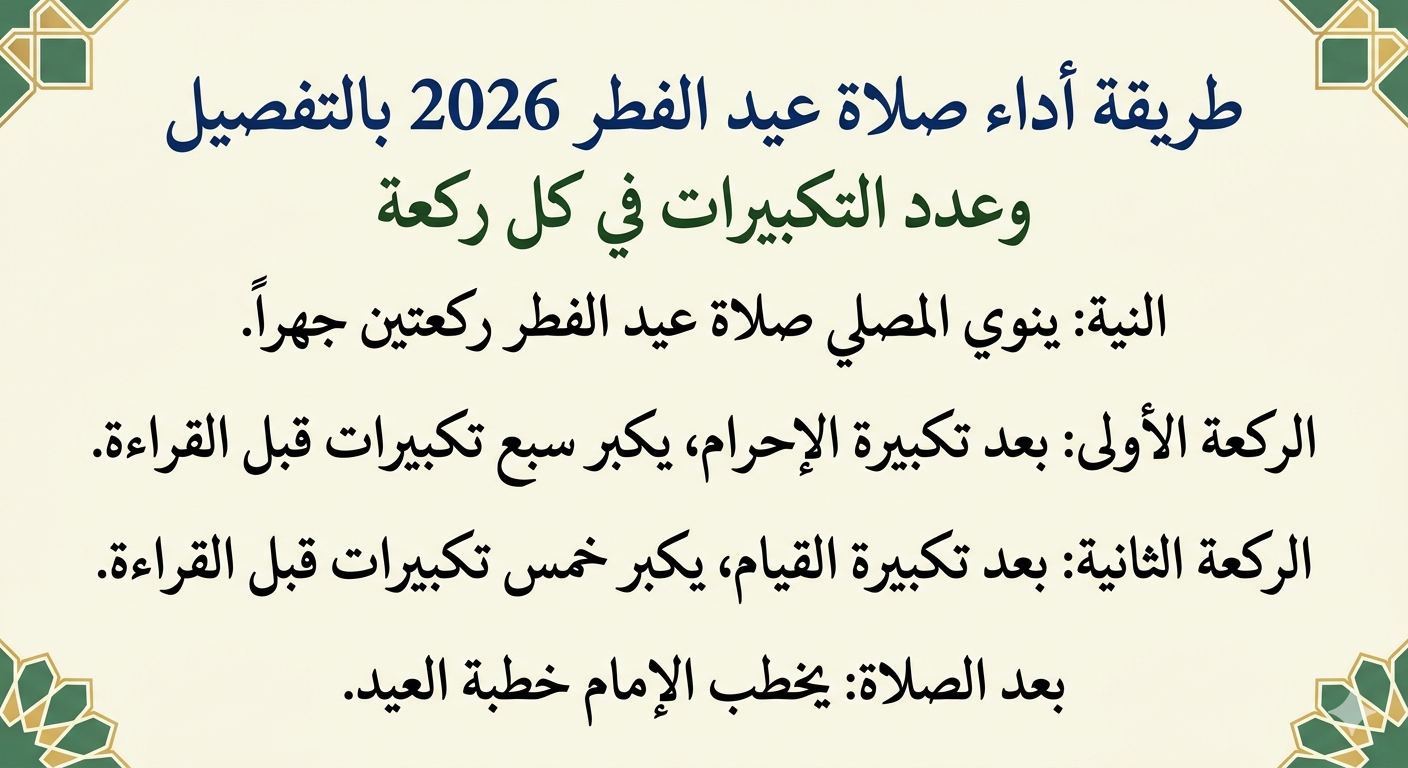
Now let's get to the core, how to pray in Islam in general, and the Eid prayer specifically. The Eid prayer is two rak'at, but it includes extra takbeers compared to regular prayers. Let's break it down in order:
- Intention (Niyyah): The heart is the foundation; silently intend in your heart to pray the Eid prayer, a confirmed Sunnah.
- First Rak'ah: Start with the Takbeerat al-Ihram (saying "Allahu Akbar" to begin the prayer). Then recite the opening supplication (Du'a al-Istiftah) silently. After that, say six more takbeers (not including the opening one), making a total of seven takbeers. Raise your hands with each takbeer and say "Allahu Akbar." Between the takbeers, you can say phrases like "SubhanAllah, walhamdulillah, wa la ilaha illallah, wallahu Akbar" (Glory be to God, all praise is due to God, there is no god but God, and God is the Greatest).
- After the takbeers, seek refuge in Allah (say "A'udhu billahi minash shaytanir rajeem") and recite Surah Al-Fatihah, followed by a short Surah like Surah Al-A'la or Surah Qaf. The Imam will recite these aloud.
- Second Rak'ah: Rise from prostration, saying the takbeer for standing up. Then say five takbeers (not including the takbeer for standing). So you'll say "Allahu Akbar" five times in a row, raising your hands with each one. Then recite Al-Fatihah and, for example, Surah Al-Ghashiyah. After that, complete the rak'ah as usual: bow (ruku), prostrate (sujood), sit for the Tashahhud, and conclude with the Tasleem (saying "Assalamu alaikum wa rahmatullah" to the right and left).
This is the relied-upon method according to many scholars, and it's the easiest and most comprehensive. The main thing is to follow your Imam and not add extra takbeers on your own.
Etiquettes and Sunnah Practices for Eid Day Before the Prayer
Regarding learning about prayer and wudu (ablution) and its rulings, performing wudu for the Eid prayer is required, just like for any other prayer. But there are specific Sunnah practices for Eid – learn them and teach them to your kids:
- Taking a Bath (Ghusl): It's Sunnah to purify yourself by taking a bath before heading out.
- Eating Before the Prayer: On Eid al-Fitr, it's recommended to eat an odd number of dates before leaving, to show that you have broken your fast after Ramadan. On Eid al-Adha, the Sunnah is to eat after the prayer from the meat of your sacrifice (if you have made one).
- Dress: Wear your best clothes – they don't necessarily have to be new, but they should be clean and nice. Use perfume and show your happiness.
- Going and Returning: Take different routes to and from the prayer ground. This way, you can see and greet more fellow Muslims.
- Takbeer: Saying takbeer on Eid day is a Sunnah you'll hear everywhere. Recite: "Allahu Akbar, Allahu Akbar, la ilaha illallah. Allahu Akbar, Allahu Akbar, wa lillahil hamd" (God is the Greatest, God is the Greatest. There is no god but God. God is the Greatest, God is the Greatest, and all praise belongs to God).
Common Mistakes We Should Watch Out For
Some people rush off right after the prayer without listening to the sermon (khutbah). The sermon isn't obligatory but it is a Sunnah, and it contains a lot of good. Make sure to listen to it. Also, some brothers miss the Eid prayer altogether, using work or sleep as an excuse. It is a confirmed Sunnah, and we shouldn't neglect it. And everyone, please don't prevent women from going out to the prayer ground. Let them go out in proper Islamic dress and without adornment – all the goodness is in gathering together.
Summary
The Eid prayer is a source of joy and happiness, a way of thanking God for helping us complete our worship. Learn the method of the Eid prayer and teach it to your family. Renew your intentions, and go out with hearts full of love and forgiveness. May you all draw closer to God, and may this Eid bring us goodness, blessings, and prosperity.