Eid Prayer: A Complete Guide to Performing It Correctly, with Etiquette and Traditions
Hello and Eid Mubarak to everyone! The atmosphere is beginning to feel festive, traditions are coming to life, and the most important part of Eid day, after the joy of completing Ramadan or standing at Arafat, is the Eid prayer. Many people ask about the exact method of the Eid prayer, what is obligatory and what is recommended? Today, I wanted to explain it from the heart, in a simple and clear way, so you can go to the prayer ground feeling confident and at ease.
Timing and Place of the Eid Prayer
First things first, the Eid prayer is not at dawn. Its time begins approximately fifteen minutes after sunrise and continues until just before the Dhuhr (noon) call to prayer. So, there's no need to rush; have breakfast, prepare yourself, and head out calmly. The Prophet ﷺ used to perform it at the Musalla – an open space outside the mosque – so that everyone could gather: young and old, men and women. Here in our country, large mosques and prayer grounds welcome the worshippers, and it's performed in congregation, carrying immense reward.
How to Perform the Eid Prayer Step by Step
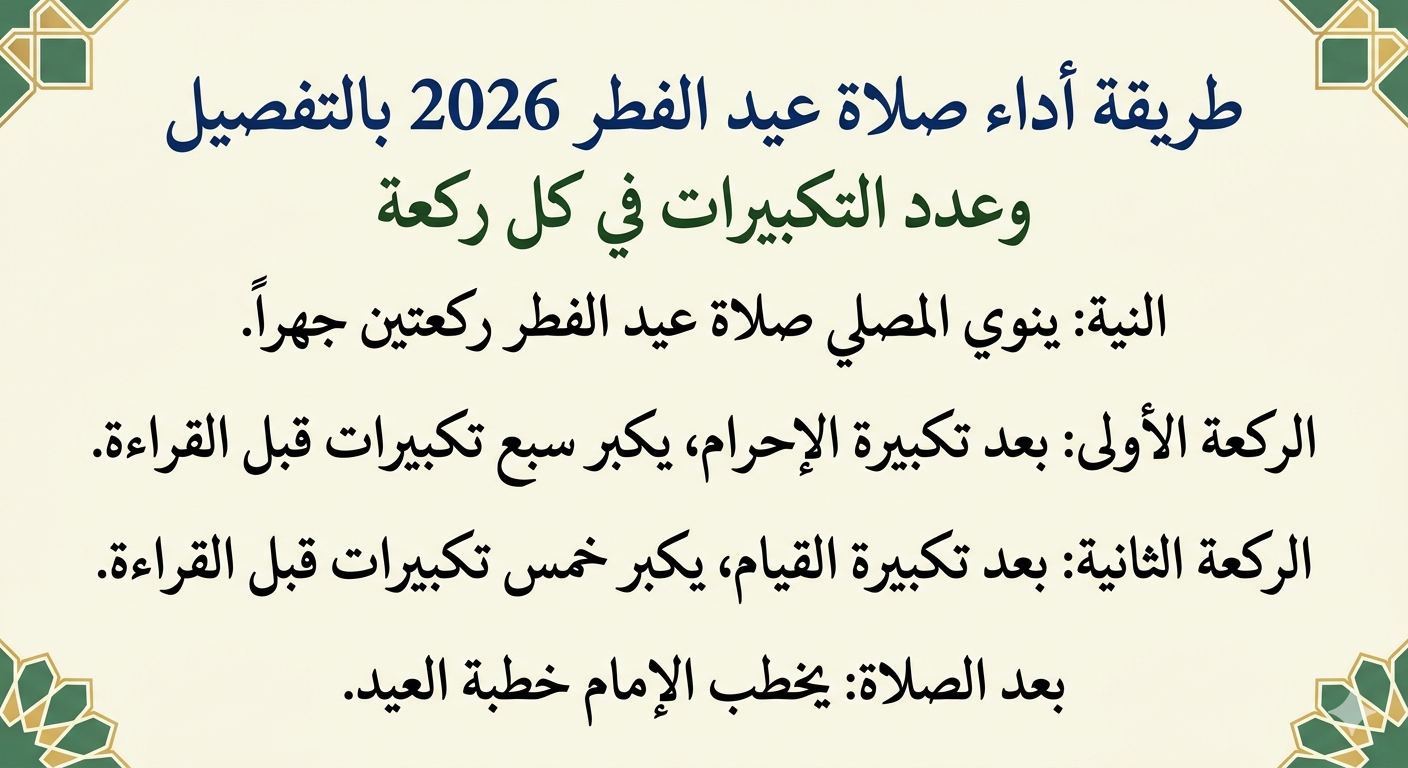
Now, let's get to the core of it: how to pray in Islam in general, and the Eid prayer specifically. The Eid prayer consists of two rak'ahs (units of prayer), but it includes additional takbeers (saying "Allahu Akbar") compared to regular prayers. Let's explain it in order:
- The Intention (Niyyah): The heart is key. Intend in your heart to perform the Eid prayer, a confirmed Sunnah.
- The First Rak'ah: Begin with the opening takbeer (Takbirat al-Ihram - saying "Allahu Akbar"). Then, recite the opening supplication (Dua al-Istiftah) silently. After that, say six additional takbeers – not including the opening one – making a total of seven takbeers. Raise your hands with each takbeer and say "Allahu Akbar". Between the takbeers, you can say: "Subhanallah, walhamdulillah, wa la ilaha illallah, wallahu akbar" (Glory be to Allah, praise be to Allah, there is no god but Allah, and Allah is the Greatest).
- After the takbeers, seek refuge with Allah (recite Ta'awwudh), recite Al-Fatihah, and then a short Surah like Al-A'la or Qaf, or the Imam will recite them aloud.
- The Second Rak'ah: Rise from prostration, saying the takbeer for standing up, then say five additional takbeers – not including the takbeer for standing. So, you say takbeer five times in succession, raising your hands each time. Then, recite Al-Fatihah and, for example, Surah Al-Ghashiyah. After that, proceed to bow (ruku), prostrate (sujood), sit for the Tashahhud, and conclude with the Tasleem (saying "Assalamu Alaikum wa Rahmatullah" to the right and left).
This is the method favoured by many scholars, and it's the easiest and most comprehensive. The important thing is to follow the Imam and not add any takbeers on your own whim.
Etiquette and Traditions of Eid Day Before the Prayer
Regarding teaching prayer and ablution and its rulings, performing ablution (wudu) for the Eid prayer is obligatory, just as for any prayer. However, there are specific traditions (Sunnahs) for Eid – learn them and teach them to your children:
- Taking a Bath (Ghusl): It is Sunnah to purify yourself by taking a bath before going out.
- Eating Before the Prayer: On Eid al-Fitr, it is recommended to eat an odd number of dates before leaving, signifying the end of the fast. On Eid al-Adha, the Sunnah is to eat after the prayer from the Eid sacrifice.
- Dress: Wear your finest clothes – they don't have to be new, but clean and smart. Use perfume and express your joy outwardly.
- The Route to and from Prayer: Take two different routes – go one way and return another – to increase the chances of seeing and greeting fellow Muslims.
- The Takbeer: Reciting the Takbeer on Eid day is a Sunnah; you'll hear it everywhere. Repeat: "Allahu Akbar, Allahu Akbar, la ilaha illallah, Allahu Akbar, Allahu Akbar, wa lillahil hamd" (Allah is the Greatest, Allah is the Greatest, there is no god but Allah; Allah is the Greatest, Allah is the Greatest, and to Allah belongs all praise).
Common Mistakes to Watch Out For
Some people rush off after the prayer before listening to the sermon (khutbah). The sermon isn't obligatory, but it is a Sunnah and contains much good. Make sure to listen. Also, some brothers miss the Eid prayer due to work or sleeping in. It is a confirmed Sunnah and should not be neglected. And as for the women, brothers, do not prevent them from going out to the prayer ground – observing proper Islamic hijab and avoiding display – all goodness lies in coming together.
Summary
The Eid prayer is a source of joy and happiness, a way of thanking Allah for enabling us to complete an act of worship. Learn the method of the Eid prayer and teach it to your families. Renew your intention, and go out with hearts filled with love and forgiveness. May you be closer to Allah each year, and may Eid bring us all goodness, blessings, and prosperity.