Global Tensions: The Critical Role of the Defence Minister in a Turbulent World
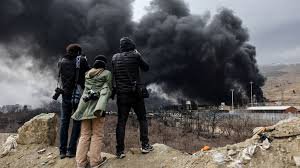
Tensions in the Middle East have flared up again in the past few hours. Columns of thick black smoke rise over Tehran following new missile attacks, and a major fire at a key tower in Kuwait is being linked to an Iranian drone strike. For the key players on the world stage at such moments, only one role truly matters: that of the Defence Minister. In The Hague, Washington, Moscow, New Delhi, and Kiev, they are now the ones calling the shots. How is each player making their moves on this risky chessboard?
Washington vs. Moscow: The Invisible Struggle
For the US Secretary of Defense, it's all hands on deck. The tensions between Israel and Iran are reaching such a peak that a regional blaze seems unavoidable. America doesn't have troops in the direct line of fire, but it does have bases and allies that could be hit at any moment. Inside the Pentagon, there's a frantic effort to develop scenarios to manage an escalation. On the other side, the Russian Defence Minister is watching with self-interest. Moscow needs Iran as an ally but doesn't want a war itself. So, whispers within the Russian defence establishment suggest they are discreetly warning Tehran not to go too far, all while securing their own position in Syria.
Kyiv and New Delhi: Two Sides of the Same Crisis
In Ukraine, the Ukrainian Defence Minister is holding his breath. An expansion of the Middle East conflict would inevitably mean a diversion of Western attention and weapons supplies. Behind closed doors, Ukrainian defence insiders admit they fear a new Russian offensive if support from Washington wanes. Over on the Indian subcontinent, the stakes are equally high. The Indian Defence Minister has the monumental task of protecting the millions of Indians working in the Gulf region. Every new attack there drives up oil prices and endangers his countrymen. In New Delhi, there are frantic consultations with embassies in Baghdad and Riyadh, as a mass evacuation is no longer just a theoretical scenario.
The Netherlands on the Diplomatic Frontline
And then there's the Dutch role. This weekend, Dutch citizens evacuated from Qatar landed at Schiphol, a quiet but clear sign that the situation in the region was deemed too dangerous for transit. The Dutch Defence Minister is on top of it. Our F-35s are already flying missions over Eastern Europe, but now the country's own air defence against drones and missile attacks is also under review. At the ministry in The Hague, there are discussions with NATO colleagues about keeping the Red Sea open—a critical trade artery increasingly targeted by Houthi rebels. It's a quiet, yet intense diplomatic war, far from the cameras.
What Defence Ministers are focusing on right now:
- The Gulf Region: Oil installations and airports are potential missile targets. Protecting their own citizens and military advisors is the top priority.
- The Red Sea: Attacks on container ships by Yemen's Houthis threaten the global economy; military escorts are essential.
- Israel and Iran: A direct war between these two would set the entire Middle East ablaze, with unpredictable consequences for NATO.
- The Information War: Russian and Iranian disinformation campaigns are trying to undermine Western support for Israel.
The title of Defence Minister is currently one of the toughest jobs on the planet. From Washington to Moscow, from New Delhi to The Hague: they must steer a steady course through a storm blowing in from multiple directions at once. And as they prepare their next moves, millions of people around the world watch the skies over Tehran and the smoke over Kuwait with bated breath. The world waits for the next move in a crisis that is far from over.