Tseng Cheng-yuan Sentenced to 7 Years and 4 Months in Ko Case; Pan-Blue Coalition Faces Early Recall Challenge: Local Organizers Say ‘This Fight Is Unavoidable’
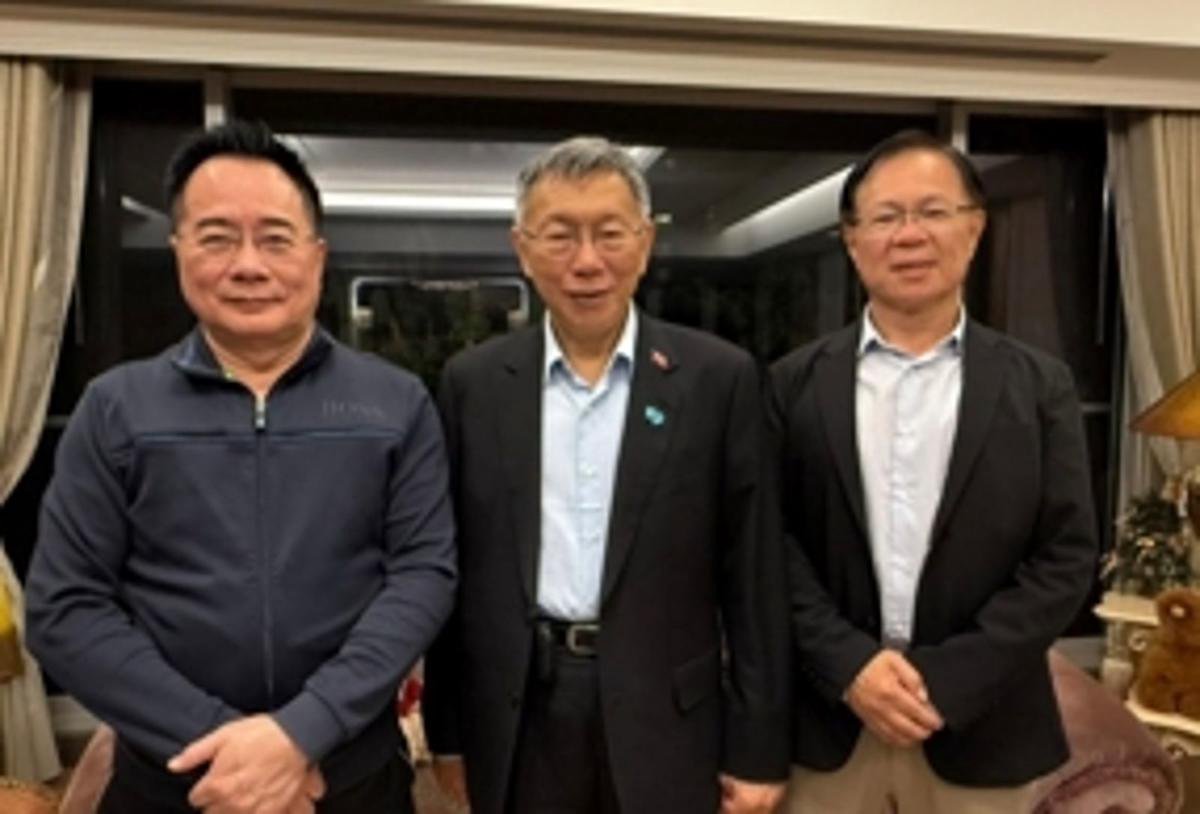
The biggest news rocking the political scene these past few days is undoubtedly the heavy sentence in the Ko Wen-je case. But what many might not realise is just how quickly the fallout has spread, landing squarely on former Kuomintang (KMT) legislator Tseng Cheng-yuan. Right as the verdict was announced, Tseng was handed a 7-year and 4-month prison sentence in the first instance for his involvement in a case concerning the acceptance of political donations. So now, the pan-Blue camp isn't just dealing with the political repercussions of the "Ko case"; it may also have to face a long-simmering recall effort against Tseng Cheng-yuan. Over the past few days, while talking to people on the ground, many grassroots organisers have been quietly saying: "There's no avoiding this fight."
Verdict Details Revealed: Political Donations Are Key
While this verdict is, on the surface, an extension of the "Ko case," investigators had been closely scrutinising Tseng’s situation for quite some time. The court determined that during a specific election period, he had accepted illegal political donations from certain businesses—a significant sum with clear quid pro quo implications. In Taiwan's electoral culture, that's an accusation that can be politically fatal. A 7-year and 4-month sentence is undoubtedly the end of the political road for a seasoned politician who once wielded significant influence in the Legislative Yuan. For local voters, however, this isn't just about one individual; it's about shaking up the entire power structure of his constituency.
Many thought the Ko Wen-je case was an issue for the Taiwan People's Party alone. But the heavy sentence for Tseng effectively turns the judicial crackdown's focus onto the murky business-political relationships within the pan-Blue camp. Rumours are now swirling. Some say this is just the first wave, with more people set to be questioned. Others directly claim that certain pan-Blue local factions are now terrified, fearing they might be next. This sense of fear is spreading rapidly through the grassroots.
Recall Fires Reignite? Local Organisers: The Tide Has Turned
Even before the verdict, there had been online calls to organise a recall campaign against Tseng Cheng-yuan. Many dismissed it as mere talk, given the high threshold to make it official. But the verdict has fundamentally changed the situation. According to local political intelligence, the mood on the ground has noticeably shifted. Centrist voters who previously supported Tseng are now taking a much more cautious stance, with a distinct sense of realisation. The verdict has ignited several key effects at once:
- Mobilisation Energy Surges: The biggest challenge for any recall is generating public enthusiasm. But now, with a judicial ruling to back it up, opponents have a clear and legitimate reason to act. Many who typically stay away from politics now feel compelled to make their stance known.
- Internal Pressure on the Pan-Blue Coalition: The KMT finds itself in a difficult position. Defending Tseng would mean going against public sentiment; abandoning him risks being seen as weak and dealing a further blow to morale. Local party branches are being inundated with calls asking whether the central party will stand by one of its own.
- The DPP Is Poised to Act: While the Democratic Progressive Party (DPP) is keeping a low profile publicly, its local networks are already mobilising. They won't openly orchestrate the recall, but by simply following the flow of public opinion and providing behind-the-scenes resources, they can make this an incredibly tough battle for the pan-Blue camp.
A senior KMT strategist, speaking on condition of anonymity, confided: "It's no longer a question of whether to fight; the battle is already at our doorstep. The moment the verdict came out, the Tseng Cheng-yuan recall stopped being a 'possibility' and became a 'certainty'."
Spillover from Ko Case Puts Pan-Blue Coalition Under Fire
What many fail to grasp is that the severe sentencing in Ko Wen-je's case represents a "dangerously close" crisis for the pan-Blue camp. In the court of public opinion, all politicians' financial dealings are now being scrutinised. Tseng's case acts as a trigger, exposing all the grey areas—often dismissed as "local services" or "constituent services"—that the pan-Blue coalition has long relied upon.
In the coming months, analysts expect several developments. First, the pace of petition signing for the Tseng Cheng-yuan recall will accelerate, potentially reaching the threshold in a short time. Second, other pan-Blue elected officials with similar controversies are now on high alert, fearing they could be the next target. Third, if this judicial storm continues, the entire political landscape could be reshaped ahead of the 2026 local elections.
Tseng Cheng-yuan himself has yet to comment extensively on the verdict, but sources close to him suggest he sees it as a "political witch hunt." However, for local voters, regardless of whether it's a political manoeuvre, seeing the verdict laid out in black and white has irreparably eroded their trust. This political wildfire, sparked by the Ko case and now engulfing Tseng, is just beginning.