Tsai Cheng-yuan Gets 7 Years and 4 Months in Ko Case! Blue Camp's "Recall" May Kick Off Early? Local Insiders Say: This Fight Is Unavoidable
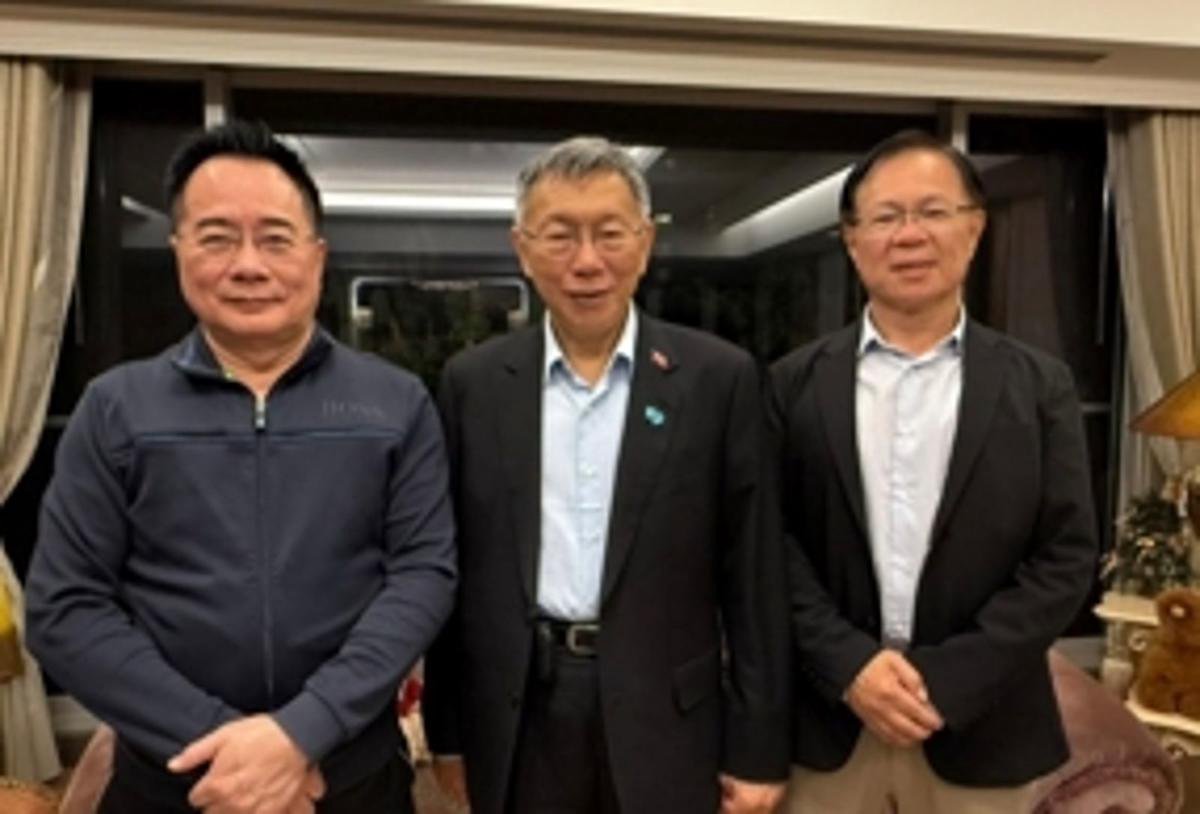
The biggest news shaking up the political scene these past few days has definitely been the heavy sentence handed down in the Ko Wen-je case. But what many might not realise is just how quickly the fire has spread, directly reaching former Kuomintang legislator Tsai Cheng-yuan. Around the same time the verdict came down, Tsai was also handed a first-instance sentence of 7 years and 4 months in prison for allegedly receiving illegal political donations. So now, the Blue Camp isn’t just grappling with the political fallout from the Ko case; they might also have to deal prematurely with a long-simmering recall effort against Tsai Cheng-yuan. Hitting the ground these past few days, many local operatives have been whispering among themselves: "This is one fight we can't avoid."
Verdict Details Revealed: Political Donations Are Key
Although this verdict is ostensibly an extension of the Ko case, investigators actually had their eye on Tsai’s involvement closely during the probe. The court determined that during a specific election period, he accepted illicit political donations from certain corporations, amounting to a significant sum and involving a quid pro quo arrangement. In Taiwan’s electoral culture, this is practically a fatal blow. A sentence of 7 years and 4 months is undoubtedly the end of the political road for a veteran politician who once wielded significant influence in the Legislative Yuan. But for local voters, this isn’t just about one person; it’s a game-changer for the entire constituency's power dynamics.
Many thought the Ko Wen-je case was an internal affair for the TPP, but Tsai’s heavy sentence essentially turns the "judicial cleanup" squarely onto the Blue Camp’s past ambiguous business-politics relationships. Rumours are now flying everywhere. Some say this is just the first wave, with more people likely to be called in for questioning. Others directly point out that some KMT local factions are terrified, afraid they might be next. This sense of fear is rapidly spreading through the grassroots.
Recall Fires Rekindled? Local Operatives: The Wind Has Shifted
Even before the verdict, there were already online campaigns to rally support for a recall of Tsai Cheng-yuan. Back then, many dismissed it as just talk, given the high threshold to get such a motion off the ground. But the situation has completely changed after this verdict. According to local political intelligence, the conversation on the ground has noticeably shifted in recent days. Moderate voters who previously supported Tsai are now holding back, with many having a moment of "So that's what was really going on." This verdict has effectively ignited several key effects at once:
- Mobilisation Surge: The biggest challenge for any recall has always been generating enough momentum. But now, backed by a judicial ruling, it gives opponents a "just cause." Many who normally stay out of politics now feel they should make their stance known.
- Pressure Mounts Inside the KMT: The party is caught in a dilemma. Defending Tsai means going against public sentiment; abandoning him risks being seen as weak, further demoralising their base. Local party offices are fielding numerous calls, all asking the same thing: "Is the central leadership going to stand by one of our own or not?"
- The DPP Is Waiting in the Wings: While the Democratic Progressive Party is keeping a low profile on the surface, their local networks are already in motion. They won't directly manage the recall, but by simply riding the wave of public opinion and providing behind-the-scenes resources, this fight will become incredibly tough for the KMT.
A senior KMT strategist, speaking on condition of anonymity, confided: "It's no longer a question of whether we go to war. The enemy is already at our gates. The moment that verdict was issued, the recall of Tsai Cheng-yuan went from a 'possibility' to a 'certainty'."
Spillover from the Ko Case: Multiple Impacts on the KMT
What many fail to grasp is that the severe sentencing in the Ko Wen-je case actually poses a "closer to home" crisis for the KMT. In the court of public opinion, scrutiny on the "money trails" of all political figures will intensify. Tsai's case acts as a trigger, blowing wide open the ambiguous grey areas that the KMT once tried to pass off as "local services" or "constituent services."
In the coming months, political observers expect several developments. First, the petition drive for the Tsai Cheng-yuan recall will accelerate, potentially crossing the required threshold in a short time. Second, other KMT representatives with similar controversies are now on high alert, fearing they could become the next target. Third, if this judicial storm continues to brew, the entire political landscape could be reshuffled going into the 2026 local elections.
Tsai Cheng-yuan himself has not yet made extensive comments on the verdict, but sources close to him indicate he believes it's "political persecution." However, for local voters, regardless of whether it's political maneuvering, seeing the details clearly laid out in black and white in the court judgment means that sense of trust is long gone. This political wildfire, ignited by the Ko case and now burning through Tsai Cheng-yuan, is only just beginning.