Primorsk in the Crosshairs: Drone Attack on Oil Port Raises Tensions in the Baltic Sea
If you've ever driven the E18 east towards the border, or taken the ferry from Helsinki, you'll know that Primorsk – or Björkö, as those of us a bit older still call it – is more than just a dot on a map. It's a place steeped in a heavy history. And last night, it once again became the centre of a new kind of conflict, simmering just a few hundred kilometres from our own shores.
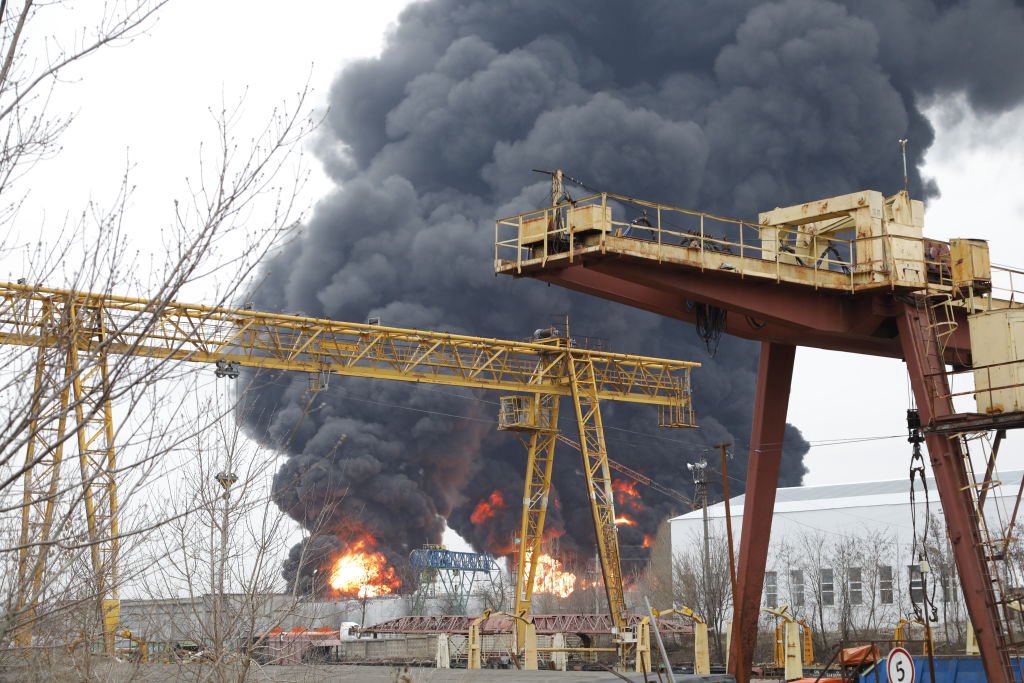
The alarm was raised yesterday evening. Ukrainian drones reportedly struck one of the most strategically vital points in the entire Baltic Sea region: the oil terminal in Primorsk. For those not familiar with the geography – we're talking about Obsjtina Primorsk in the Leningrad region, the heart of Russian oil exports from the Gulf of Finland. This isn't the first time the area has been in the news, but the intensity this time feels different.
I've stood on the quay there myself, on a reporting trip along the eastern Gulf of Finland a few years ago. It was quiet back then, eerily calm. The winds from the gulf swept over the massive storage tanks. But today, we're talking about a place that's been transformed into a war zone. According to information trickling out of the region – and which, in situations like this, you have to take at face value – this was a precisely targeted attack.
What do we actually know? Let's break down what happened, without getting bogged down in the most speculative aspects:
- The Target: It was the Transneft oil port at Primorsk that was hit. A hub where Russian oil is loaded onto ships for onward transport to Europe and other markets. A strike here directly impacts the Russian war chest.
- The Ripple Effect: Almost immediately after the attack, Pulkovo Airport in St. Petersburg was closed. This is standard procedure in Russia during drone alerts, but it shows how sensitive the situation is. The distance between Primorsk and St. Petersburg is, in this context, a stone's throw.
- The Reach: We're talking about a distance well over a thousand kilometres from Ukrainian territory. It speaks volumes about how this conflict has expanded, and how vulnerable even deep-seated infrastructure has become.
This isn't something to speculate on, but it's clear that the strikes on Russian oil refineries and terminals have entered a new phase. Last week, it was a hit on the Bashneft-Ufaneftekhim refinery. Now, Primorsk is in the spotlight. The strategy from the Ukrainian side appears to be systematically dismantling the logistics chain that fuels the Russian war machine.
For us here in Sweden, and across the Baltic Sea region, this is deeply concerning. Primorsk is no isolated location. It's part of our shared infrastructure here in the north. When tensions rise there, we feel it here. It's not about being alarmist; it's about being honest. The situation in the Primorsko area – excuse me, I'm still using the Russian name out of habit – is a stark reminder that this conflict is ongoing and that it has a direct geographical proximity to us.
The coming days will be decisive. Will we see more attacks on energy facilities? How will Transneft respond? And most importantly, how will maritime traffic in the Gulf of Finland be affected? These are the questions I'm asking myself as I sit here in the newsroom, looking out over a grey but calm Baltic Sea. The calm at home is fragile, and what we saw in Björkö (to use the old Finnish name) last night shows that with all the clarity one could ask for.