Jürgen Habermas has died: Farewell to the Frankfurt School philosopher
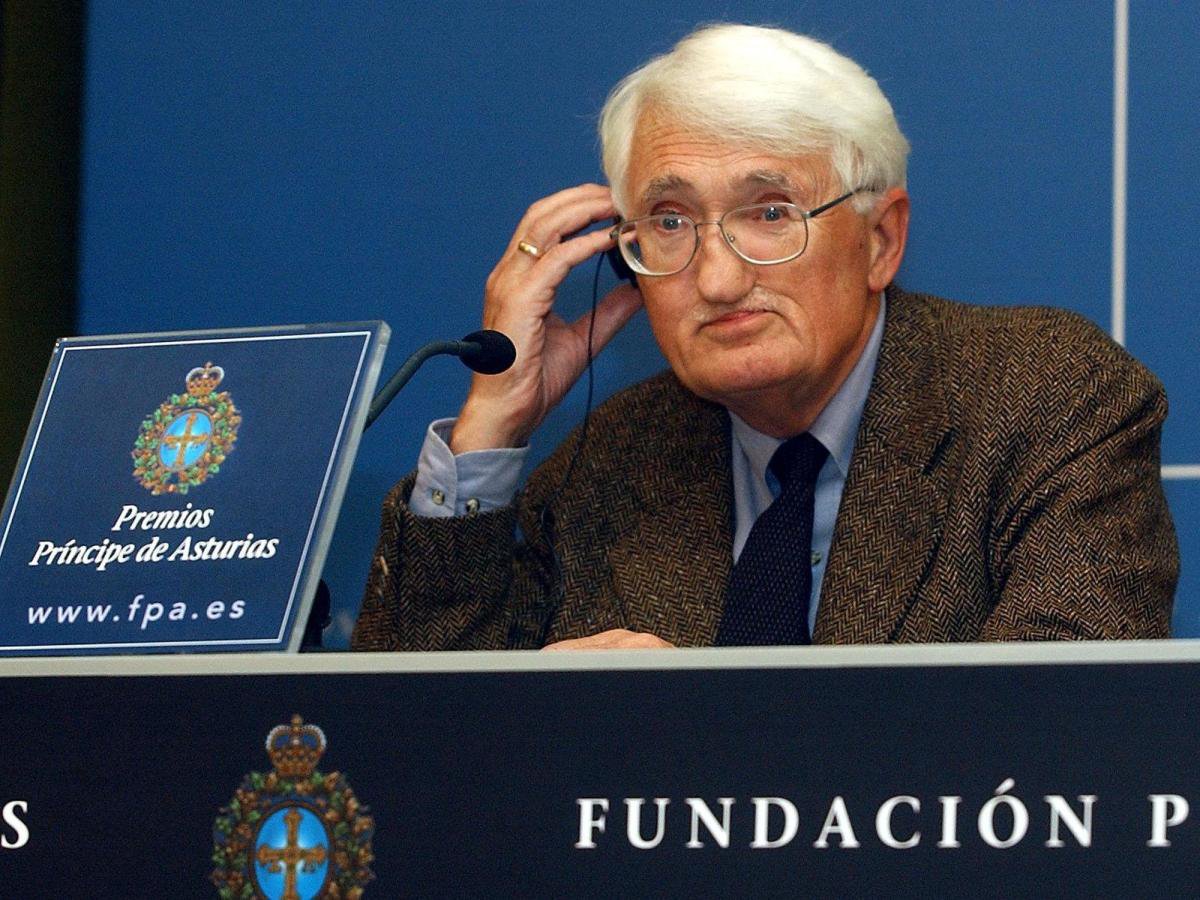
Farewell to Jürgen Habermas, the thinker who shaped the 20th century
Jürgen Habermas, one of the most influential philosophers of our time, has died at the age of 96. The heir to the Frankfurt School tradition passed away peacefully surrounded by his family, leaving an immense void in the global cultural landscape. The news, which broke yesterday, has sent shockwaves not only through Germany but across Europe, and particularly in Italy, where his ideas have always found a receptive audience.
Born in Düsseldorf in 1929, Habermas navigated the short 20th century and beyond through the sheer force of his ideas. His philosophy never remained cloistered in an ivory tower; it sought to interpret society, democracy, and the role of communication. For decades, he was the central figure of critical theory, carrying forward the legacy of Horkheimer and Adorno while keeping his gaze firmly fixed on the present.
The cornerstones of his thought are perhaps more relevant today than ever:
- The public sphere as a space for rational debate, capable of generating democratic opinion.
- The theory of communicative action, the bedrock of a society where dialogue triumphs over coercion.
- The staunch defence of the European project and constitutionalism, seen as bulwarks against nationalism and populism.
- The continuous dialogue with other great 20th-century minds, from Rawls to Derrida, and engaging with the Marxist tradition.
In Ireland, as elsewhere, his work has been profoundly influential. His books – from The Structural Transformation of the Public Sphere to Between Facts and Norms – are essential reading in philosophy, sociology, and political theory. Irish academics and students have long grappled with his dense but rewarding prose. His ideas on deliberative democracy and communicative reason have informed countless debates on our own political institutions and the future of the European Union. His presence at international conferences and his lectures, though less frequent in later years, resonated deeply, shaping generations of scholars. Irish political discourse, particularly around European integration and constitutional values, has often implicitly or explicitly drawn on his framework.
In reflecting on his body of work, one realises just how vital his lessons remain. For anyone coming to his philosophy for the first time, an essential starting point could be the concept of "communicative action": a deceptively simple yet powerful idea that society is held together by our ability to reach mutual understanding through language. But how can we apply these tools today? In an era of social media echo chambers and polarisation, his theory urges us to rediscover authentic dialogue, free from distortion and power imbalances.
Habermas was never an abstract philosopher. In his later years, he was unsparing in his critiques of neoliberal drift and euroscepticism. He believed in a political Europe, capable of counterbalancing the forces of globalisation. His calm but firm voice will be sorely missed in these turbulent times.
With him, a piece of the 20th century is gone, but his ideas endure. As someone once wrote, philosophy isn't meant to console us, but to make us freer. And Habermas's philosophy was one of freedom, grounded in reason and debate. Today, as we bid him farewell, we can only thank him for teaching us how to think.