Barcelona teachers' strike: Massive turnout on the streets against the regional government this March 16th
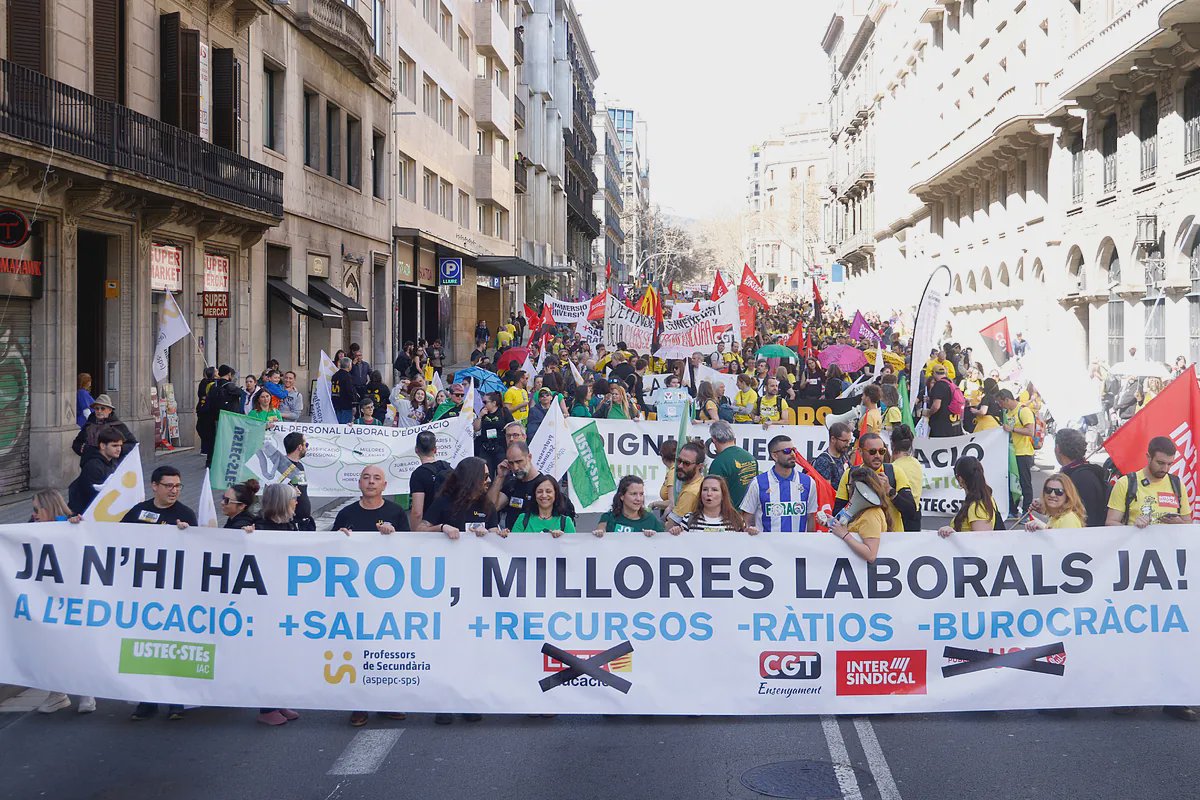
If you were out and about in Barcelona today, you couldn't miss the sea of placards and whistles. Catalan teachers have once again upped the ante against the regional government. From early this morning, the teachers' strike in Barcelona has been bringing secondary schools and primary schools to a standstill, and things are set to escalate. This isn't just any walkout: we're talking about thousands of educators who've decided to dig their heels in to demand the improvements to working conditions they've been seeking for years. And, to be fair, they've got some serious reasons.
Why is this teachers' strike happening now?
The atmosphere within the education community has been tense for months. Unions had been warning for a while: if there's no real progress, we're back on the streets. And they've followed through. This strike isn't a one-day whim; it's the result of stalled negotiations with the Department of Education. Teachers claim the department hasn't followed through on previous agreements and that classrooms are at breaking point. We're talking about sky-high student-to-teacher ratios, hours of paperwork eating into lesson planning time, and a lack of support staff that makes it impossible to cater for the diverse needs of students.
Among the key demands, unions have put forward:
- Reducing student-to-teacher ratios, especially in secondary and vocational training, where classes are overflowing.
- Cutting teaching hours to allow more time for preparation and collaborative work.
- More specialist staff (counsellors, social workers) to address mental health and diverse needs.
- Scrapping the bureaucracy imposed by national education laws which, they argue, eats up their time without improving educational quality.
Atmosphere of protest in central Barcelona
I've been following the protest since early on. By midday, the head of the march had already left Universitat square and was making its way along Gran Via towards Sant Jaume square, where the regional government palace is located. Thousands of green and orange t-shirts (the colours of the main unions) filled the streets. Chants could be heard like "Education isn't a cost, it's an investment" and "Government, listen, teachers are fighting back."
I had a chat with a secondary school teacher from Nou Barris who preferred not to give her name: "We've been putting up with this for years. This year, I've had up to 34 students in a 4th year ESO class (ages 15-16). There's no way to teach properly like that. And on top of that, we have more and more paperwork to fill out. If the government doesn't genuinely sit down and negotiate, this won't stop." Her colleague nodded in agreement while holding a banner for USTEC·STEs (the main union).
How does the strike affect families? A quick guide
If you're a parent and feeling a bit lost, don't worry. Here's what you need to know today. Many schools have had to close because the majority of teachers are on strike. In others, management teams have organised minimum services, but don't expect a normal school day. Your best bet is to check the school's website or the parents' WhatsApp group; they usually post there if there are any activities being run or if it's simply a day to stay at home. And if you're wondering how to use this situation to explain the importance of trade union action to your kids, well, it could be an opportunity to talk about workers' rights and democracy.
The government's reaction and what might happen in the coming days
For now, the Education Secretary has called for dialogue, but unions insist that words aren't enough. They want written commitments and concrete dates. There's speculation there could be an emergency meeting this very afternoon, but in the meantime, the pressure on the streets isn't letting up. The organisers have announced they'll maintain information pickets at schools and haven't ruled out further action if there's no progress.
Tensions are running very high. In my view, this Barcelona teachers' strike has all the makings of a long-running dispute if the administration doesn't give ground. It's happened before: the government tries to wear the unions down, hoping the movement will lose steam, but today I saw too many people up for a fight. We'll see what happens in the next few hours, but one thing is clear: public education in Catalonia is at a critical point, and teachers have said enough is enough.