Barcelona Teachers Strike: Massive March Rocks Catalan Government on March 16
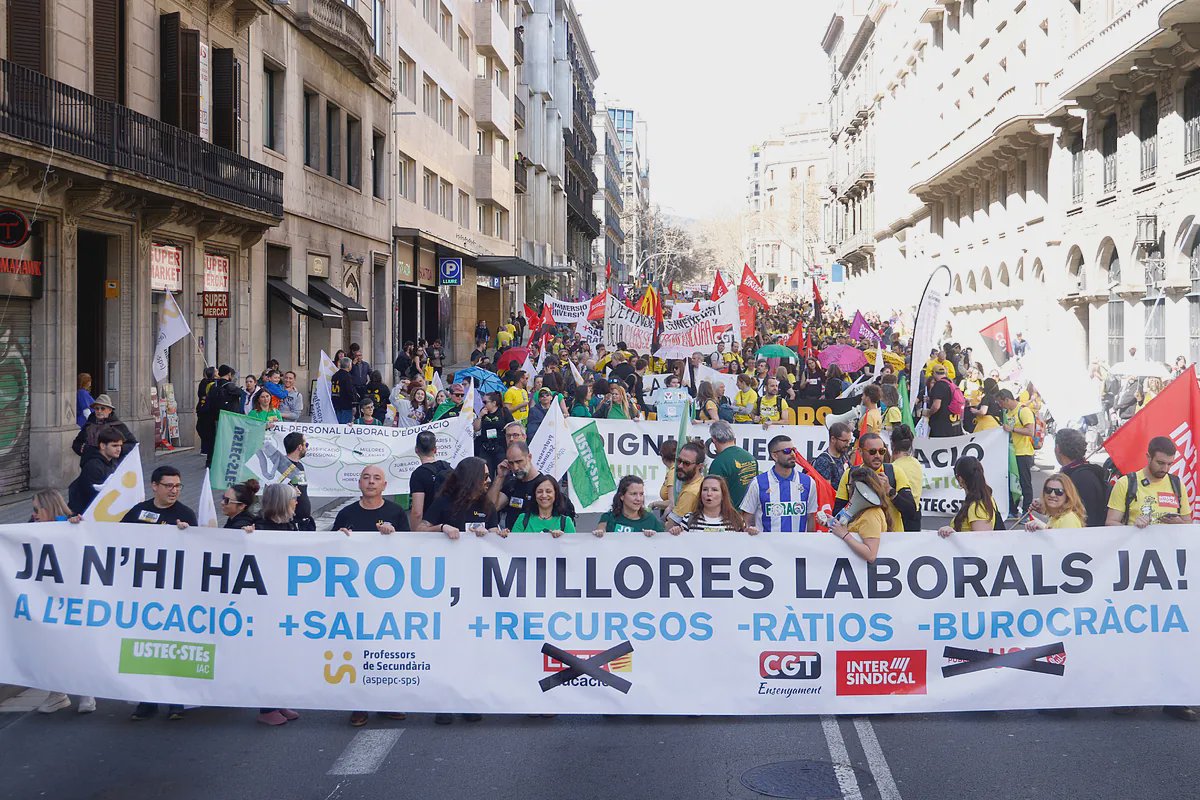
If you were out and about in Barcelona today, you couldn't miss the sea of signs and whistles. Catalan teachers have thrown down the gauntlet to the regional government once again. Starting early this morning, the Barcelona teachers' strike is bringing high schools and elementary schools to a standstill, and it's only gaining momentum. This isn't just another walkout: we're talking about thousands of educators who've decided to draw a line in the sand, demanding long-overdue improvements to their working conditions. And honestly? They've got some pretty solid reasons.
Why Are Teachers Striking Now?
Tensions have been simmering within the educational community for months. Unions have been warning the government for a while: if we don't see real progress, we're heading back to the streets. And that's exactly what happened. This strike isn't some spontaneous decision; it's the result of negotiations with the Catalan Department of Education hitting a brick wall. Teachers are calling them out, saying the department hasn't followed through on previous agreements and that classrooms are bursting at the seams. We're talking sky-high student-to-teacher ratios, hours lost to pointless paperwork that should be spent on lesson planning, and a critical shortage of support staff, making it impossible to actually address the diverse needs of students.
Here’s what the unions are demanding:
- Lower student-to-teacher ratios, especially in high schools and vocational training, where classes are completely overcrowded.
- Fewer teaching hours so they can actually carve out time for prep work and collaborating with colleagues.
- More specialized staff (like school counselors and social workers) to tackle student mental health and diverse learning needs.
- Scrap the red tape from the national education law (LOMLOE), which they argue eats up their time without doing a thing to improve education quality.
The Protest Scene in Downtown Barcelona
I've been following the march since it kicked off. By midday, the front of the procession had already left Plaza Universitat and was making its way down Gran Via towards Plaza Sant Jaume, where the Catalan government headquarters sit. Thousands of green and orange t-shirts (the colors of the major unions) flooded the streets. Chants filled the air: "Education is an investment, not an expense!" and "Government, listen up, teachers are fighting back!"
I chatted with a high school teacher from the Nou Barris district who asked to remain anonymous: "We've been putting up with this for years. This year, I've had up to 34 kids in my 10th-grade class. It's impossible to actually teach. And on top of that, the amount of paperwork keeps piling up. If the government doesn't get serious about negotiating, this isn't going to stop." Her colleague nodded in agreement while holding a banner for USTEC·STEs, the main teachers' union.
How the Strike Affects Families: A Quick Guide
If you're a parent feeling a bit lost right now, don't worry. Here's what you need to know today. Lots of schools have had to shut their doors because the majority of teachers are on strike. At others, the administration has put together minimum services, but don't expect a regular school day. Your best bet is to check the school's website or that class parents' WhatsApp group – they usually post updates there about any supervised activities or if kids are just staying home. And if you're wondering how to use this situation to talk to your kids about why labor organizing matters, well, it could be a pretty good chance to chat about workers' rights and democracy.
The Government's Response and What's Next
So far, the Education Secretary has put out a call for dialogue, but the unions are making it clear that words aren't enough. They want written commitments and a concrete timeline. There are whispers that an emergency meeting might be called this afternoon, but in the meantime, the pressure on the streets isn't letting up. The strike organizers have said they'll keep informational pickets at schools and aren't ruling out more action if there's no progress.
The atmosphere is super charged. From where I'm standing, this Barcelona teachers' strike has all the makings of a long, drawn-out conflict if the administration doesn't give ground. We've seen this movie before: the government tries to wait the unions out, hoping the movement will lose steam. But today, I saw way too many people fired up and ready for a fight. We'll see what the next few hours bring, but one thing's crystal clear: public education in Catalonia is at a critical point, and teachers have just said 'enough is enough.'